


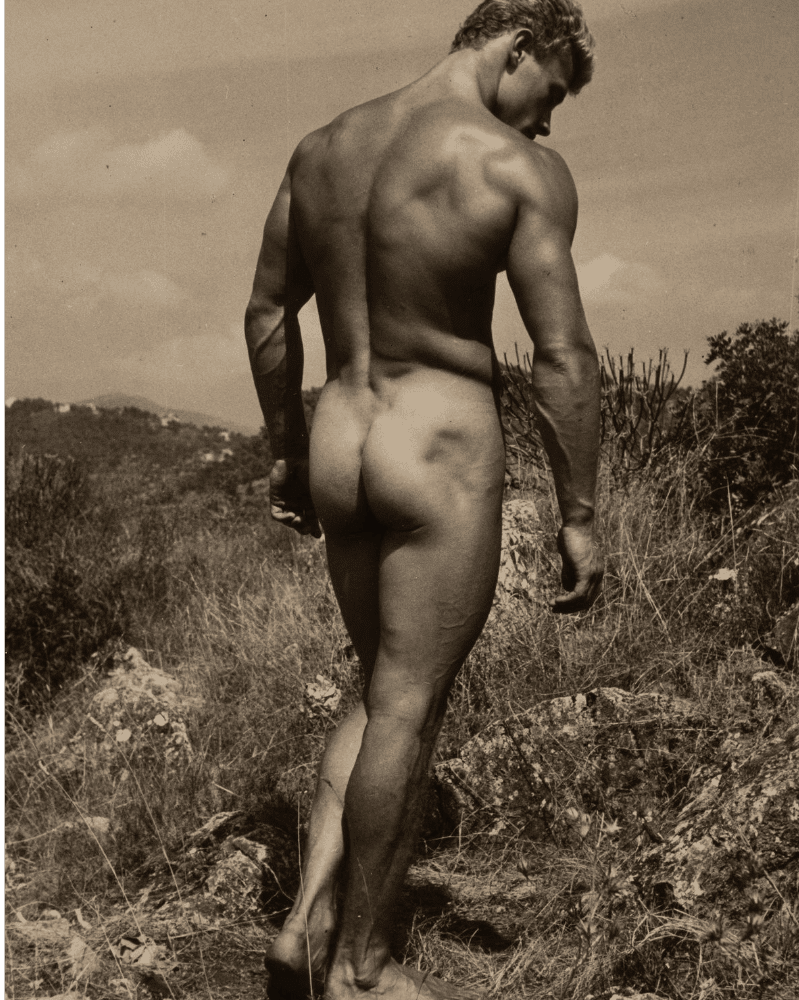
Bruno Wiehr was a distinguished figure in the German photographic tradition, specifically during the era that celebrated the synthesis of athletic prowess and aesthetic form. In this exceptional work titled “Acrobatie,” Wiehr demonstrates his mastery of the human figure as a dynamic architectural element. The composition features an acrobat in a moment of suspended equilibrium, extending the limbs to create a series of powerful, intersecting lines. Consequently, the photograph functions as a study of geometric precision and physical discipline. Wiehr moves beyond simple documentation to present the human body as a manifestation of balanced energy, aligning his work with the “New Objectivity” movement’s focus on clarity and structure.
The technique utilized in this piece showcases Wiehr’s expertise in tonal control and studio spatiality. Specifically, he utilizes a soft, directional light source to render the skin with a smooth, almost marble-like texture. This choice emphasizes the muscular engagement required to maintain the pose while preserving a sense of effortless grace. The background is intentionally darkened to create a vacuum of space, which forces the viewer’s eye to remain fixed on the silhouette. Furthermore, the archival quality of the gelatin silver process used by Wiehr ensures a vast range of grays, providing the work with a deep, painterly atmosphere. Therefore, the image achieves a monumental quality that belies its intimate photographic scale




 No products in the cart.