
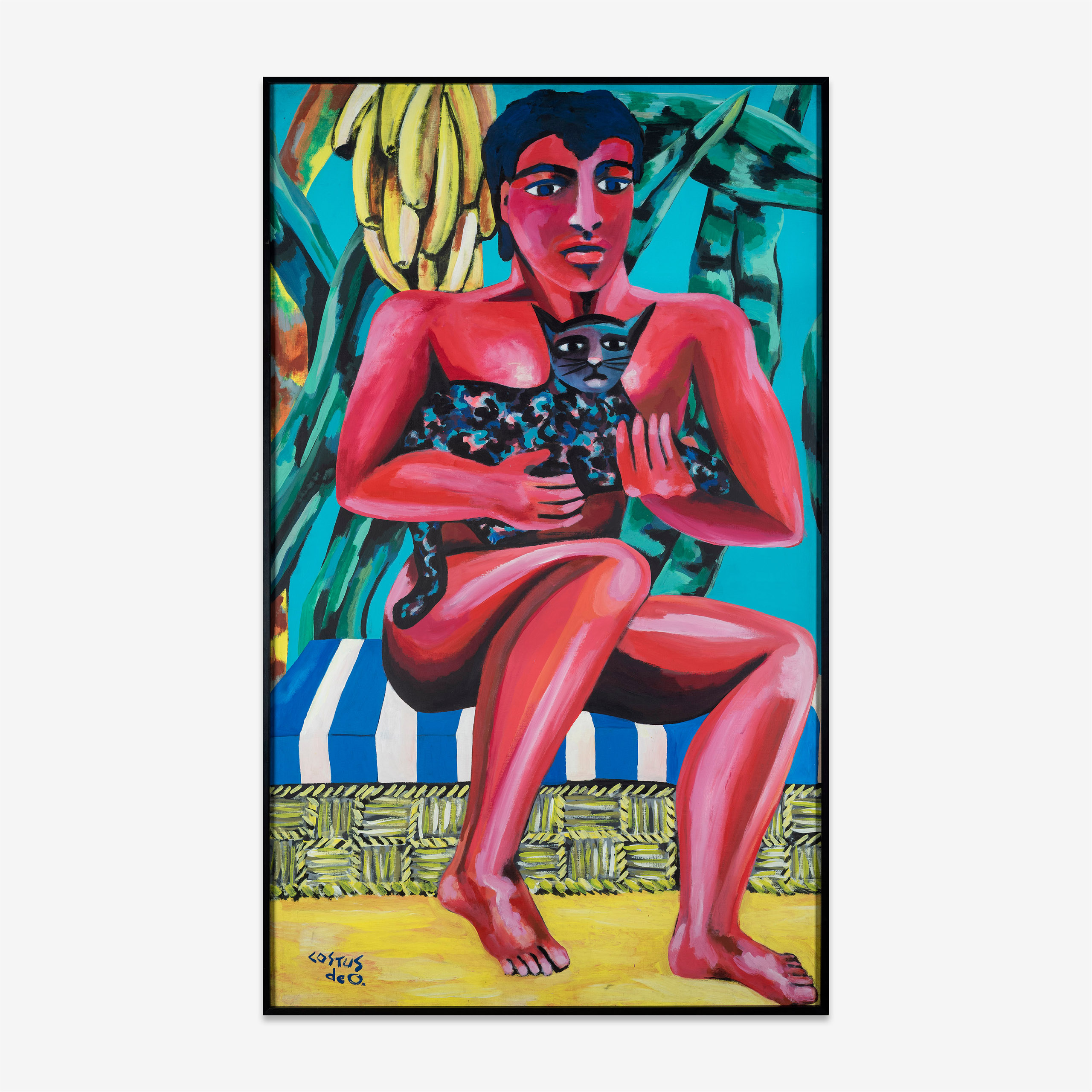
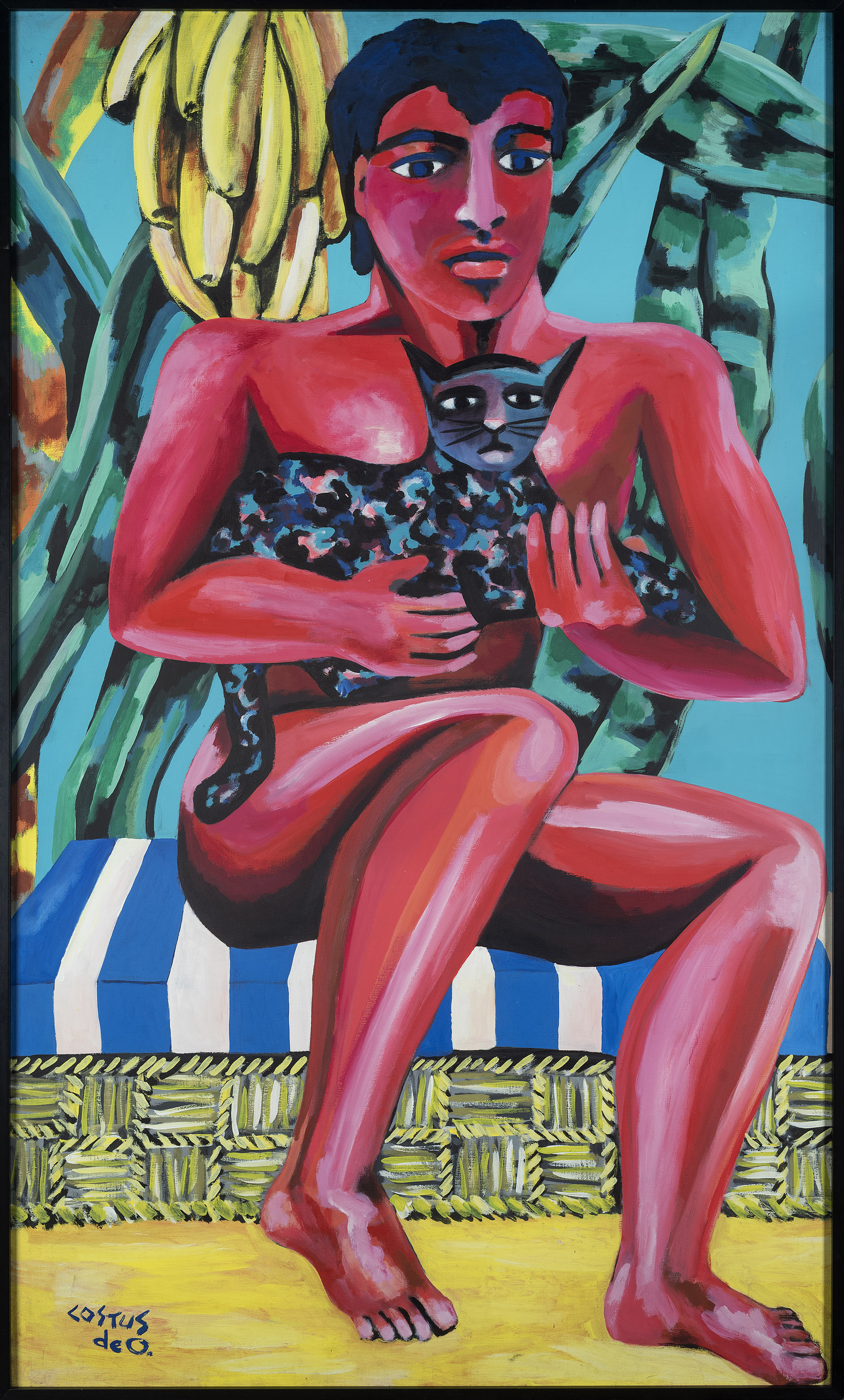
“Chulo con Gato” stands as one of the most vibrant and expressive paintings within the Costus visual universe, merging figurative intensity with the duo’s unmistakable chromatic language. The work depicts a seated figure holding a cat, presented through an anatomy built from confident, sculptural brushstrokes and a deliberately heightened palette. The figure’s skin is rendered in saturated reds and pinks, a colour strategy often used by Costus to push the body into a symbolic realm—sensual, expressive, and emotionally charged rather than merely representational.
Behind the central figure, oversized banana leaves and warm yellow fruit create a lush, tropical backdrop. This exotic vegetation forms not only an environmental context but also a psychological one: nature becomes an expressive extension of the figure’s interiority. The intense turquoise sky amplifies the work’s atmosphere, providing a luminous counterpoint to the warm tones of the figure’s body.
The cat, held closely against the figure’s chest, introduces a contrasting emotional register. Its stylised face—with large, melancholic eyes—adds an unexpected softness, anchoring the composition with a quiet, introspective presence. The relationship between figure and animal suggests tenderness amid the otherwise bold graphic tension of the scene.
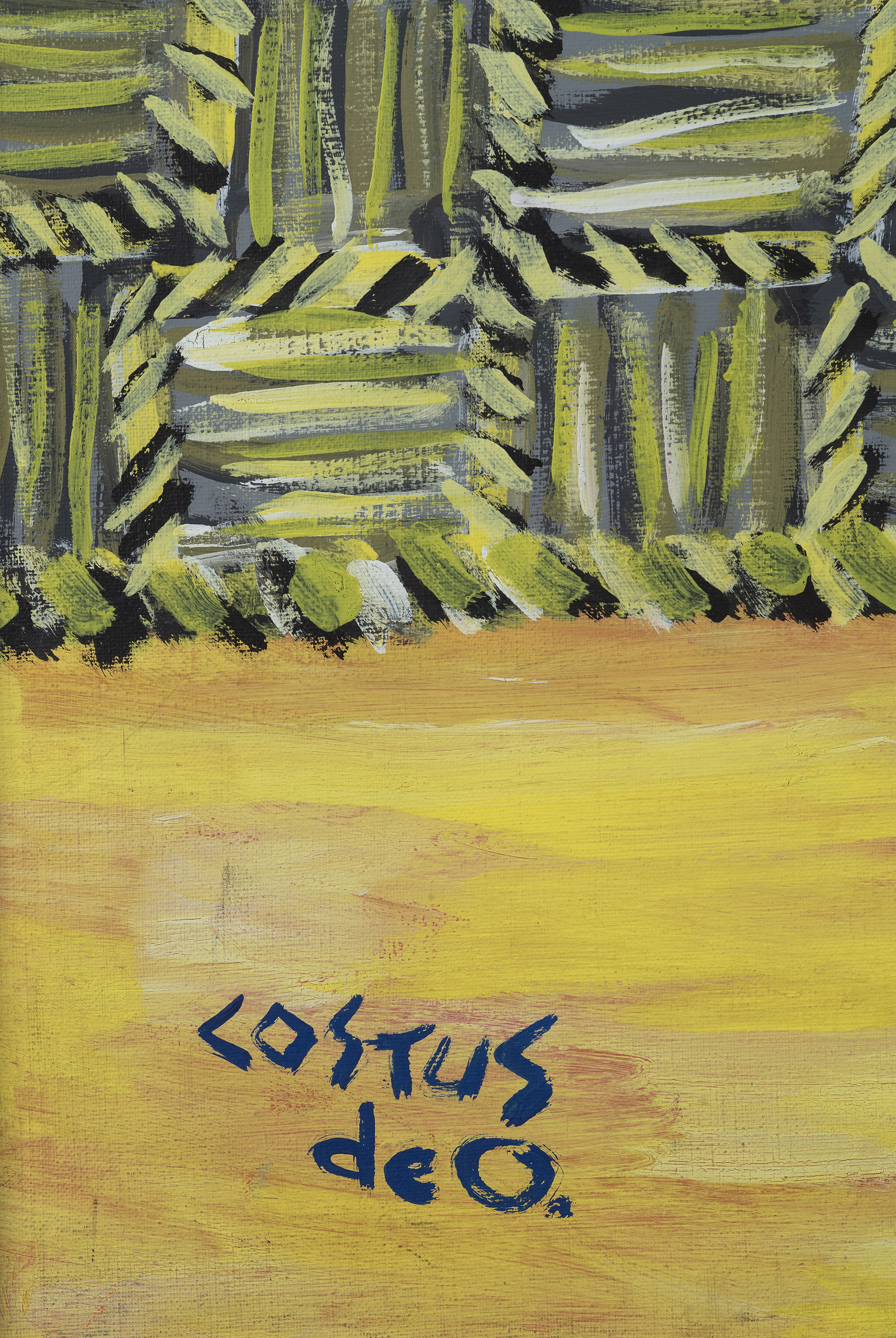
The lower register of the painting—striped textiles, geometric woven patterns, and sandy ground—demonstrates Costus’s flair for combining decorative rhythm with narrative cohesion. Thick acrylic application reveals the hand of the painter, particularly that of Juan Carrero Galofré (Juan Costus), whose direct, expressive strokes and unfiltered use of colour marked the duo’s production throughout the second half of the 1980s.
“Chulo con Gato” encapsulates the spirited sensibility of the era: exuberant, unapologetically colourful, and emotionally immediate. It stands as a quintessential example of Costus’s ability to unite figuration, pop-inflected colour theory, and mythic human presence into a single, compelling image.


 No products in the cart.