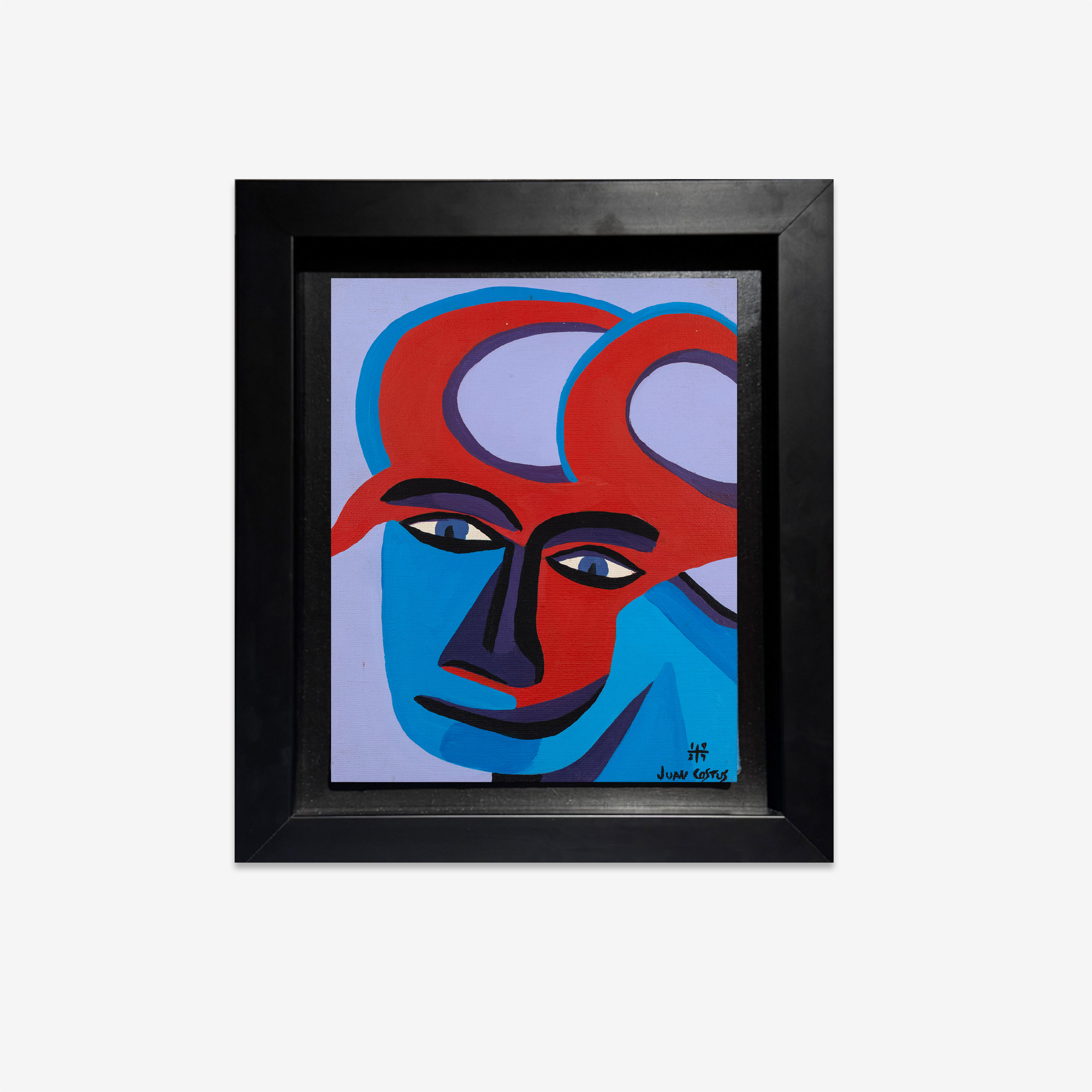
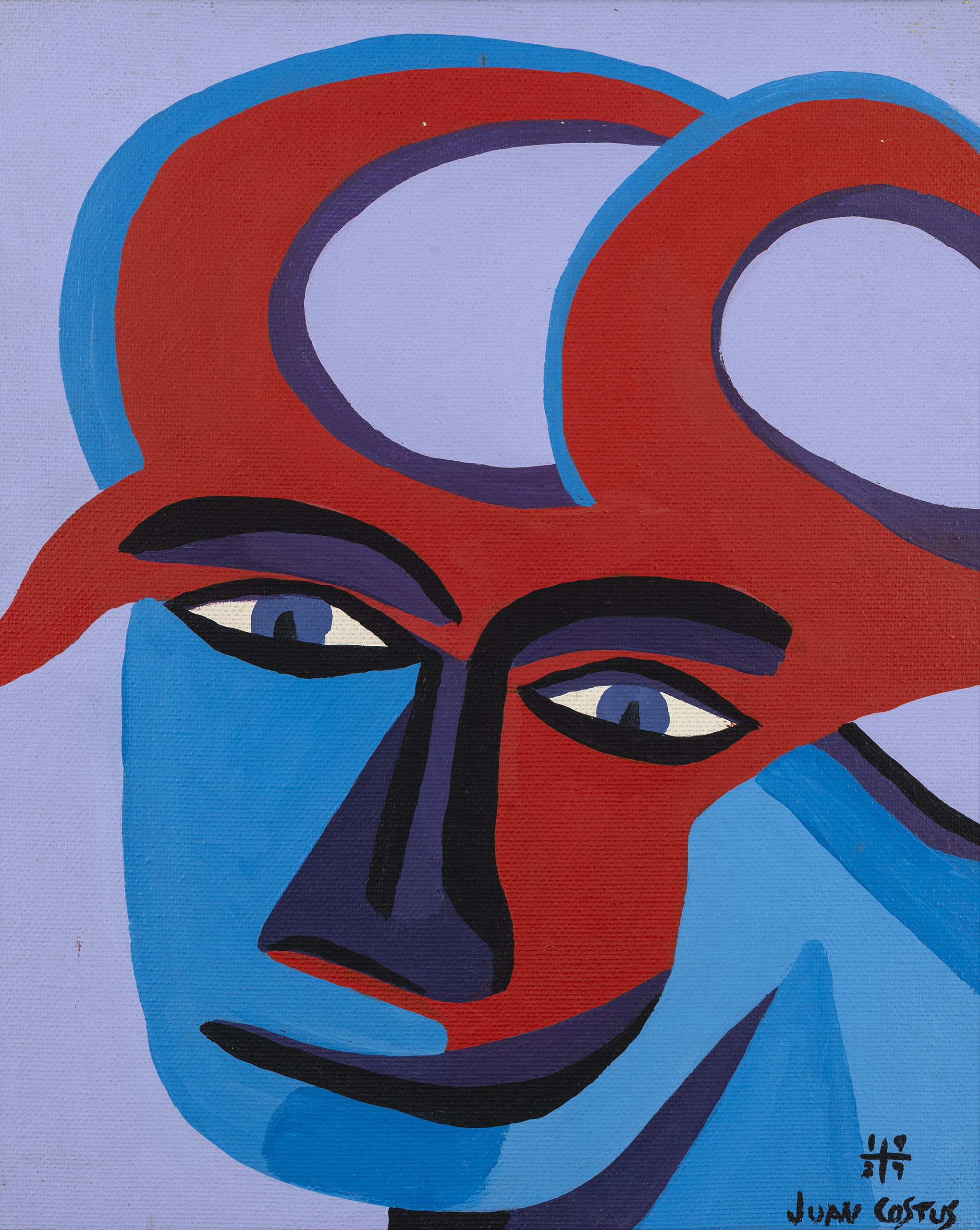
Diablo Rojo y Azul (1987) is a concise yet striking example of the visual language developed by Costus, signed by Juan Carrero Galofré. Executed in acrylic on canvas, the work reflects the artist’s exploration of graphic clarity, chromatic intensity, and the construction of symbolic identities through simplified forms. Despite its intimate format, the painting embodies the characteristic tension between abstraction and figuration that defines much of Costus’ production during the mid-to-late 1980s.
The composition is dominated by a stylized face rendered in bold areas of color. The interplay between red and blue—two hues positioned at opposite ends of the emotional and symbolic spectrum—creates a dynamic visual confrontation. The red forms, broad and curvilinear, crown the upper portion of the head, while the blue planes define the structure of the face below. Together, these chromatic contrasts generate a duality that is central to the work’s concept: an opposition between warmth and coolness, intensity and calm, instinct and reflection.
The simplified geometry of the features—reduced to essential shapes outlined in black—reinforces the graphic impact of the painting. Rather than pursuing anatomical realism, the artist constructs the visage as a sign, an emblematic presence that evokes both mask and identity. The sharp black contours articulate the facial proportions with precision, while the flat application of acrylic paint emphasizes the painting’s graphic qualities, echoing influences from Mediterranean pop aesthetics and urban iconography of the period.
The background, rendered in a soft lavender tone, establishes a neutral yet deliberate field that enhances the vibrancy of the foreground palette. This chromatic selection reinforces the visual clarity of the composition and ensures that the figure emerges with a strong, unmistakable presence. Through the balance of color, line, and negative space, Costus achieves a compact but highly coherent composition that resonates with the broader artistic project of the duo: the construction of visually iconic figures through stylization and chromatic precision.
Signed and dated in 1987, Diablo Rojo y Azul offers collectors a refined example of Costus’ ability to synthesize identity, symbolism, and design into a cohesive pictorial statement. Its dimensions—27 x 22 cm—underscore its intimacy while maintaining the unmistakable visual authority that characterizes the artist’s most recognisable works.


 No products in the cart.