
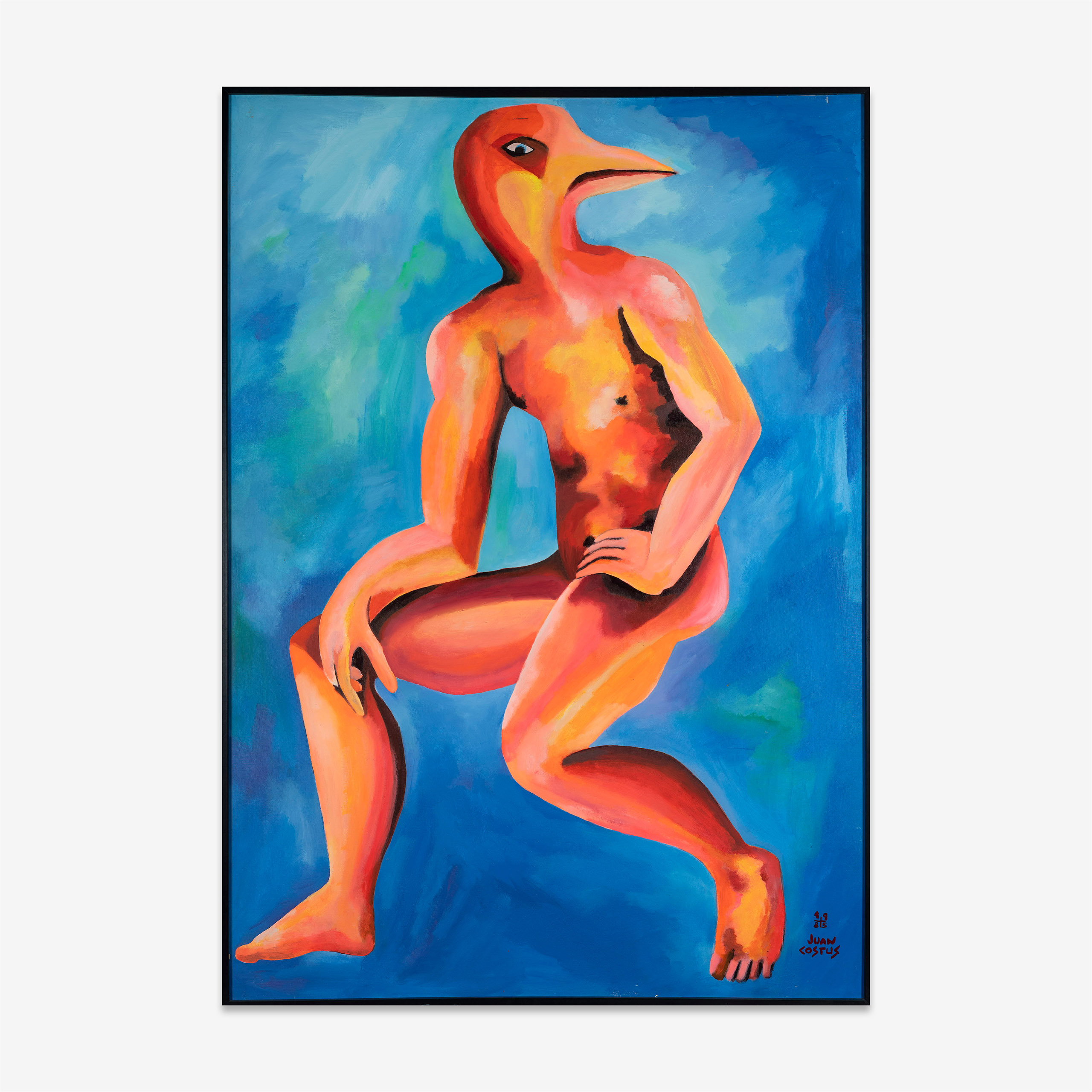
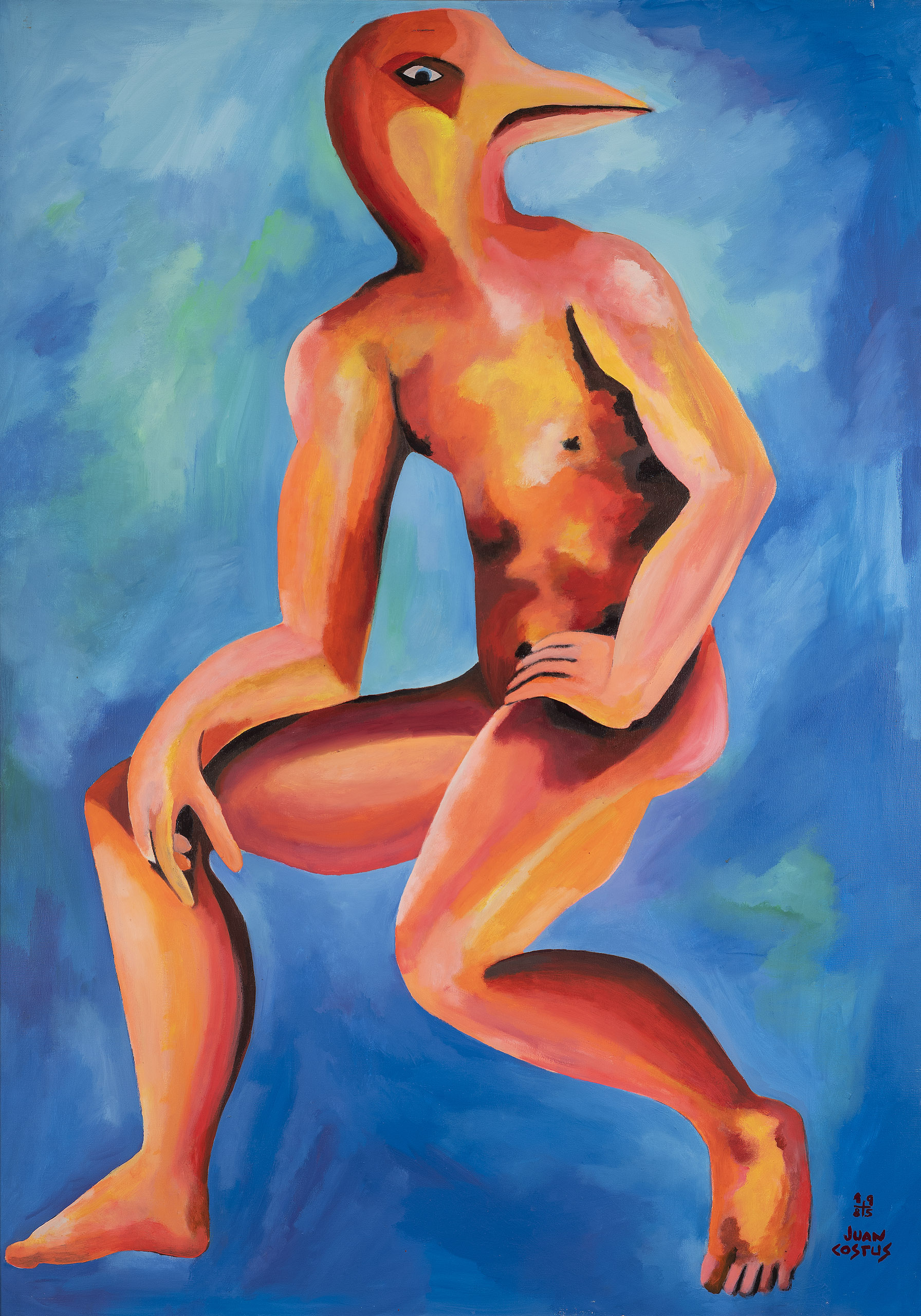
“Hombre Pájaro” is a large-format acrylic on canvas created in 1985 and signed Juan Costus. With its imposing dimensions (161 × 114 cm), the work exemplifies the duo’s ability to expand their characteristic graphic language into a more monumental register. The composition, while rooted in figuration, operates through a system of signs and visual syntheses that elevate the figure into a symbolic presence. The title introduces a hybrid notion—man and bird—yet the painting’s force derives from the tension between its recognizable elements and its highly stylized visual treatment.
Executed in acrylic, the surface reveals a confident and deliberate application of pigment, with areas of saturated flat color contrasted by sharply defined contours. The canvas becomes a stage for a figure that appears both emblematic and dynamic, shaped by the bold linework and chromatic contrasts typical of Costus. The interplay between contour, color fields, and the central figure produces a visual rhythm that guides the viewer’s gaze across the vertical composition, emphasizing both structure and expressive intensity.
The scale amplifies the painting’s impact. Unlike the immediacy of the duo’s small-format works on paper or cardboard, Hombre Pájaro asserts itself through physical presence: the figure occupies the canvas with a commanding clarity that suggests both narrative and archetype. The acrylic medium contributes to this effect, allowing for crisp transitions and a strong graphic identity while maintaining the freshness and luminosity of the color palette.
Signed Juan Costus, the work carries particular documentary relevance within the chronology of their production. The date, 1985, situates the piece during a period of artistic expansion and visual experimentation, when the duo increasingly embraced larger formats and more iconic imagery. The painting reflects this context through its synthesis of symbolism, stylization, and expressive economy.
For collectors, Hombre Pájaro represents a significant example of Costus’s mature aesthetic: bold, unmistakable, and anchored in the duo’s distinctive visual vocabulary. Its size, technical confidence, and emblematic character position it as a key work within any collection of Spanish contemporary art or within broader contexts interested in figurative symbolism and graphic expressiveness.
Ultimately, Hombre Pájaro encapsulates the essence of Costus’s visual language—formal reduction, intense chromatic presence, and a figure that transcends literal representation to inhabit a symbolic and almost mythic dimension. It stands as a powerful and compelling painting where icon, gesture, and identity converge.


 No products in the cart.