
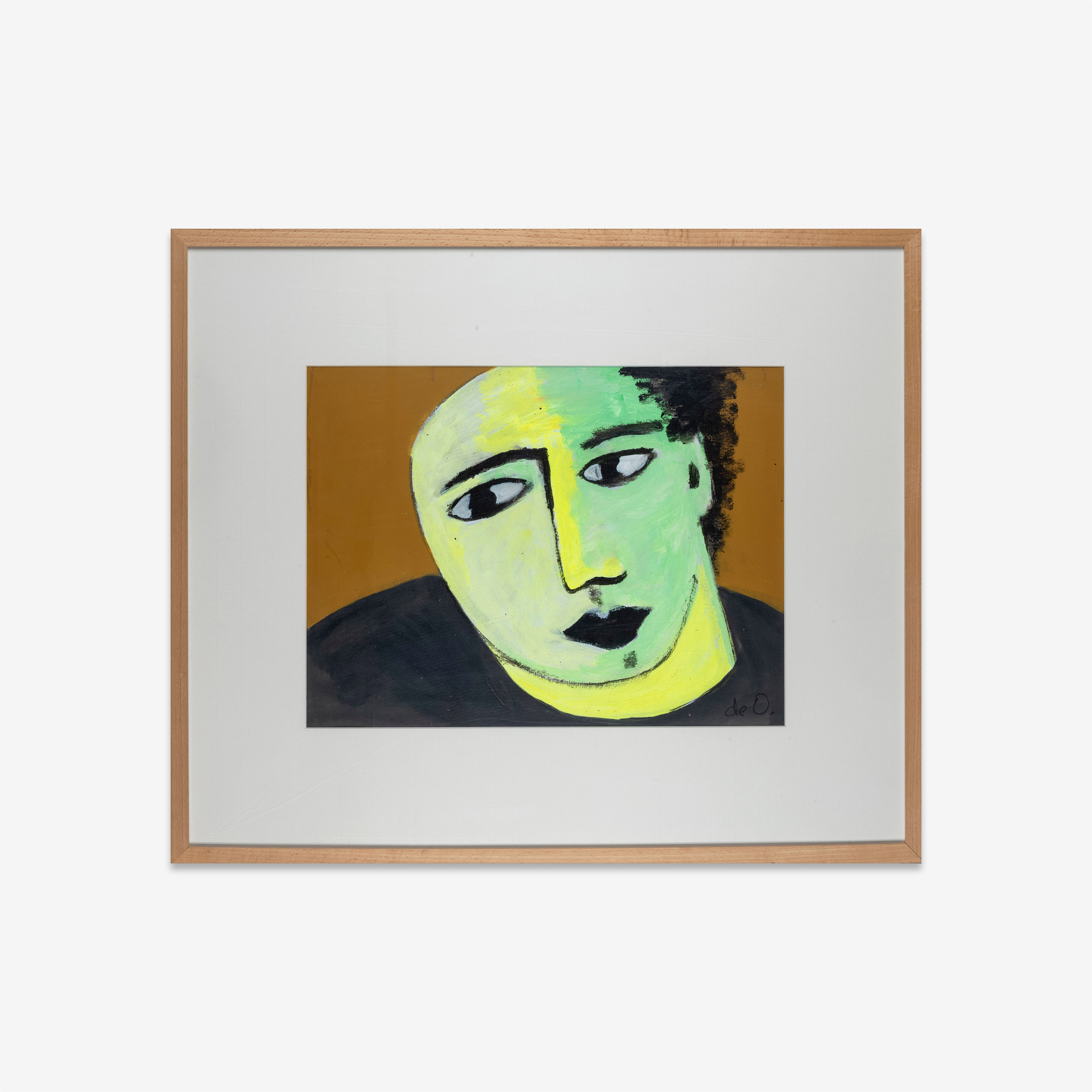
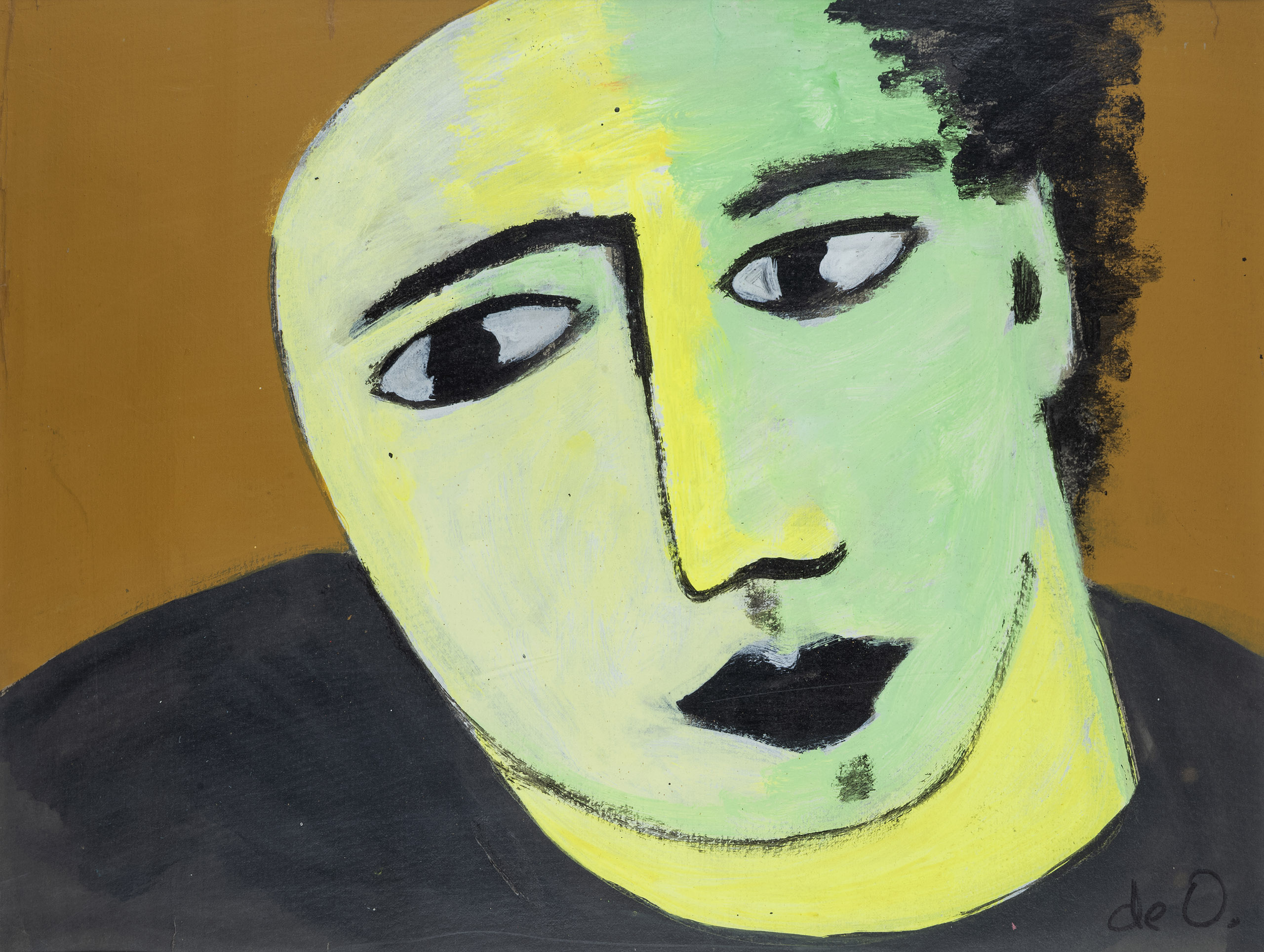
“Hombre Pensativo” is a notable example of the expressive portraiture developed within the Costus universe, particularly in the works attributed to Juan Carrero Galofré during the 1980s. The piece presents a stylized male face rendered with a reduced but highly intentional palette of greens, yellows, blacks, and warm ochre. The chromatic construction of the face—split between yellow and green—creates a perceptual tension that heightens the introspective quality of the subject. This strategic use of color blocking, a hallmark within certain Costus works, reinforces the psychological ambiguity that defines much of the duo’s portrait production.
The exaggerated proportions of the eyes and the simplified geometry of the features suggest both immediacy and deliberateness. Rather than striving for anatomical precision, the portrait prioritizes gesture and emotional architecture. The flattened perspective and dense application of acrylic underline the influence of post-expressionist and pop-inflected aesthetics, movements that resonated strongly in Spain’s cultural reawakening during La Movida. In this context, “Hombre Pensativo” can be understood as more than a portrait; it becomes an examination of identity through distortion, color, and reduction.
From a technical standpoint, the use of acrylic on paper allows for sharp contrasts and visible brush dynamics, giving the work a direct, almost raw presence. Acrylic’s capacity to maintain vibrancy and structure on paper supports the artist’s intention to highlight chromatic conflict and tonal shifts. This approach aligns with the broader methodology of Costus, who frequently embraced immediacy, bold silhouettes, and strong visual rhythm to create works that were accessible yet conceptually grounded.
The portrait also reflects Juan Carrero Galofré’s ongoing interest in human expression as a symbolic language. The subject’s downward gaze and asymmetrical coloring evoke an internal state rather than a narrative moment, turning the figure into a psychological landscape. Within the framework of contemporary collecting, “Hombre Pensativo” offers a compelling example of the Costus legacy—merging pop sensibilities, introspection, and the iconographic identity that made the duo a vital reference point in late 20th-century Spanish art.


 No products in the cart.