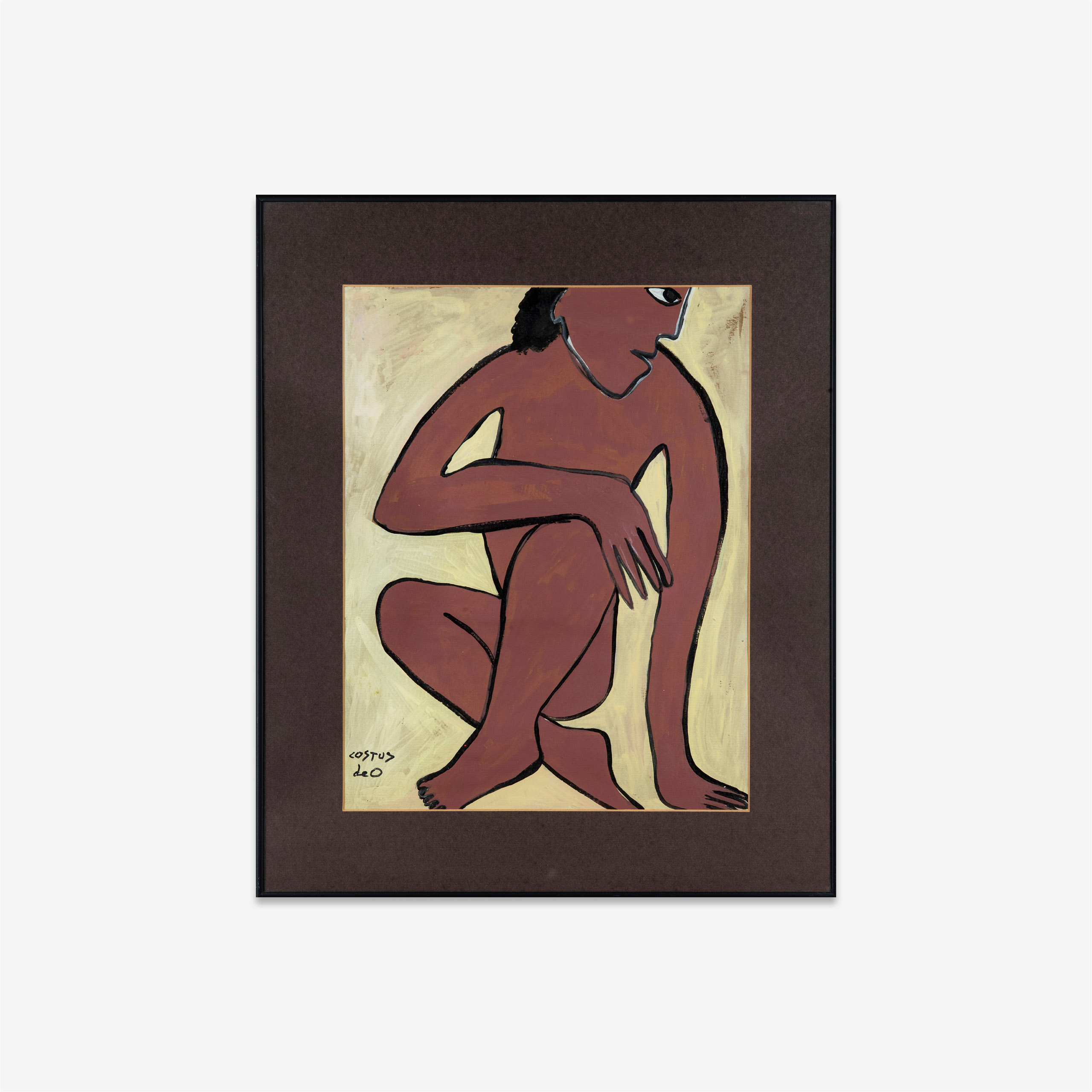
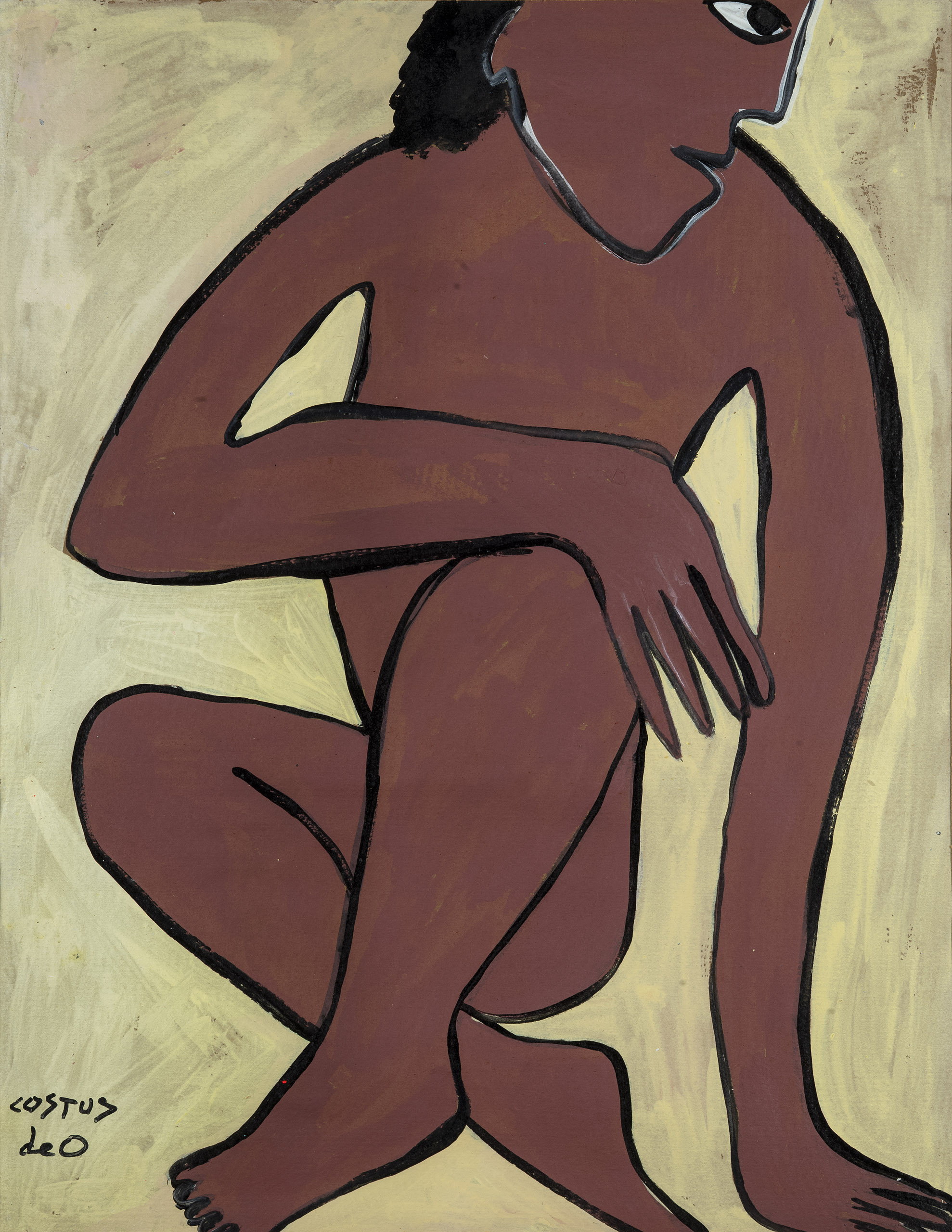
“Nativo marrón” is a representative work by Costus, the artistic duo formed by Juan Carrero Galofré and Enrique Naya, although this piece belongs to the production of Juan Carrero Galofré (Juan de O.). Executed in acrylic on paper, the work demonstrates the artist’s interest in simplified figuration, direct chromatic application, and the construction of the human body through bold contours and flat planes of color.
The composition presents a seated nude figure rendered in a restrained palette dominated by warm brown tones, outlined with decisive black lines that define anatomy without resorting to naturalistic detail. The figure’s posture, compact and self-contained, recalls both primitive sculpture and modernist figuration, positioning the body as a symbolic form rather than a portrait or narrative subject. This reduction of the human figure to essential volumes is characteristic of Juan de O.’s graphic language, developed in parallel with the wider visual experimentation of the Madrid Movida.
The background is treated as a neutral pictorial field, allowing the figure to occupy the visual space with clarity and authority. The absence of contextual elements reinforces the timeless quality of the image, distancing it from anecdotal readings and focusing attention on form, structure, and surface. The controlled use of acrylic on paper produces a matte finish, emphasizing the flatness of color and the immediacy of the gesture, while also preserving the spontaneity associated with works on paper.
From a technical perspective, the work reflects Costus’ interest in combining painting and drawing into a single visual language. The acrylic is applied in an economical manner, with visible brushwork and minimal layering, allowing the material qualities of the paper to remain present. This approach aligns with the duo’s broader practice, which often embraced immediacy, graphic clarity, and a conscious rejection of academic refinement.
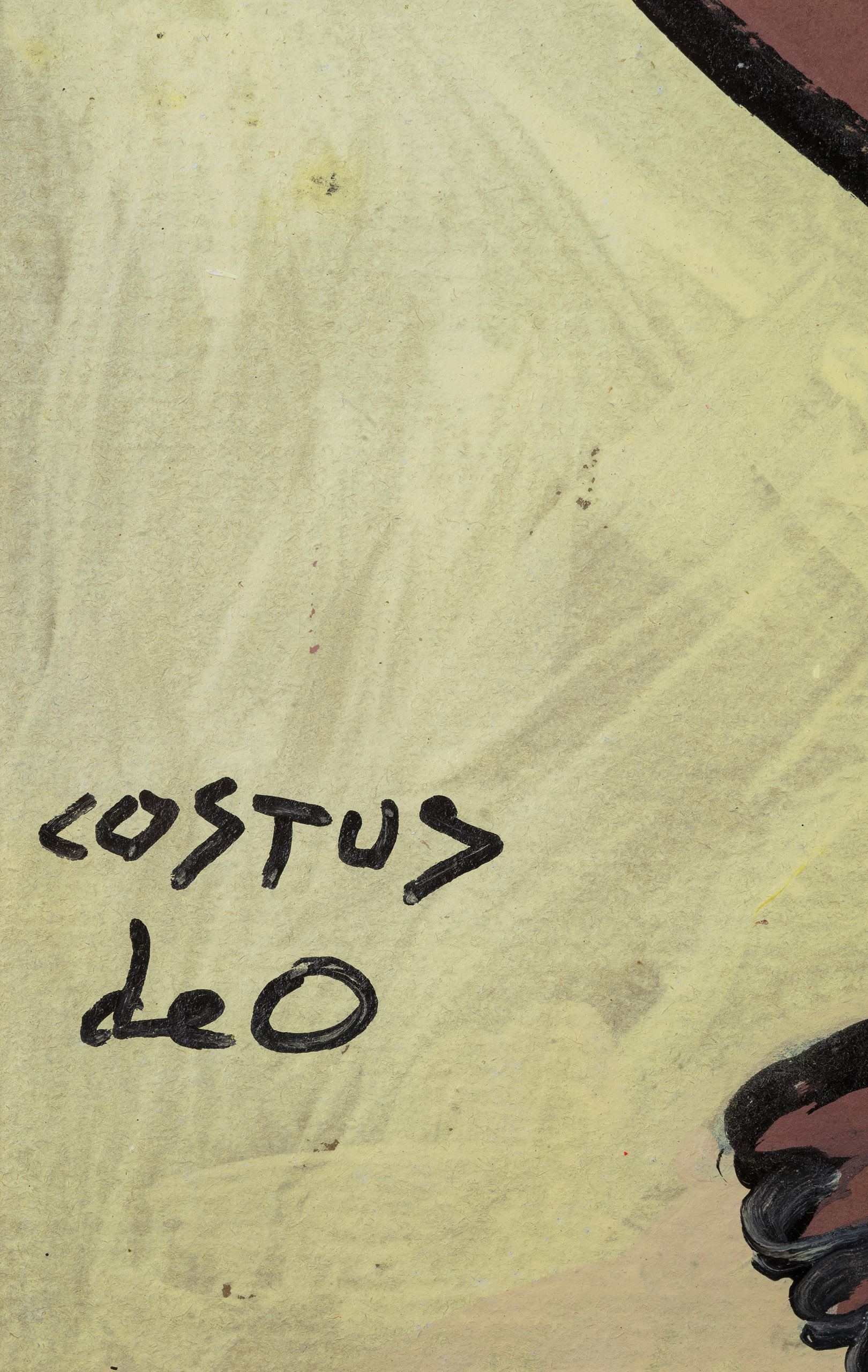
“Nativo marrón” can be situated within Costus’ sustained exploration of the human body as an archetype rather than an individual. The title suggests a reference to origins or essential identity, reinforcing the work’s engagement with the body as a universal form. Signed by Costus de O., the piece holds documentary and artistic significance within the context of Juan Carrero Galofré’s contribution to Spanish contemporary art of the 1980s.
As a signed work on paper, this piece offers collectors a direct and authentic example of Juan de O.’s pictorial language, combining formal rigor with the experimental spirit that defined Costus’ production during a key period of cultural transformation in Spain.


 No products in the cart.