
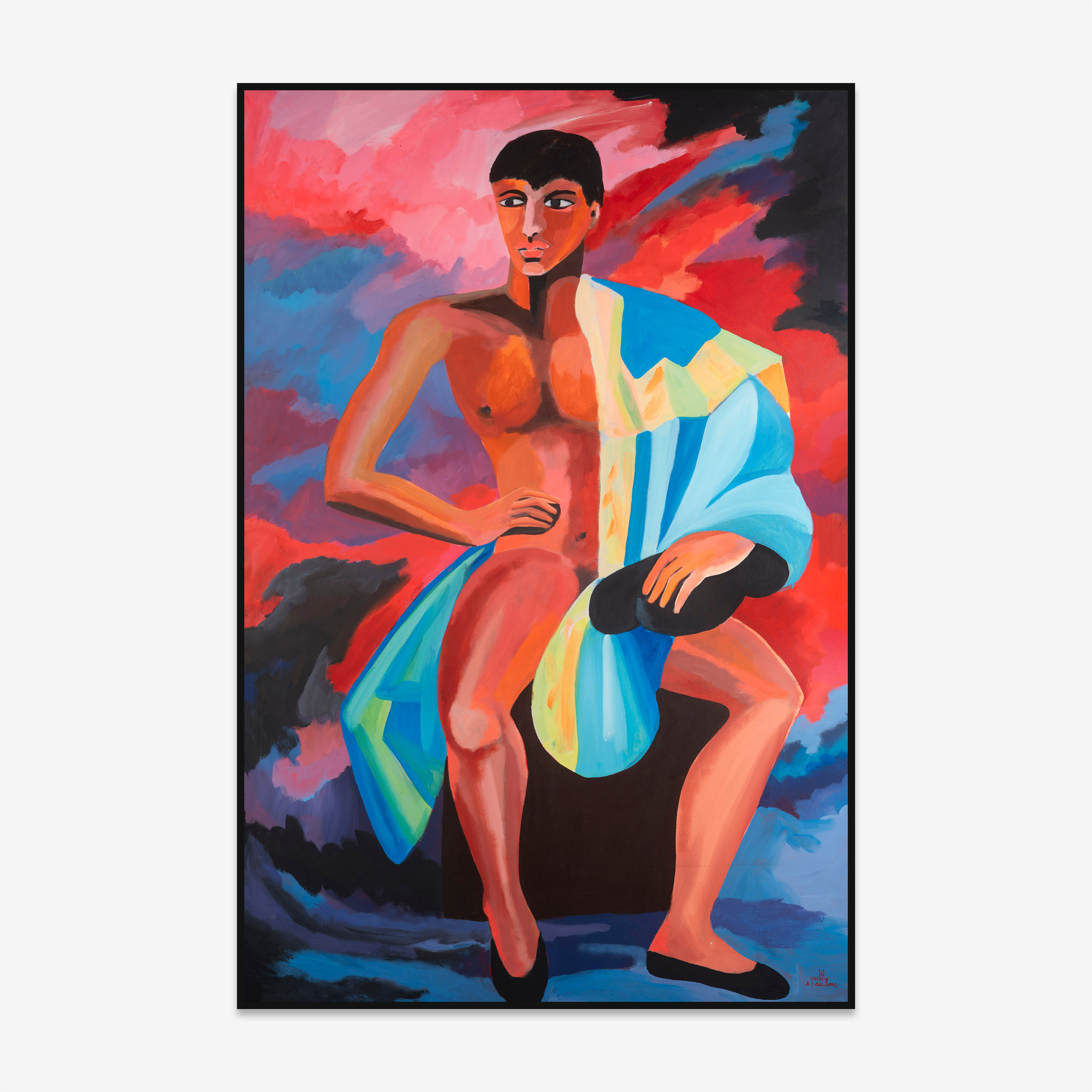
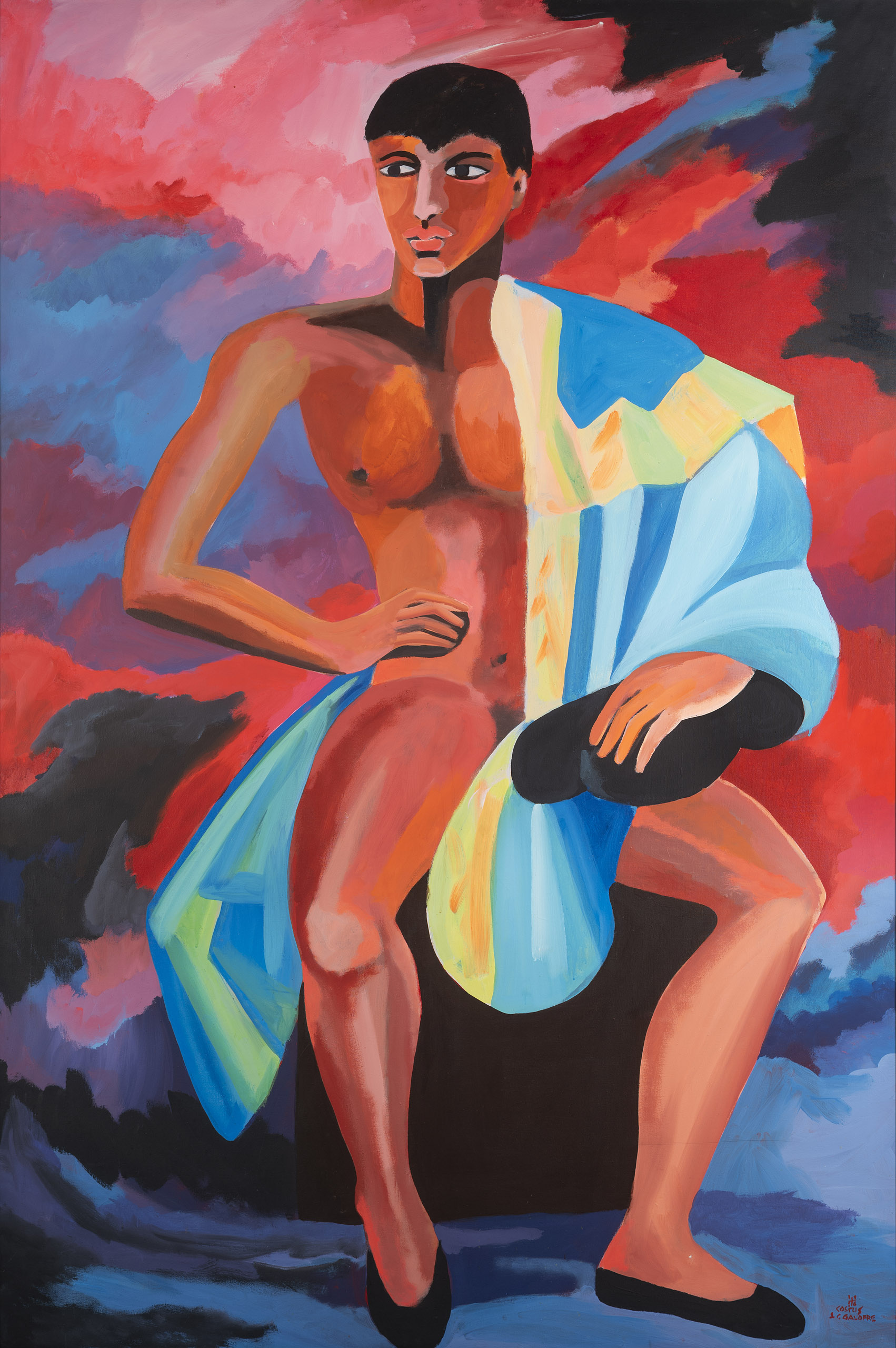
“Torero Desnudo” is a formally ambitious work that synthesizes the Costus project’s interest in figurative monumentality and vivid chromatic staging. Executed in acrylic on canvas in 1986 and signed “Costus J. C. Galofre,” the painting presents a seated figure draped partially in a folded cloth—an iconography that evokes classical portraiture and historical costume while being resolutely contemporary in its treatment. The composition occupies a large pictorial field (195 × 131 cm), allowing Juan Carrero to develop an expansive visual presence where the figure functions as both subject and sculptural object. The scale itself signals the work’s intention for prominent display and gives the painted body a physical authority that is palpable in person.
Color and surface treatment are central to the work’s visual strategy. A saturated palette of warm flesh tones is set against a dynamic backdrop of crimson, cerulean and deep violet washes that suggest atmospheric depth without literalizing space. The figure’s drapery, rendered in cool blues and pale yellows, establishes a counterpoint that clarifies the silhouette and introduces a chromatic rhythm across the canvas. Acrylic as a medium enables luminous, layered passages and crisp edges between planes of color; the artist’s brushwork alternates between broad, gestural strokes for the background and controlled modelling for the figure’s musculature. This balance of painterly freedom and structural discipline demonstrates Carrero’s technical command and his capacity to orchestrate large-scale pictorial effects.
Formally, Torero Desnudo negotiates a productive tension between stylisation and anatomical observation. The figure is posed with an assured posture that recalls conventions of the heroic portrait, yet the simplified modelling and deliberate flattening of certain planes locate the work in a modernist register. The partially draped costume alludes to theatricality and ritual—references consistent with Costus’ broader interest in performance, identity and staged personae—while the directness of the gaze and the carefully considered hand gestures anchor the composition in human presence. These choices reflect a mature approach to figurative painting that privileges symbolic resonance and visual clarity over anecdotal detail.
From a provenance and collecting perspective, the painting is representative of Juan Carrero Galofré’s contribution to the Costus partnership during the mid-1980s, a period in which the duo consolidated a recognizable aesthetic language combining pop-inflected color, graphic clarity and figurative inquiry. Signed works of this scale are particularly relevant to institutions and private collections seeking pivotal pieces from that moment in Spanish contemporary art. The painting’s condition, materiality and commanding dimensions make it suitable for institutional loans, museum hangings and focused curatorial projects examining late 20th-century reinterpretations of classical motifs. For the collector, Torero Desnudo offers both visual immediacy and a clear contextual link to an influential creative network.
In sum, Torero Desnudo is a work that exemplifies Costus’ ability to reconceptualise traditional subject matter through a modern pictorial vocabulary. Its technical refinement, chromatic audacity and compositional rigor provide a substantial contribution to the artist’s oeuvre and to the critical narrative of Spanish figurative painting in the 1980s. Displayed at scale, the painting commands attention while offering layered interpretive possibilities—from considerations of performative identity to the dialogue between classical reference and contemporary pictorial invention.


 No products in the cart.