
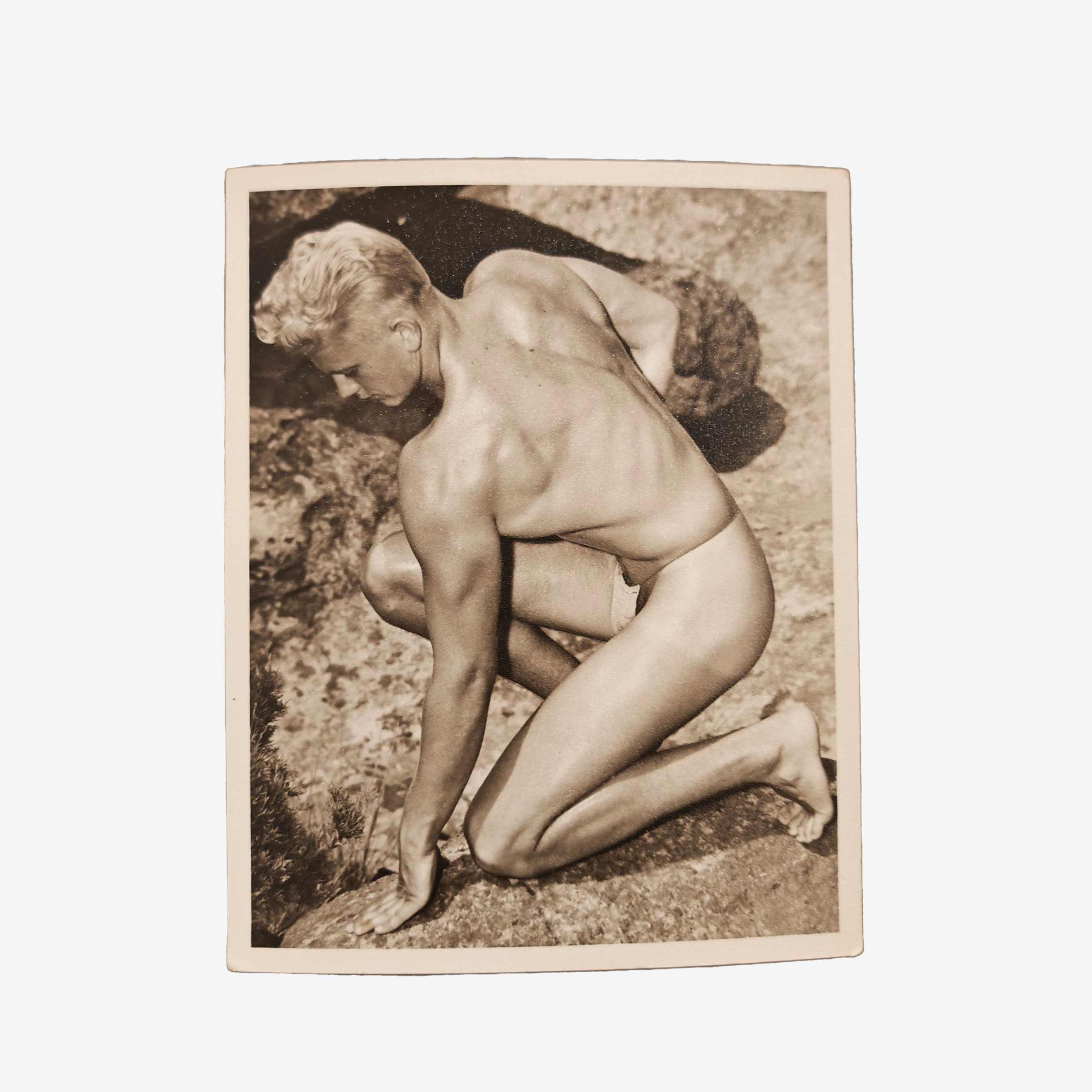
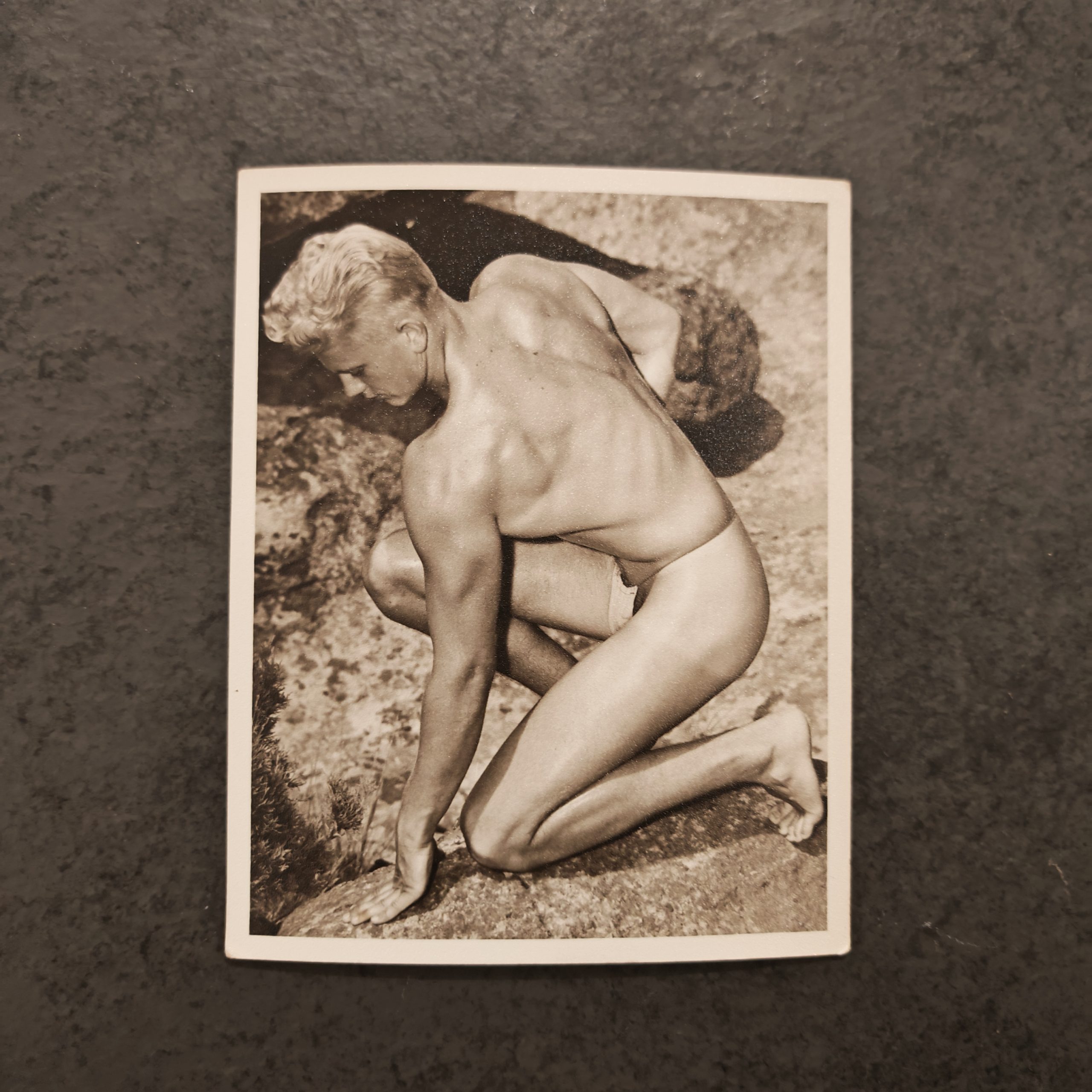
The vintage photograph Don Whitman: Bill Geiskieng stands as a sophisticated representation of mid-20th-century physique culture. During the 1950s, the Western Photography Guild in Denver became a sanctuary for the artistic study of the masculine form. In this specific work, Don Whitman captures model Bill Geiskieng in a crouched, dynamic pose upon a rocky landscape. This composition intentionally emphasizes the anatomical harmony between the human body and the natural world. Consequently, the image serves as a precursor to contemporary figurative photography, making it a vital acquisition for serious collectors of vintage art photography
Regarding the technical execution, Don Whitman: Bill Geiskieng demonstrates an exceptional mastery of natural light and shadow. The artist utilizes a high-contrast silver gelatin process to define the muscular ripples of the model’s back and torso. By choosing an outdoor setting, Whitman avoids the artificiality of studio lighting, which results in a more raw and authentic aesthetic. Furthermore, the low-angle perspective grants the subject a heroic quality, elevating the photograph from a mere study to a piece of fine art. Scholars of 20th-century photographic techniques frequently cite Whitman’s ability to balance textures, such as skin against stone, as a hallmark of his professional skill.
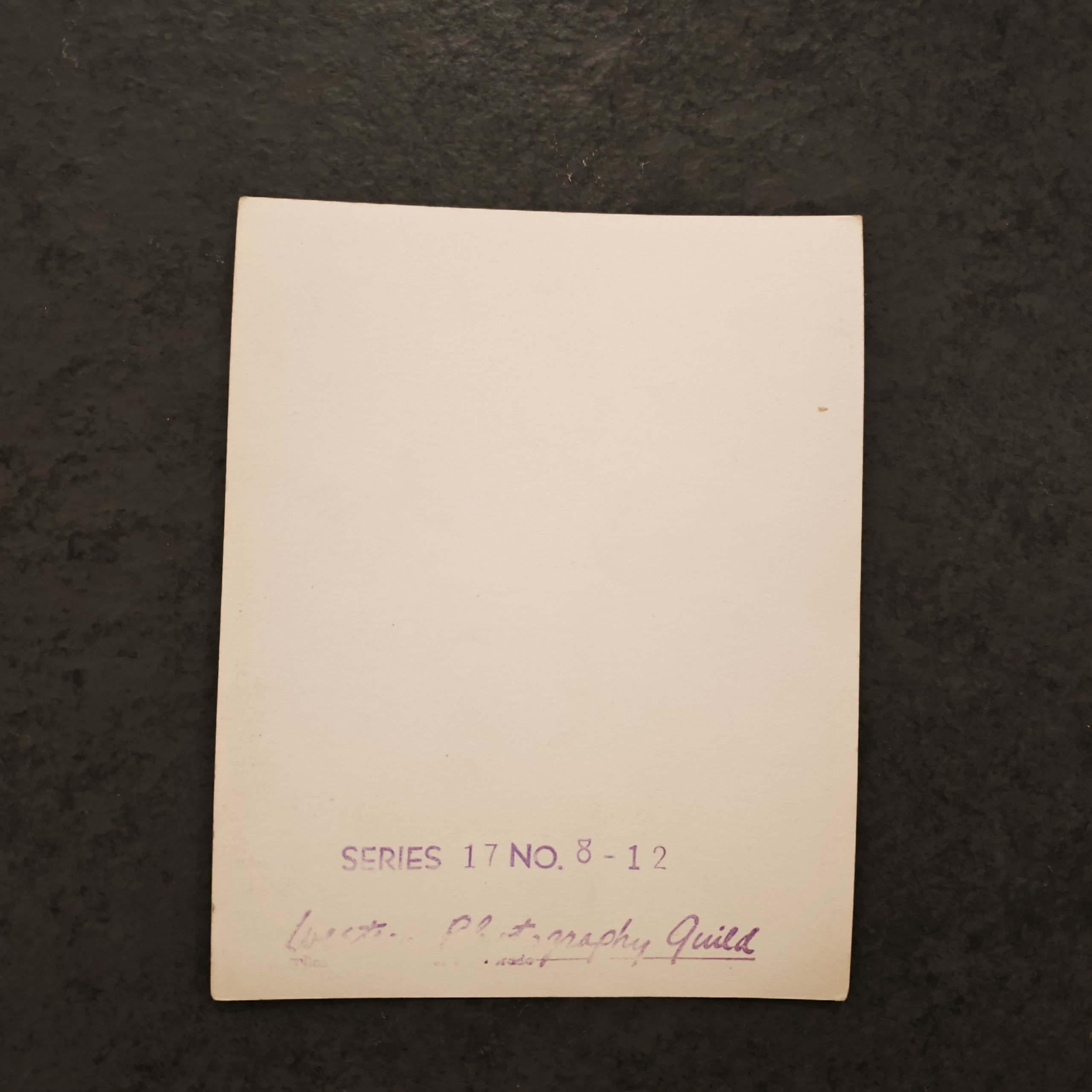
The physical object of Don Whitman: Bill Geiskieng carries immense historical value due to its verified provenance. On the reverse side, the print features the authentic “Series 17 No. 8-12” stamp from the Western Photography Guild. This documentation proves its origin from one of the most influential studios of the era. Don Whitman played a crucial role in legitimizing the male form as a subject of high art during a period of significant social constraint.


 No products in the cart.