
A Flirtation with Fantasy and Power
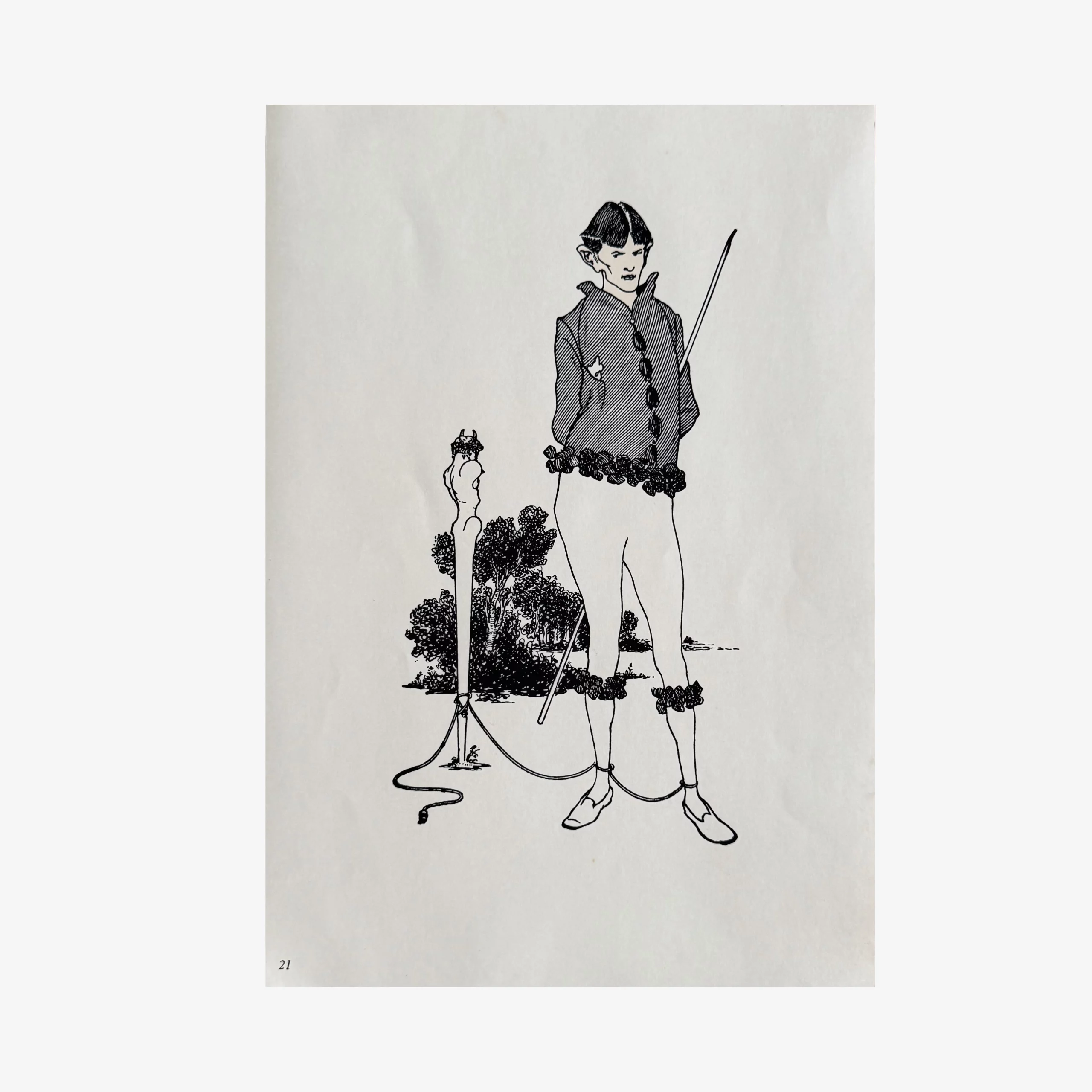
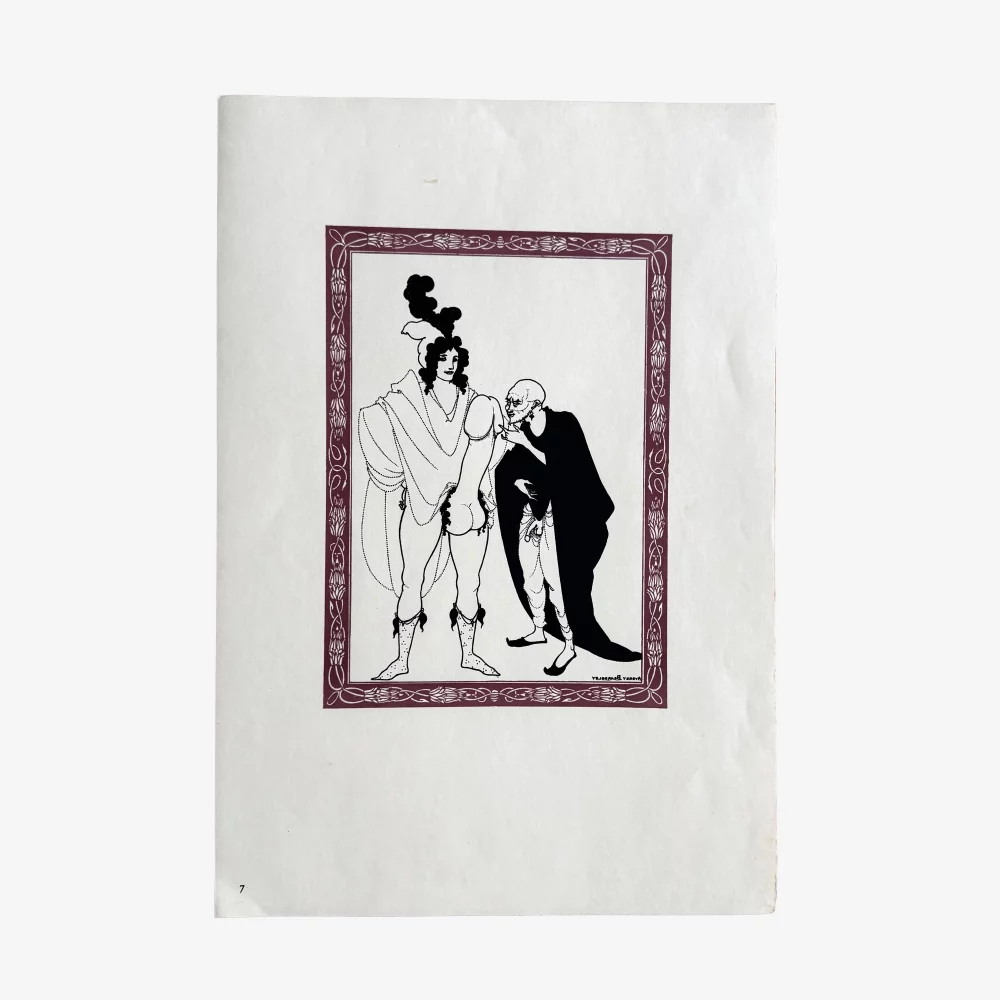
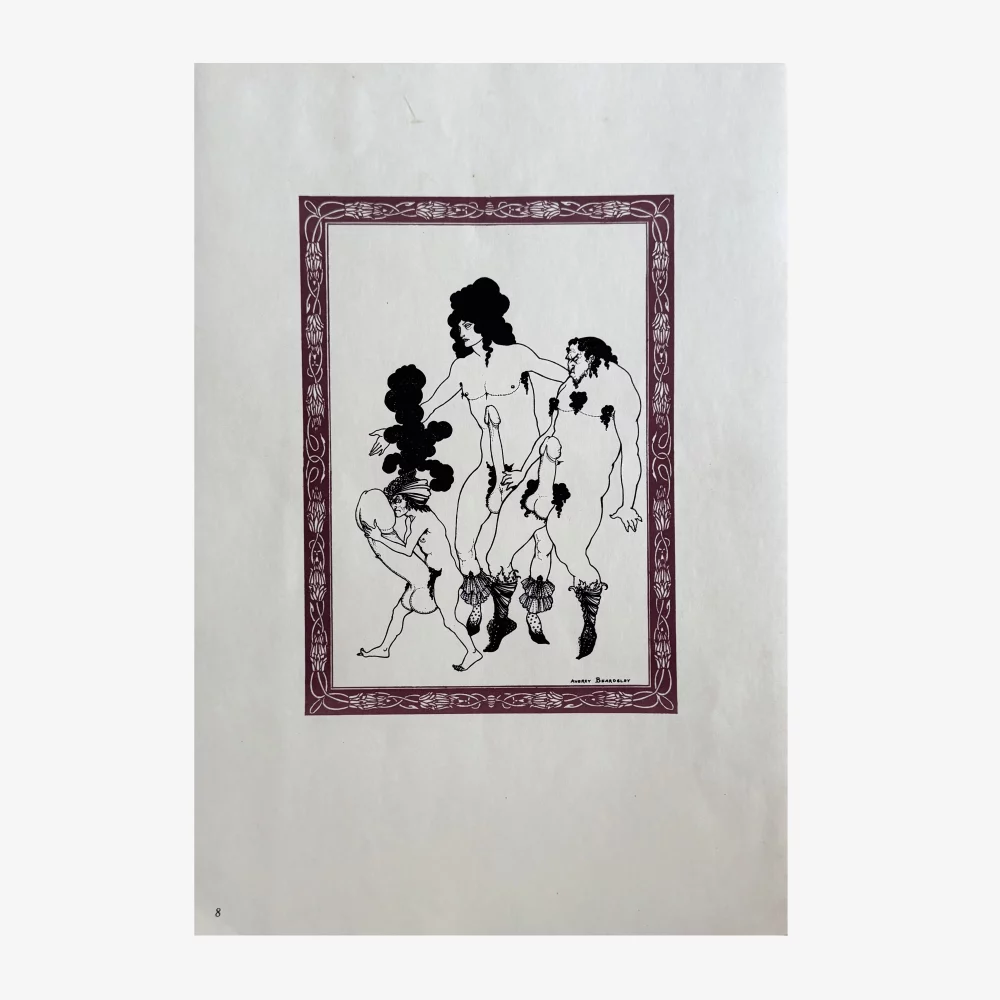
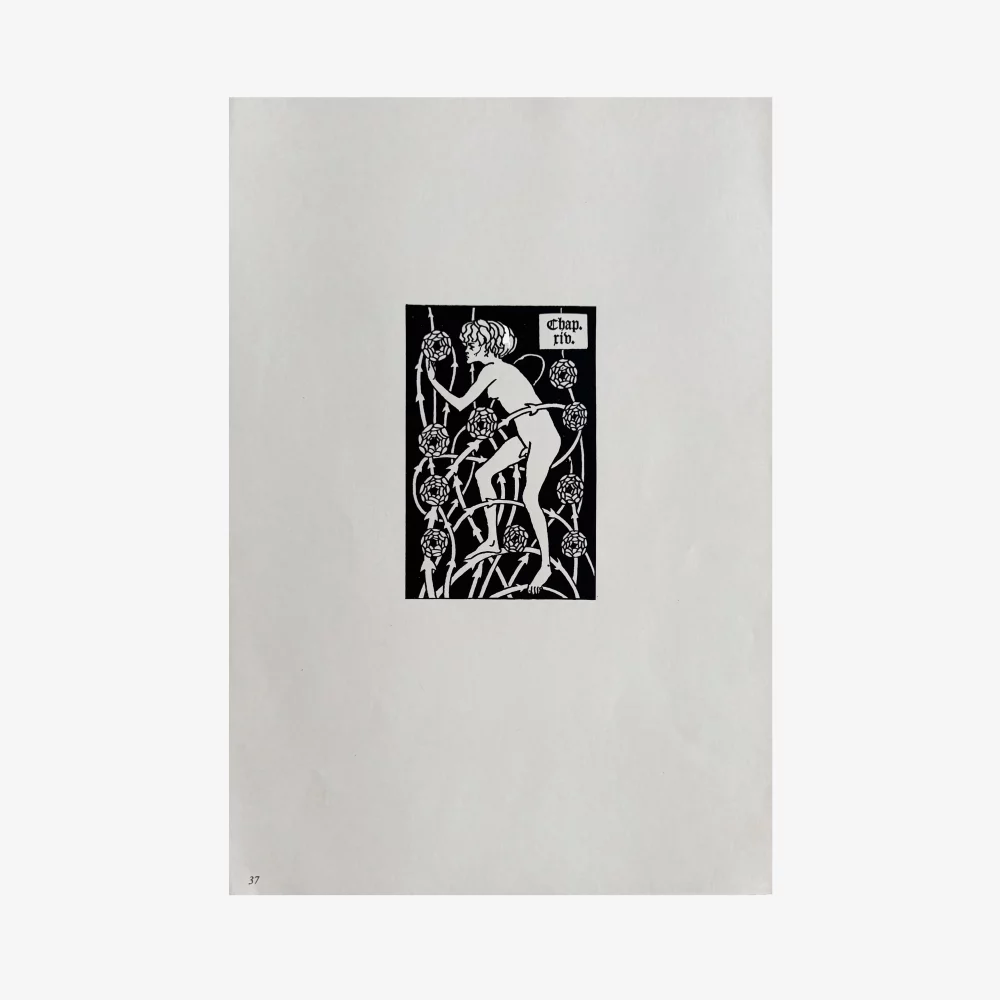
This striking illustration, attributed to Aubrey Beardsley, presents a figure that blends eroticism, theatricality, and fantasy. The androgynous character, dressed in tight-fitting attire adorned with floral garlands, stands confidently before a whimsical landscape. Their pointed ears and short hair give them an elfin appearance, suggesting a character from myth, theatre, or dream.
The figure holds a long whip and stands with their legs loosely bound by a cord. The stance feels both controlled and performative. Through subtle gestures and fine lines, Beardsley plays with themes of power, restraint, and elegance. These are recurring elements in his visual language, often shaped by his deep engagement with literature, desire, and theatrical traditions.
A Scene Both Playful and Provocative
Despite its minimalism, the image carries layers of symbolic tension. The costume resembles a jester’s outfit, while the floral garlands recall pagan fertility rites. At the same time, the cord and the figure’s posture evoke a sense of stylized submission or ritual. This ambiguity, rich in erotic charge and irony, reflects Beardsley’s ability to merge beauty and taboo within a single image.
The refined linework is typical of Beardsley’s mature style, with its deliberate use of black ink, decorative detail, and bold contrast. These qualities reflect his admiration for Japanese woodblock prints and his place within the Art Nouveau and Decadent movements.
Context and Edition
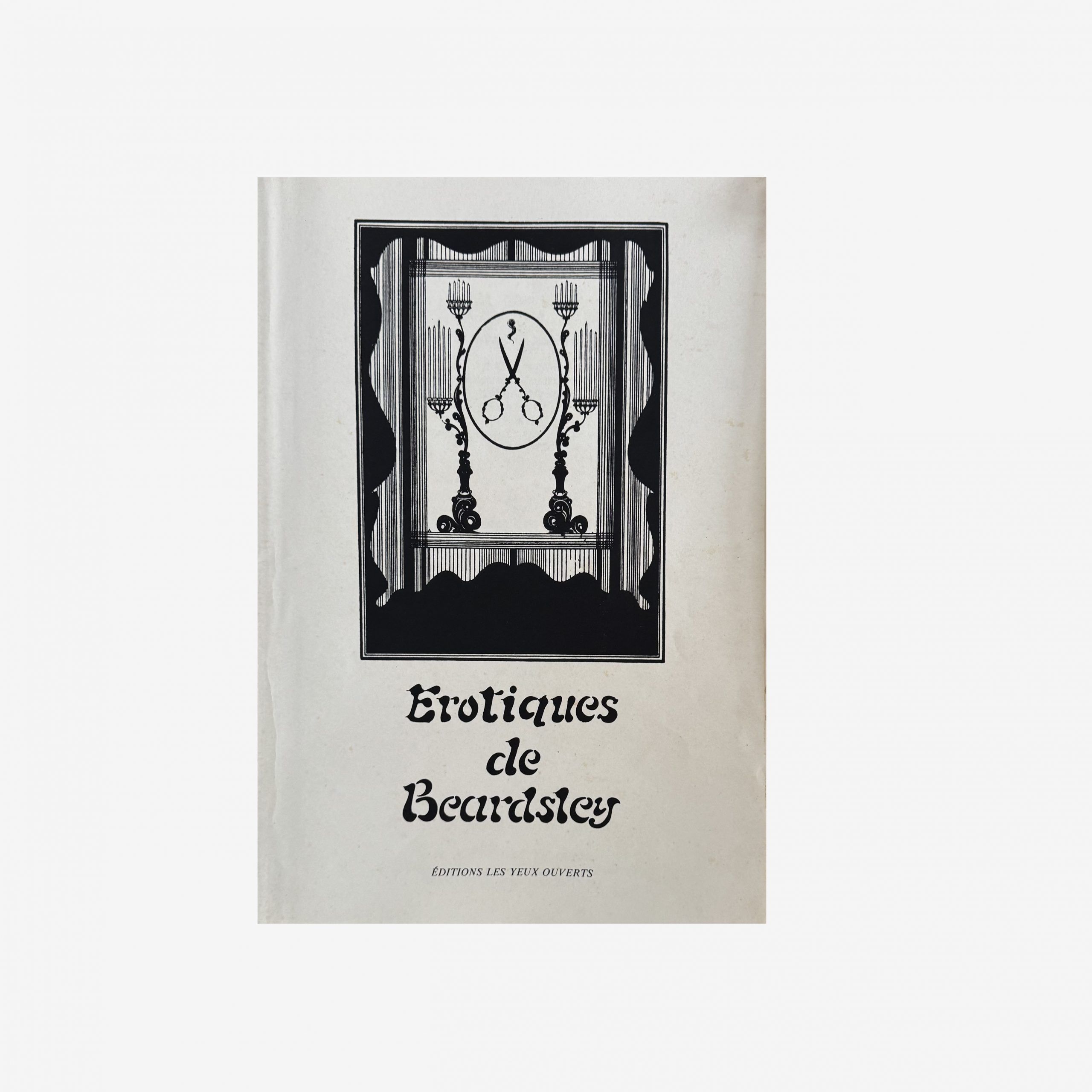
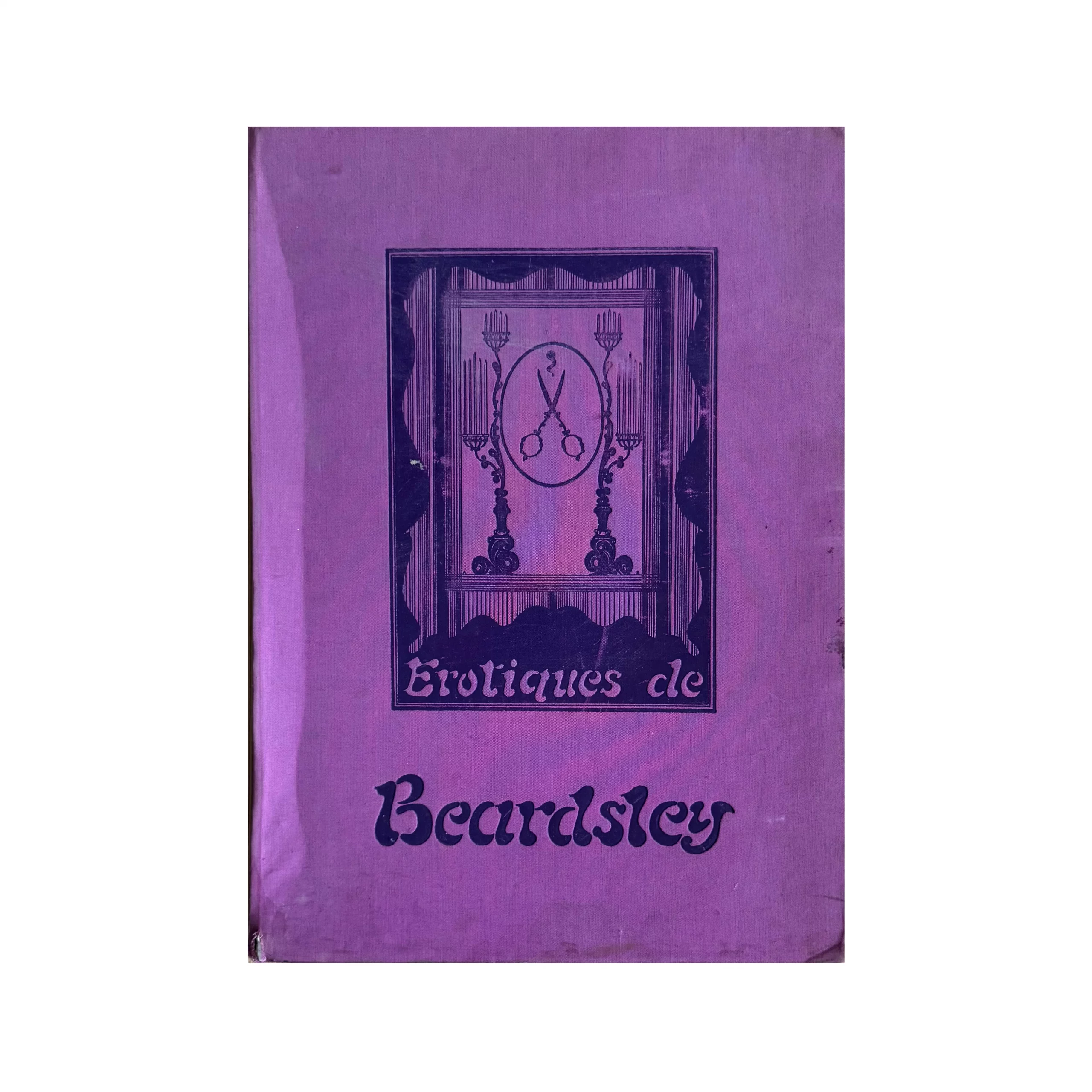
This illustration appears on page 21 of the book Érotiques de Beardsley, published in France by Éditions Les Yeux Ouverts. The edition, likely printed in the mid-20th century, compiles some of the artist’s most daring and sensual works. While the exact origin of this specific drawing remains uncertain, it fits within the erotic and theatrical world Beardsley created in illustrations for works like Lysistrata or Salomé.
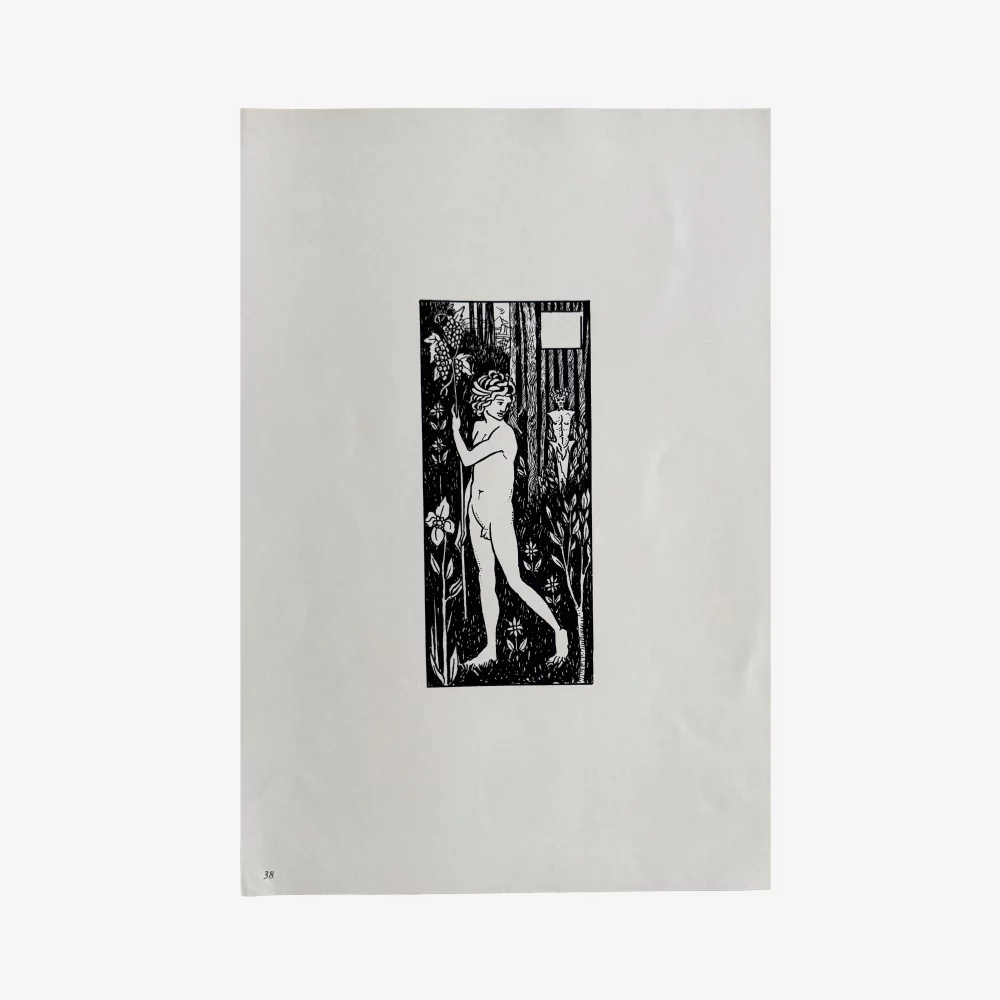
These images were never mere decoration—they were provocations. Beardsley used line and gesture to explore desire, ambiguity, and aesthetics beyond the moral boundaries of his time.

 No products in the cart.