


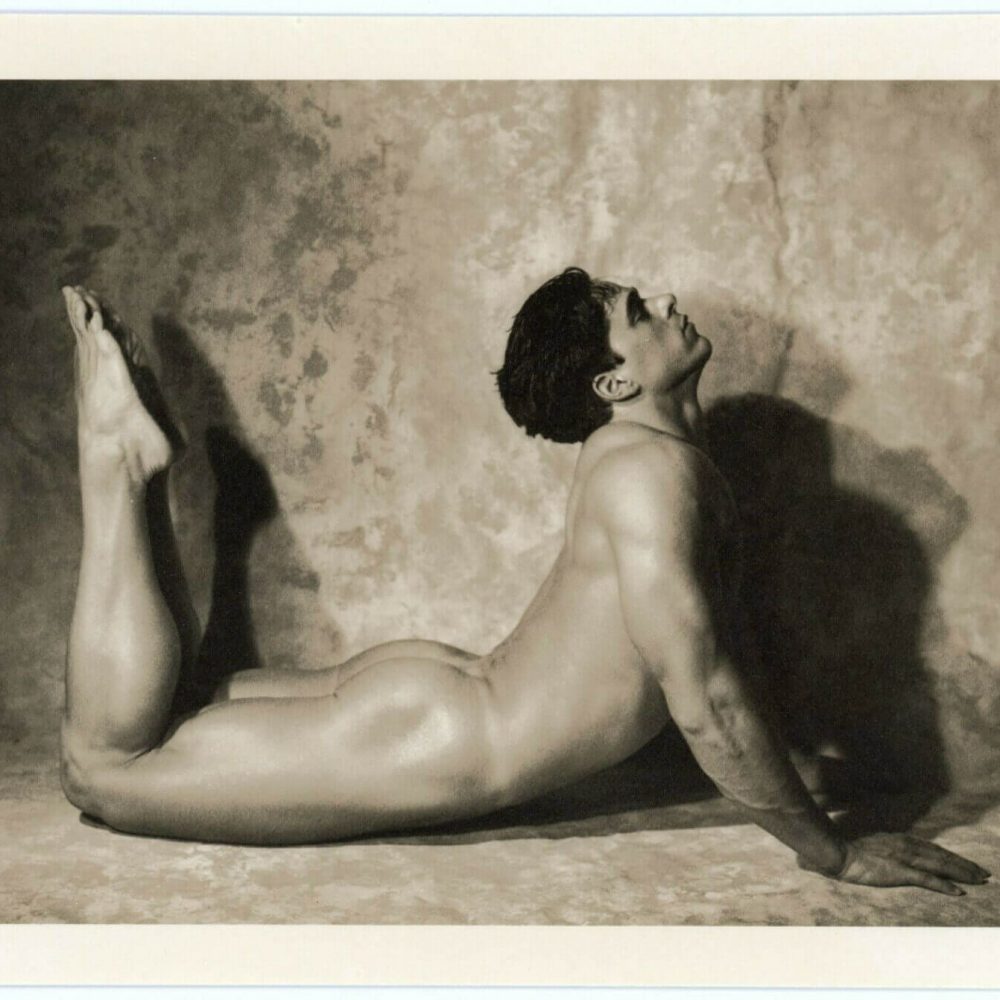
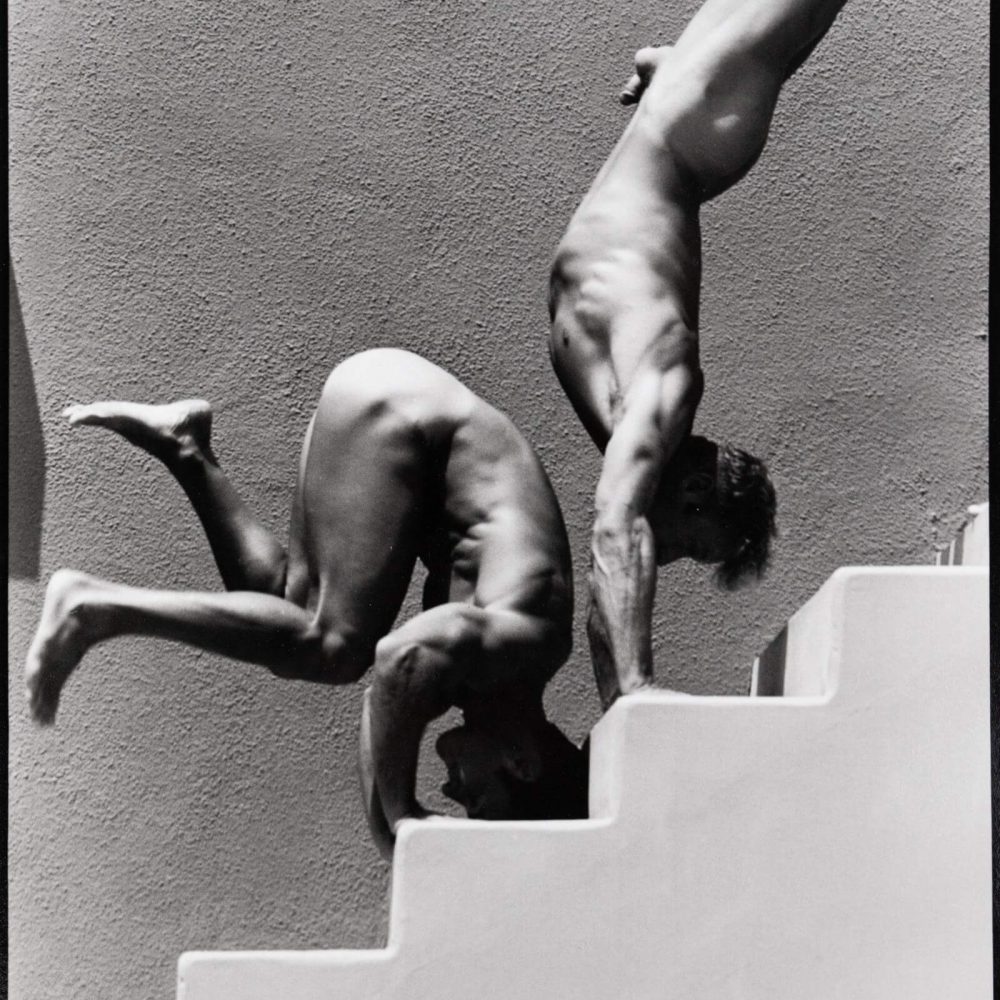
Francis Neff was a photographer deeply invested in the aesthetic ideals of the early 20th century. In this significant work, titled “Le Discobole,” the artist pays a direct tribute to classical Greek antiquity. The composition references the famous ancient sculpture of the Discus Thrower. Consequently, Neff uses the photographic medium to translate frozen stone into living, breathing anatomy. By placing the subject against a deep, void-like black background, the artist removes all contemporary distractions. This choice forces the viewer to focus entirely on the physical silhouette and the tension of the pose. Therefore, the work serves as a bridge between the historical athletic ideal and the modern photographic gaze.
The technique displayed in this photograph is a masterclass in chiaroscuro lighting. Neff uses a single, directional light source to carve the musculature out of the darkness. This approach creates a high-contrast environment that highlights every anatomical detail with surgical precision. Furthermore, the silver gelatin process provides a rich tonal range. It allows for soft transitions in the highlights while maintaining deep, velvety shadows. The circular disc held by the athlete acts as a geometric focal point. Similarly, the careful positioning of the limbs creates a sense of rhythmic balance. As a result, the image achieves a monumental quality. It feels like a permanent monument to physical discipline and classical proportions.












 No products in the cart.