
Gerald G. Granger and American Social Photography
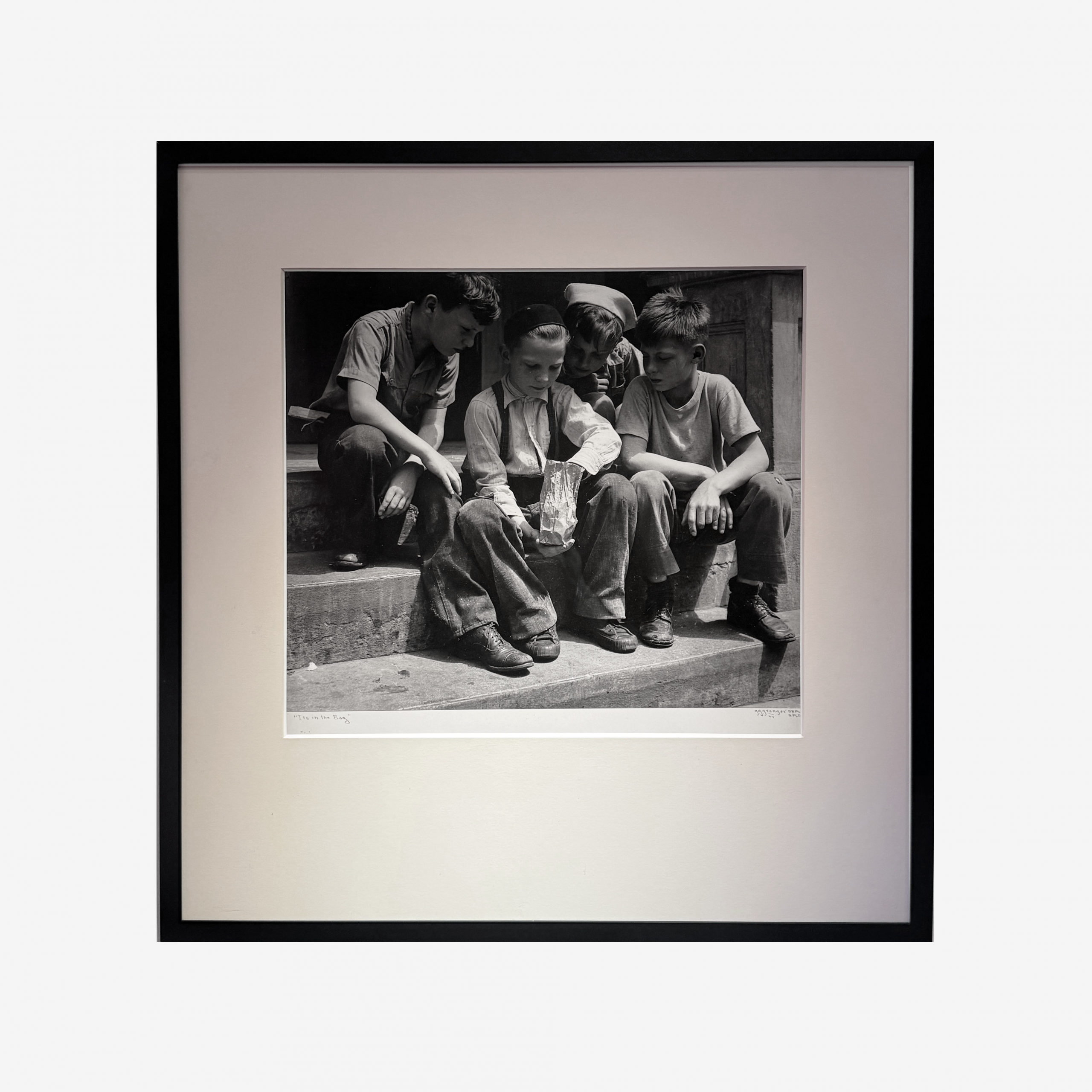
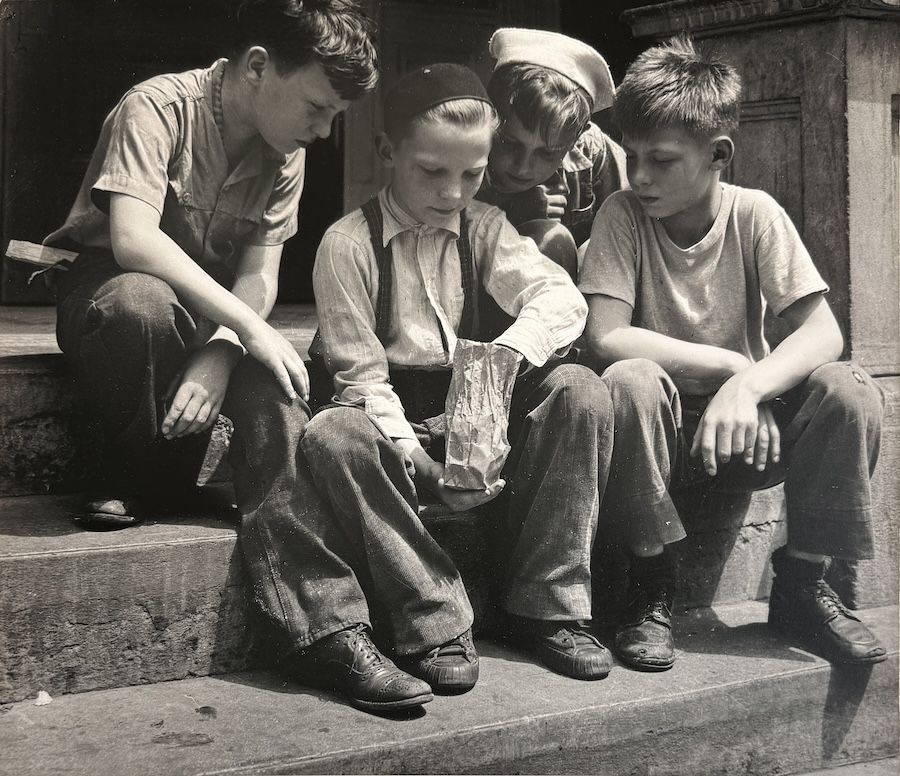
Gerald G. Granger (U.S.A., 1903–1946) worked during a key moment in American photography. At that time, the medium was moving away from pictorialism and toward documentary realism. His 1945 photograph It’s in the Bag captures this shift with clarity and restraint.
Granger created the image during the final year of his life and at the close of World War II. As a result, the photograph reflects the quiet, observant mood of the mid-1940s. Rather than staging the scene, he focused on everyday urban life. Through this approach, he elevated a simple moment into a strong social document.
Composition and Use of Light
In this work, Granger carefully controls light and structure. He places four figures on a set of stone steps, which creates a natural visual rhythm. Because of this arrangement, the viewer’s eye moves easily toward the center of the image. The paper bag becomes the main point of attention.
Moreover, Granger likely used natural afternoon light. This choice produces strong contrasts across clothing and faces. Consequently, the figures gain a clear sense of volume. At the same time, light and shadow highlight textures. The rough stone, worn fabric, and crumpled paper all feel distinct. These details reveal the precision of the silver gelatin process.
Narrative and Artistic Intent
Beyond technique, It’s in the Bag represents a broader change in American photography. During this period, photographers began to treat everyday scenes as fine art. Granger avoids sentimentality. Instead, he presents the moment with calm objectivity.
Each figure shows a different sense of curiosity and anticipation. However, all four share the same focus. Because of this unity, the image feels self-contained. The viewer observes a private moment without disturbing it. This quality defines strong street photography.
Historical and Collectible Value
For collectors and curators, this photograph holds lasting value. It reflects the ideals of American Social Realism after the war. At the same time, it captures how simple shared experiences gained new meaning in that era.
Granger’s late works remain rare. In addition, this image shows exceptional balance and framing. For these reasons, It’s in the Bag stands as a strong acquisition. It suits collections focused on 20th-century American masters and the development of documentary photography.




 No products in the cart.