
Giorgio de Chirico – “Agamonte”
This hand-colored lithograph by Giorgio de Chirico reflects the artist’s deep and lasting interest in classical mythology. Created during his later period, the work revisits themes that shaped his Metaphysical Painting from the early twentieth century. De Chirico did not abandon antiquity in his mature years. Instead, he returned to it with clarity, color, and renewed theatrical presence.
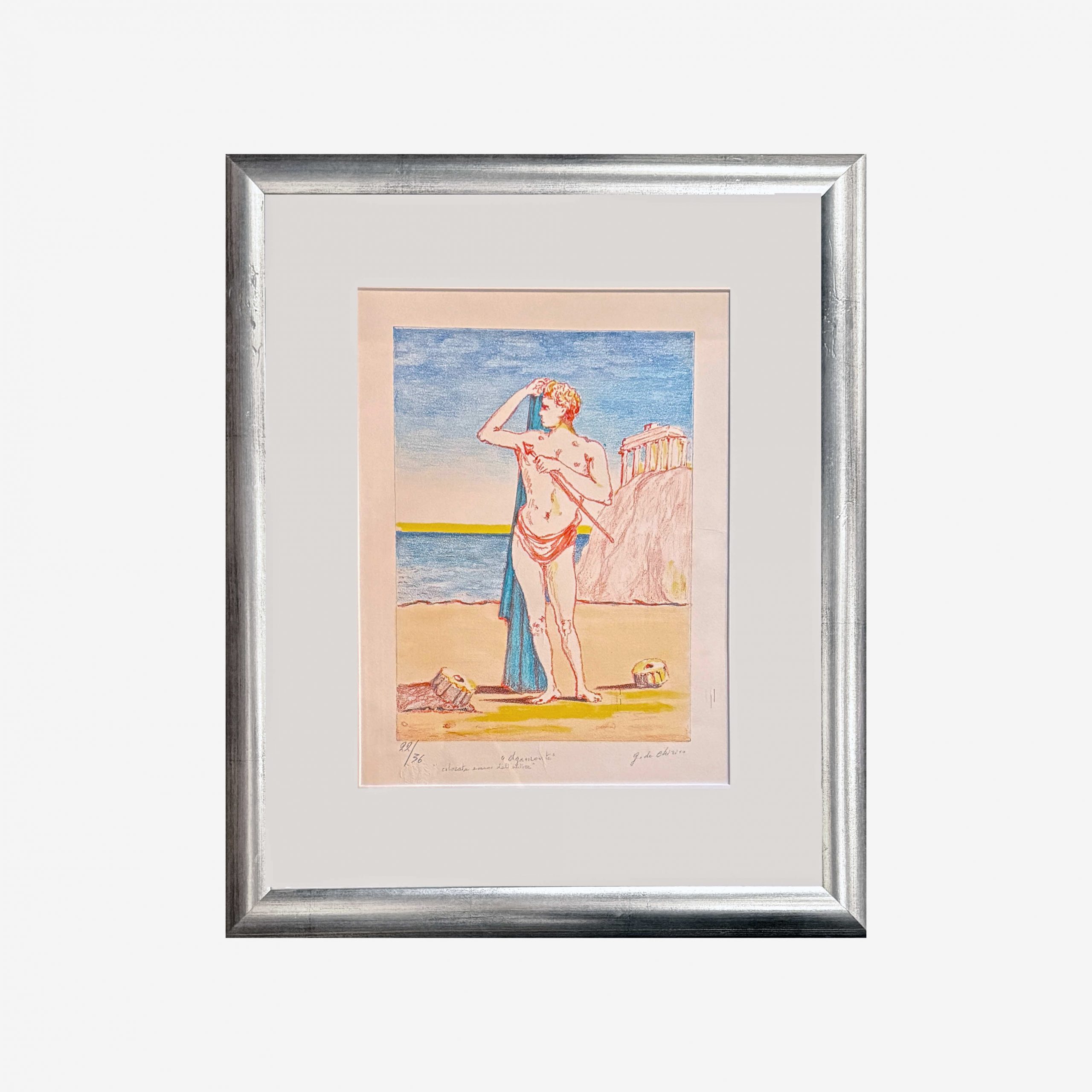
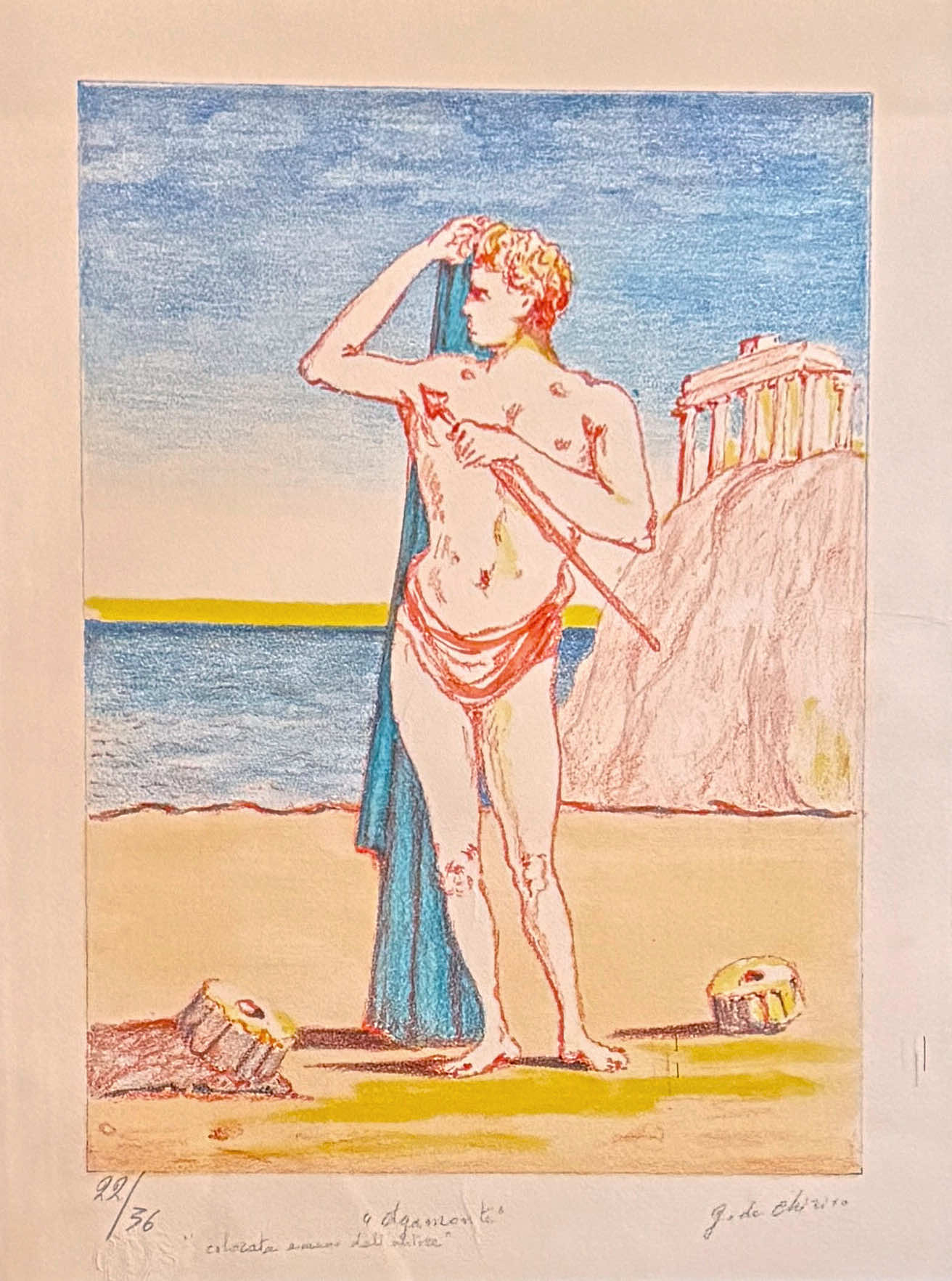
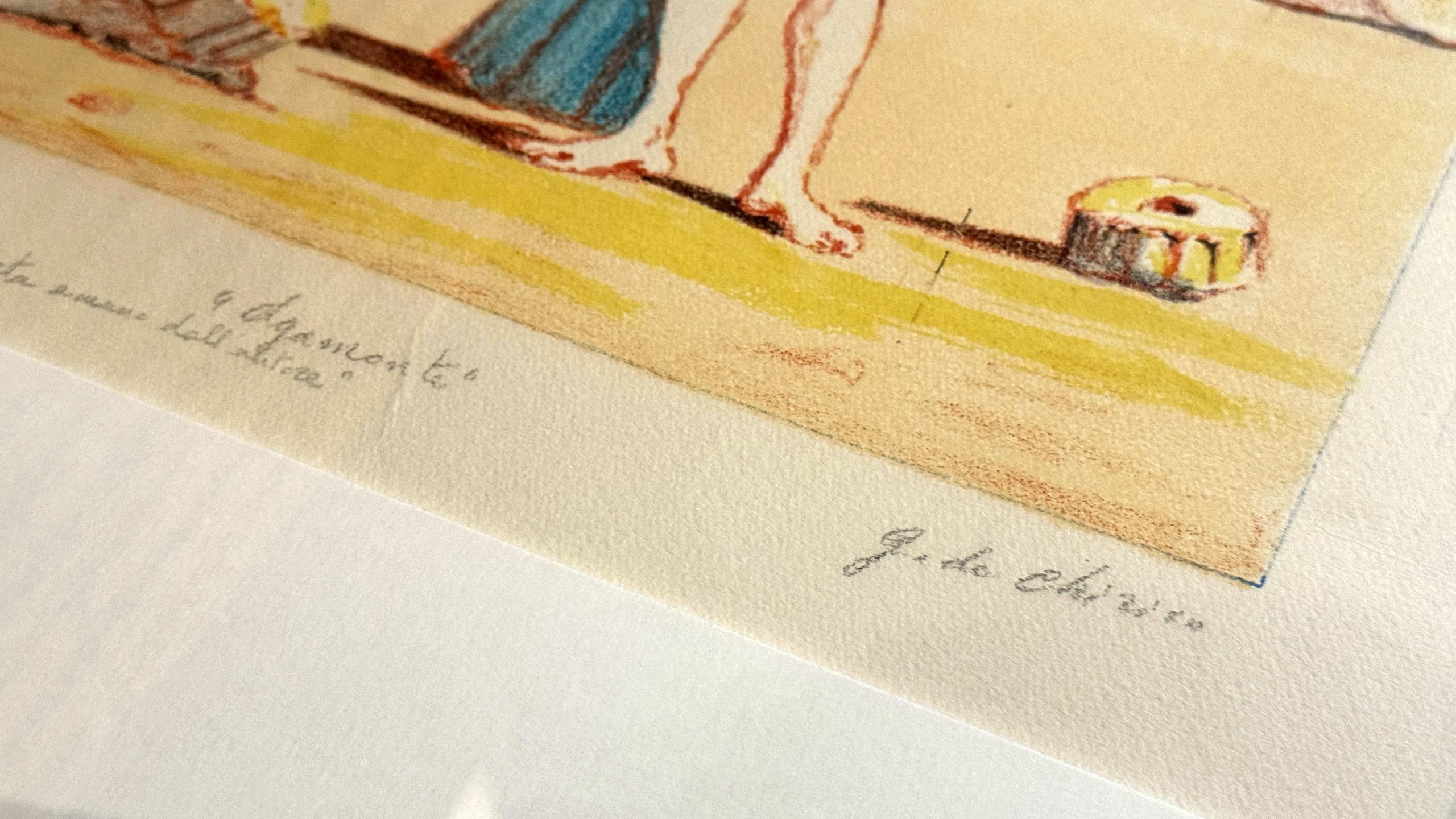
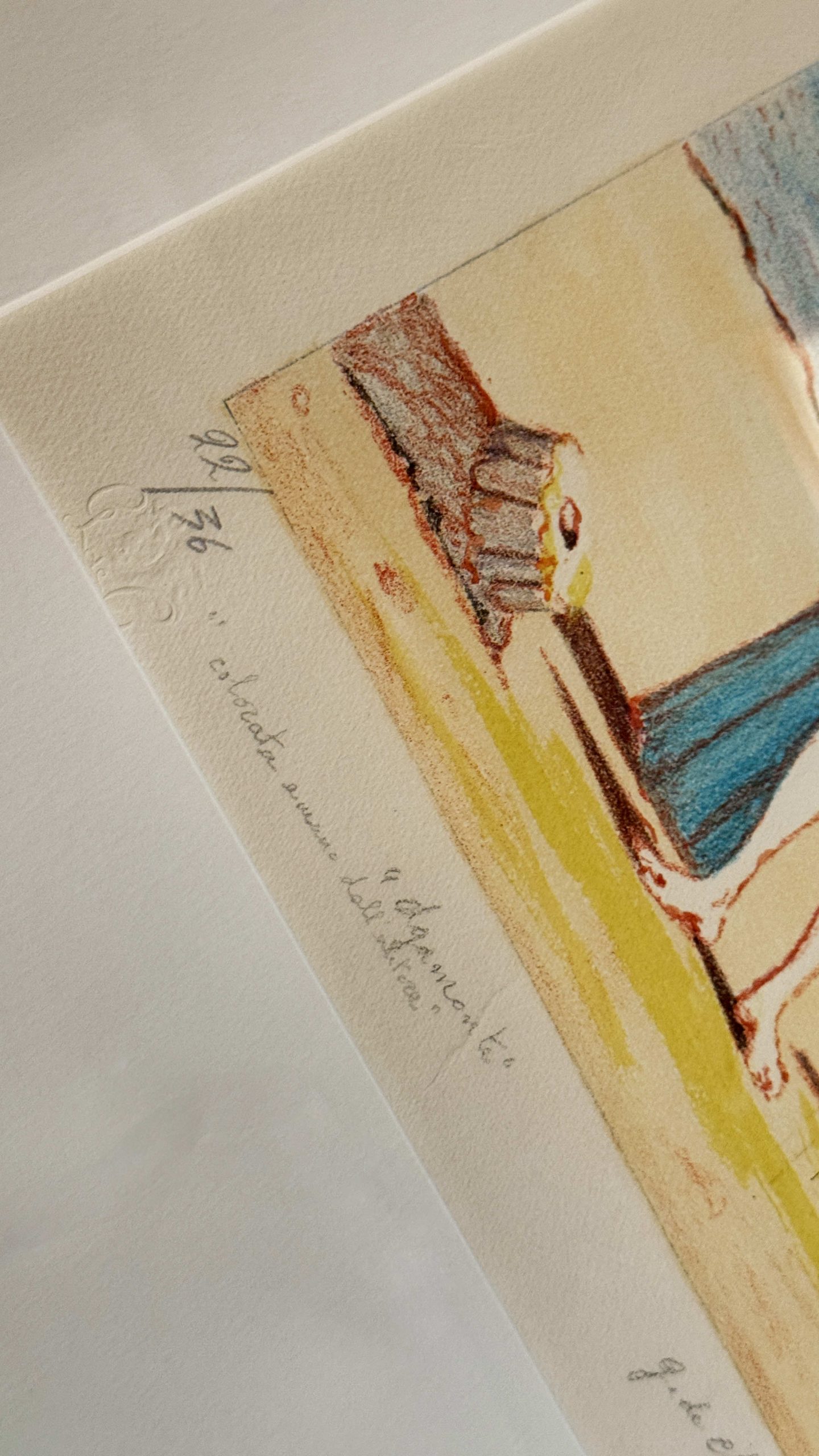
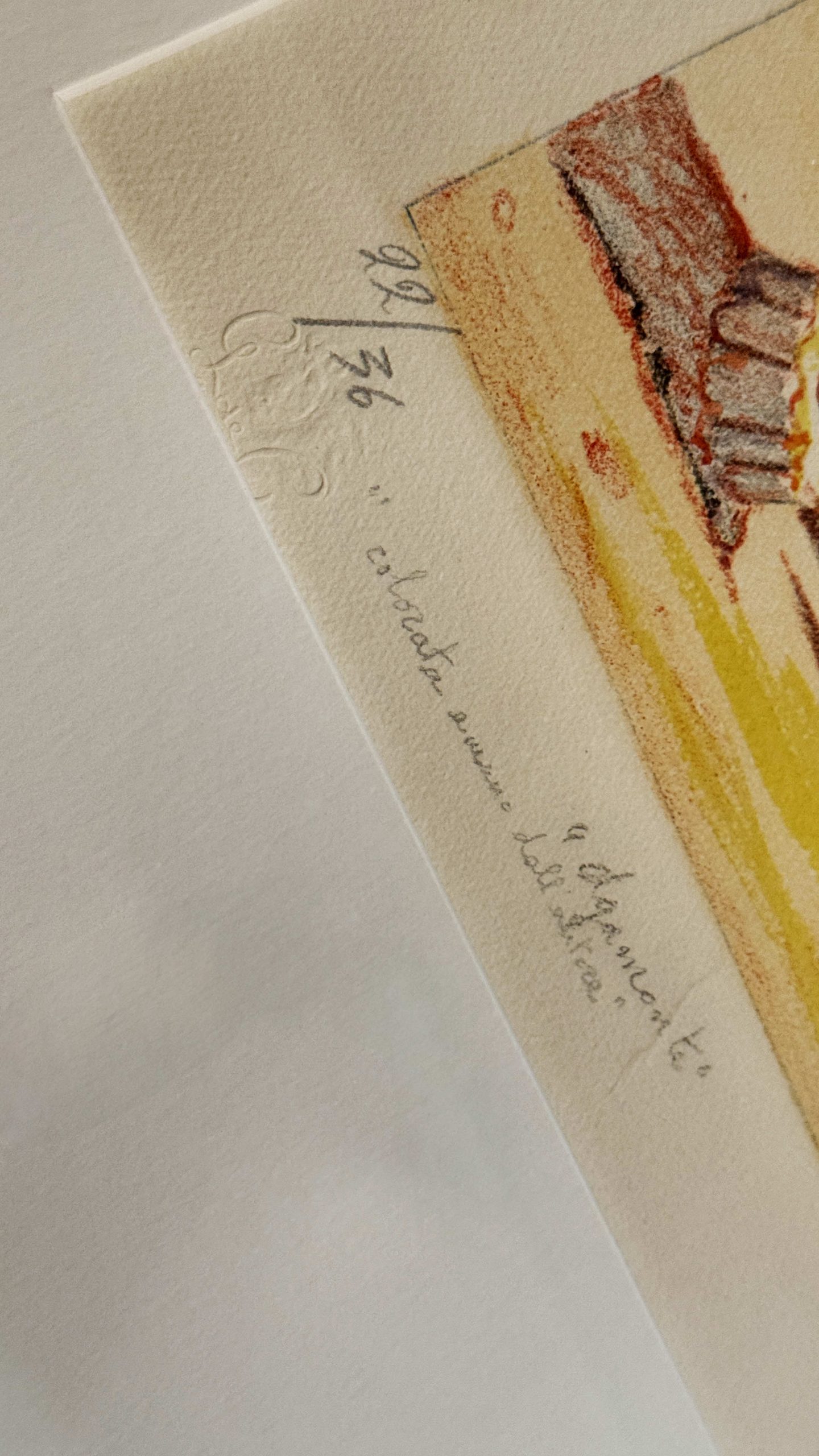
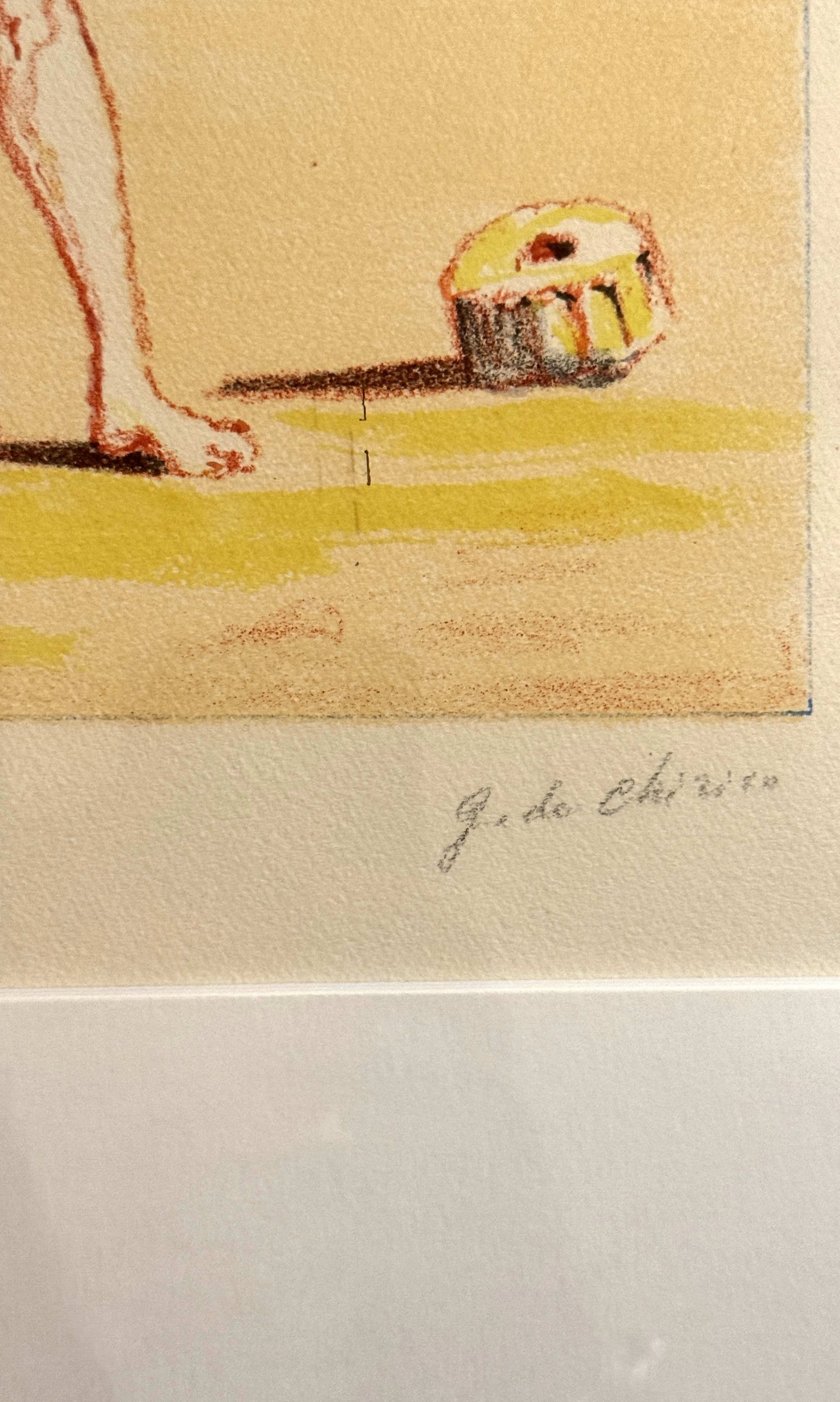
The print is signed, titled, and numbered 22/36. It also bears the embossed “G. de C.” seal. Beneath the title appears the handwritten note: “collorata a mano dall’autore.” The spelling of collorata includes a double “l,” which may require verification.
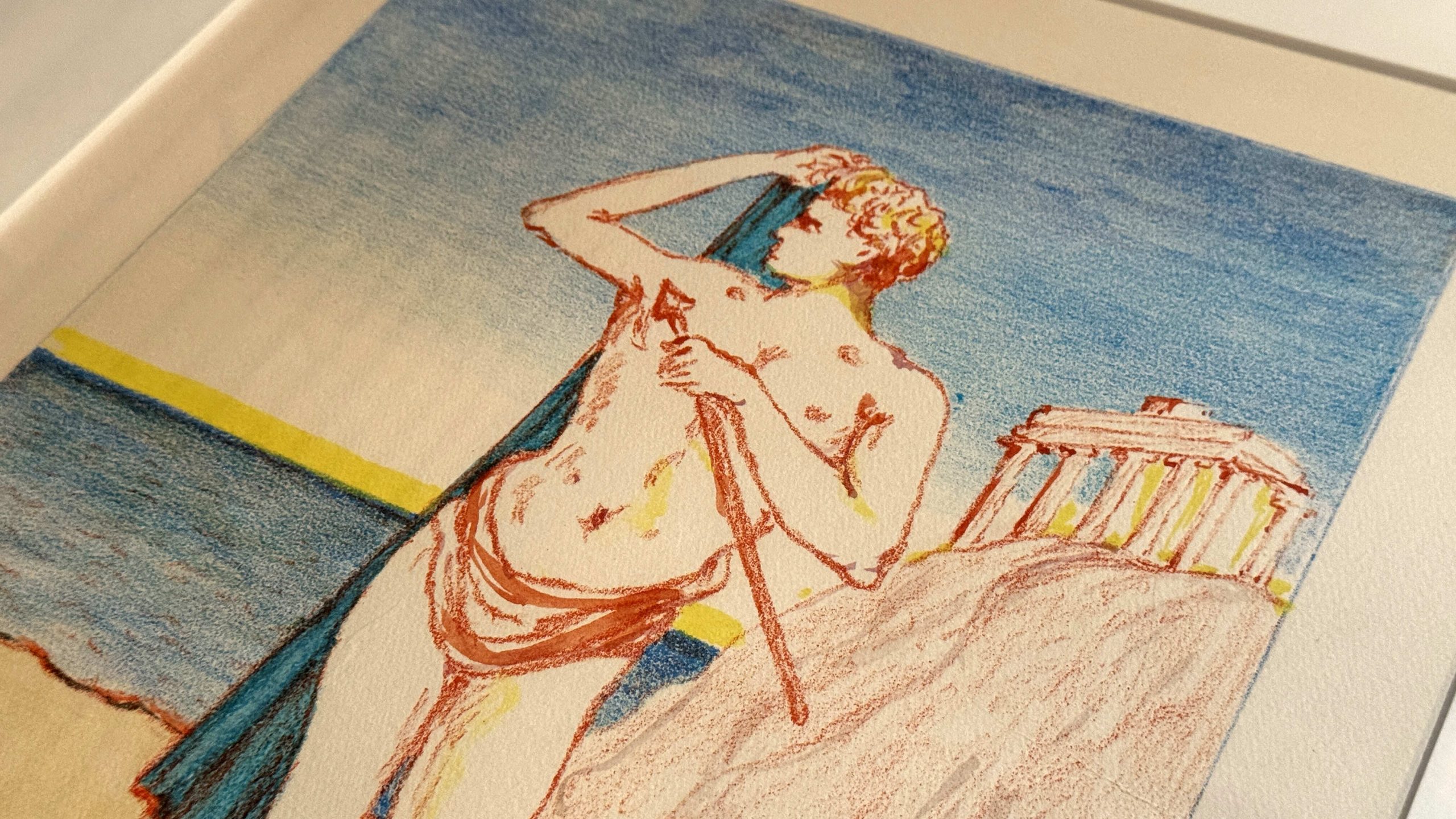
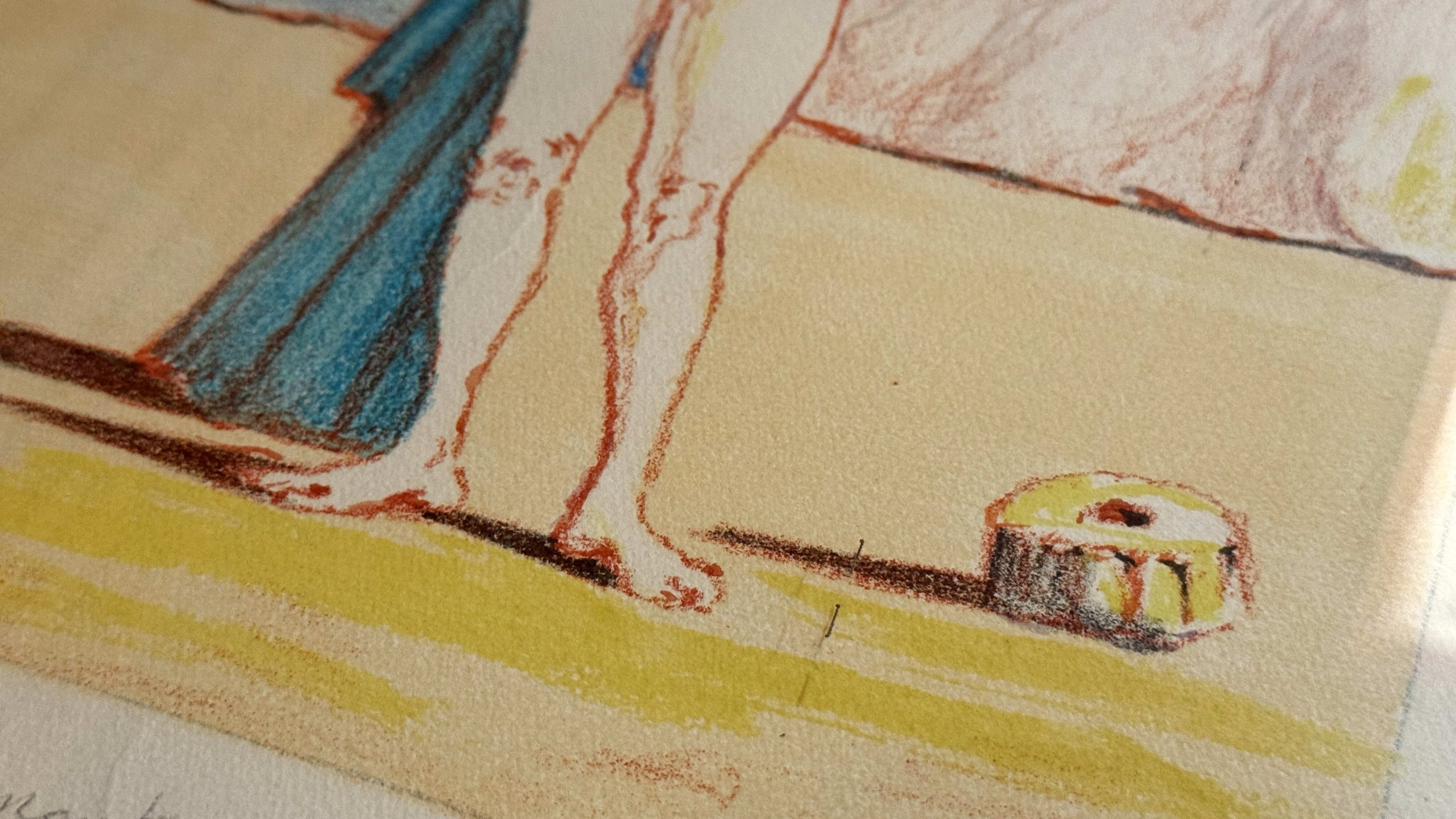
De Chirico produced this work using lithography and then colored it by hand. This process gives each impression a unique character. The soft application of blue, ochre, and red tones adds warmth and individuality to the composition.
The image measures 33.5 × 24.5 cm, while the framed dimensions are 53 × 36 cm. The relatively intimate scale enhances its refined and collectible nature.
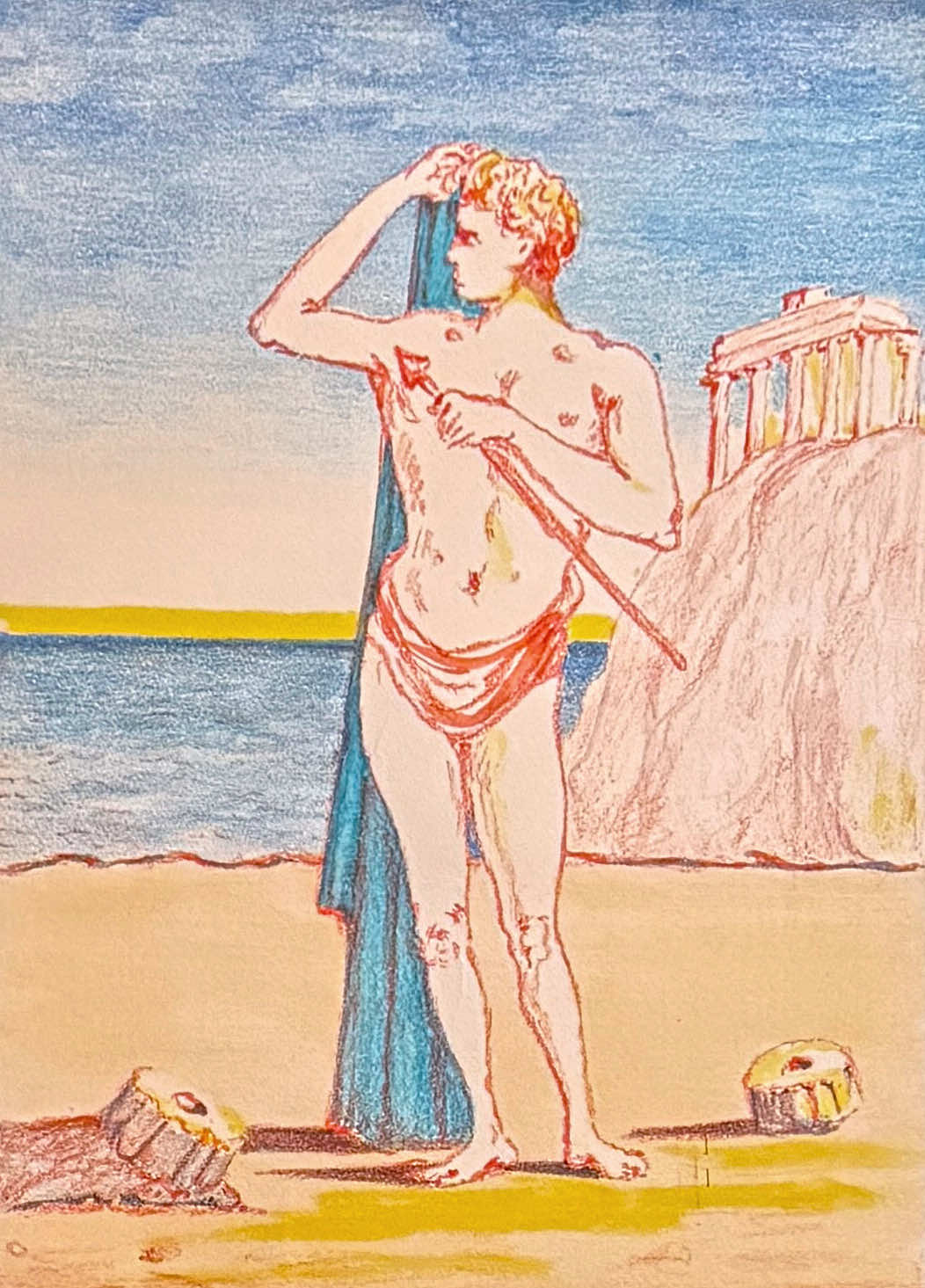
The scene presents a nude male figure standing on a beach before a calm sea. He holds a spear and raises his hand to his forehead as if scanning the horizon. His pose suggests vigilance and expectation. The body recalls ancient Greek sculpture, both in proportion and stance.
A bright yellow band marks the horizon line. This strong division between sea and sky creates a symbolic boundary. It introduces a metaphysical tension between the visible world and the unknown.
To the right, a classical temple with Doric columns rises on a rocky formation. In the foreground, fragments of broken columns rest on the sand. These ruins evoke archaeology, memory, and the persistence of history. De Chirico often used such elements to suggest suspended time.
The title “Agamonte” may relate to the Trojan cycle and possibly to Agamemnon, though the spelling invites further confirmation. Rather than portraying a specific narrative episode, the artist presents an archetypal hero. The figure becomes timeless, isolated between myth and landscape.
This lithograph belongs to De Chirico’s neo-metaphysical phase. Unlike his darker early piazzas, this composition embraces light and Mediterranean color. The atmosphere feels calm rather than unsettling.
During the late 1960s and 1970s, De Chirico produced an important body of graphic work. Scholars document this period in Edoardo Brandani’s Giorgio de Chirico. Catalogo dell’operagrafica, 1969–1977 (Edizioni Bora, Bologna, 1990, p. 212, plate 187). In these works, the artist reinterprets classical heroes, temples, and mythological themes with clarity and decorative elegance.
His approach connects with broader twentieth-century movements that revived antiquity. Artists such as Picasso during his classical phase also returned to myth. However, De Chirico maintained a uniquely metaphysical perspective. He combined archaeology, memory, and silence in a distinctive visual language.
The work comes from Vienna, Austria. Central European collectors have long appreciated De Chirico’s art, especially his graphic production. Limited editions such as this one remain highly sought after for their historical significance and refined execution.
“Agamonte” demonstrates Giorgio de Chirico’s enduring fascination with classical myth and timeless heroism. Through lithography and hand-coloring, he transforms an ancient theme into a modern metaphysical vision. The result is a luminous and contemplative composition that bridges antiquity and twentieth-century art.


 No products in the cart.