


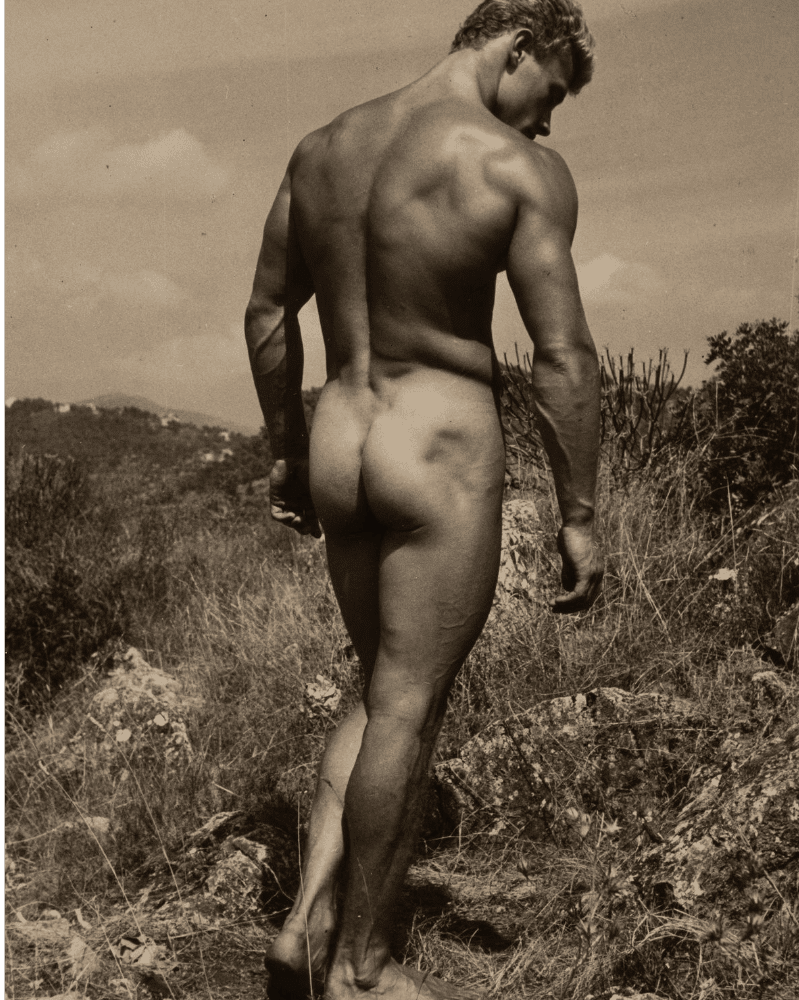
Kurt Reichert was a prominent figure in the early 20th-century German photographic movement, particularly associated with the Freikörperkultur (FKK) or nudist culture. In this original vintage print, titled “In Licht und Sonne” (In Light and Sun), Reichert captures the quintessential spirit of this era. During this time, photographers sought to portray the human body in total harmony with the natural environment. By depicting the male subject from the rear, focusing on the anatomical structure of the back and shoulders, Reichert emphasizes physical health and the aesthetic beauty of the human frame. The work reflects a social shift toward sunlight, fresh air, and a return to nature as a means of physical and spiritual liberation.
The technique utilized in this photograph demonstrates Reichert’s expertise in natural light manipulation. Specifically, the artist uses the bright, direct midday sun to create high-contrast shadows that map the musculature with professional precision. This lighting style, common in the Lichtgebet (Light Prayer) aesthetic, avoids the artifice of the studio. Instead, it relies on the raw texture of the skin under natural conditions. Furthermore, the print quality shows the characteristic soft-focus edges of early 20th-century lenses. Similarly, the composition uses the vertical lines of the background trees to provide a structural balance to the organic curves of the body. As a result, the image achieves a monumental status, treating the subject as a living extension of the landscape itself.




 No products in the cart.