
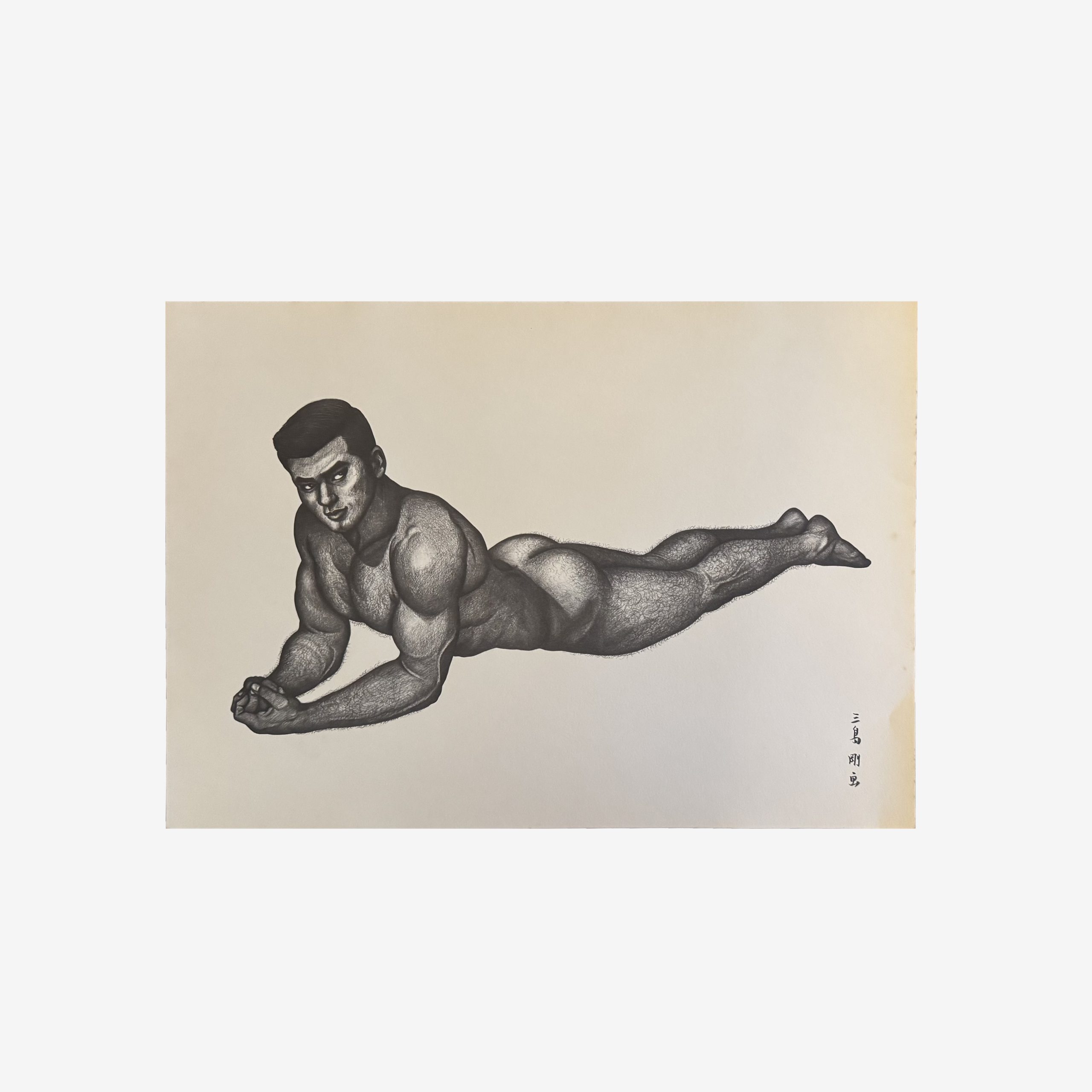
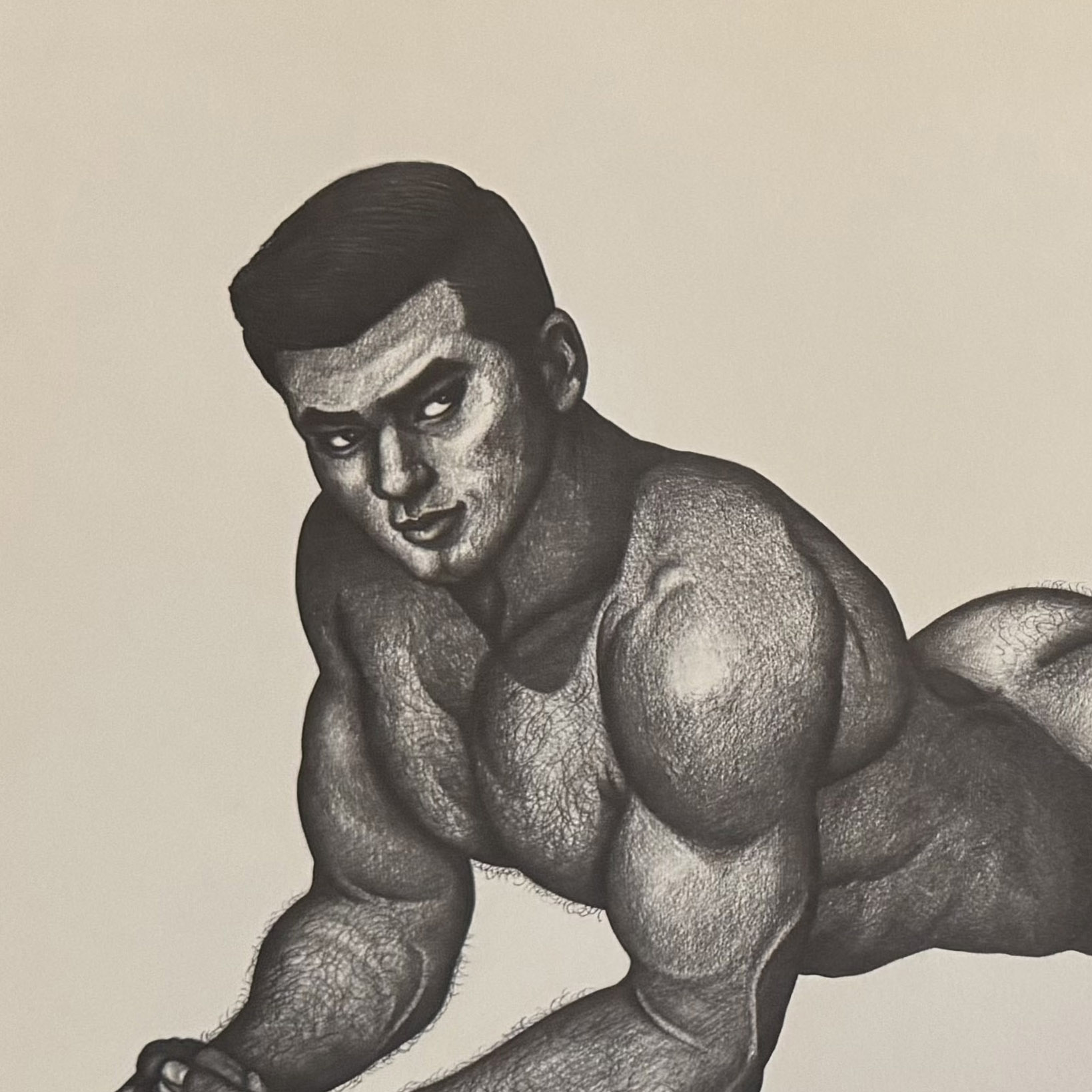
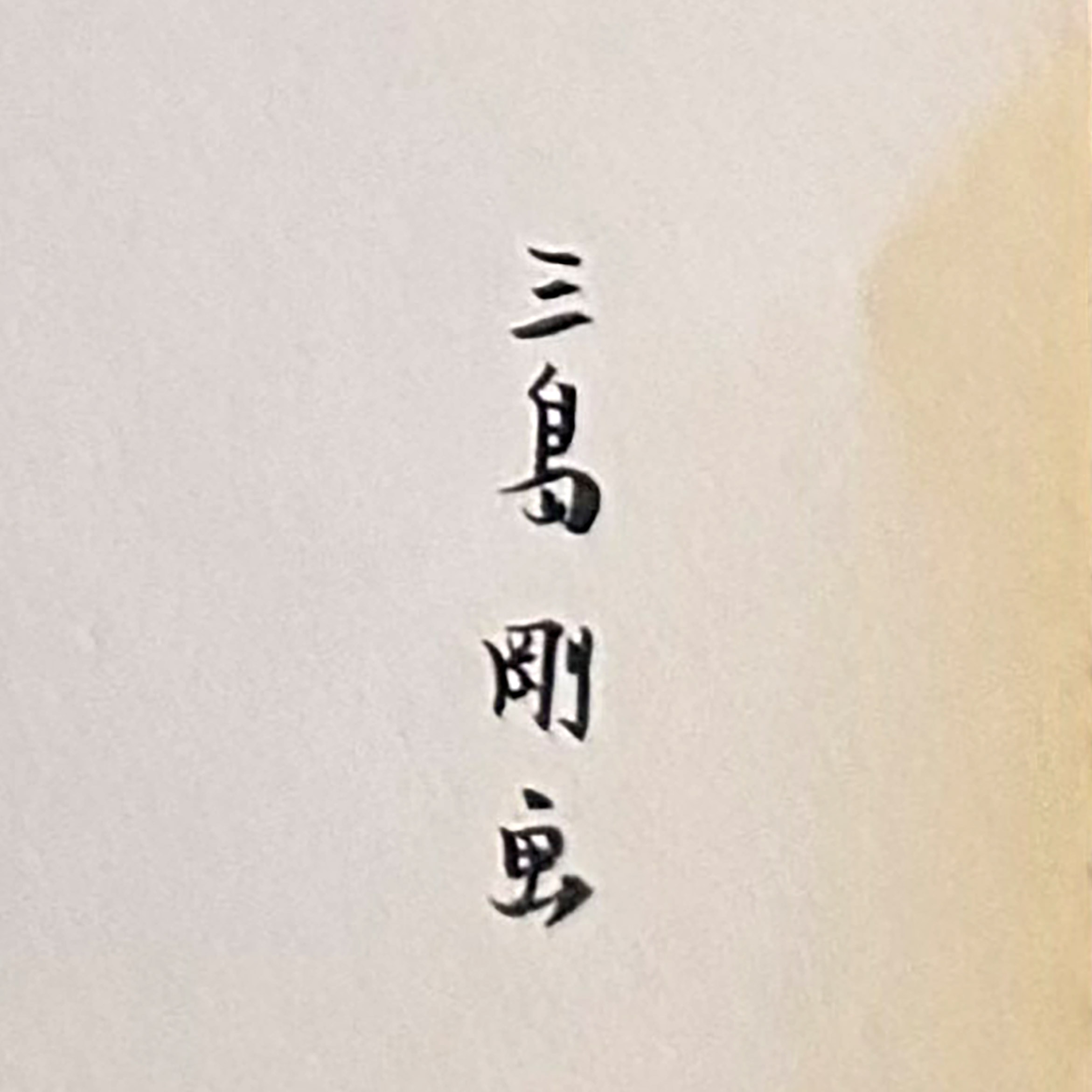
This lithograph, titled “Man Lying on Stomach”, comes from the rare art book Wakamono (若者, Youth) by Japanese artist Mishima Gō (三島剛, 1924–1988). Created during the Shōwa period (1926–1989), this work reflects the bold visual identity of one of Japan’s most influential queer artists. Measuring approximately 29.8 × 42 cm, the piece is printed on paper and shows signs of age but retains strong visual presence.
The composition features a muscular young man, nude and lying face-down. Rendered in a style that combines traditional Japanese linework with modern erotic expression, the image is sensual but never vulgar. Mishima’s approach elevates the male form, presenting it with both strength and tenderness. His figures often carry a silent melancholy, expressing themes of solitude, vulnerability, and desire—emotions often hidden beneath society’s surface.
Mishima Gō is widely recognized as a pioneer of gay erotic art in Japan, particularly active from the postwar years into the 1980s. His art emerged during a time when queer visibility was still suppressed, and yet his works gave voice to a generation of men navigating identity in private. His depictions of young Japanese men—often in scenes of rest, tension, or intimacy—formed a visual language that resonated with a growing gay subculture. Wakamono (Youth), the book from which this print originates, stands as one of his most iconic collections, celebrating both the beauty and inner life of young male subjects.
Beyond eroticism, Mishima’s work offers a sociocultural testimony. His drawings speak to experiences of marginalization, emotional isolation, and the human need for connection. His legacy has gained renewed attention through recent exhibitions, including the “LECTURA DE POESÍA” show held in Tokyo, where his prints were shown in dialogue with contemporary voices such as Kari DeWitt.
This particular print is in fair condition, with visible aging and minor stains consistent with its age. Despite that, it remains a rare and valuable artifact of postwar queer Japanese art. Collectors and institutions alike appreciate Mishima not only for his artistic skill but also for his role in shaping the visual culture of early LGBTQ+ communities in Japan.
 No products in the cart.