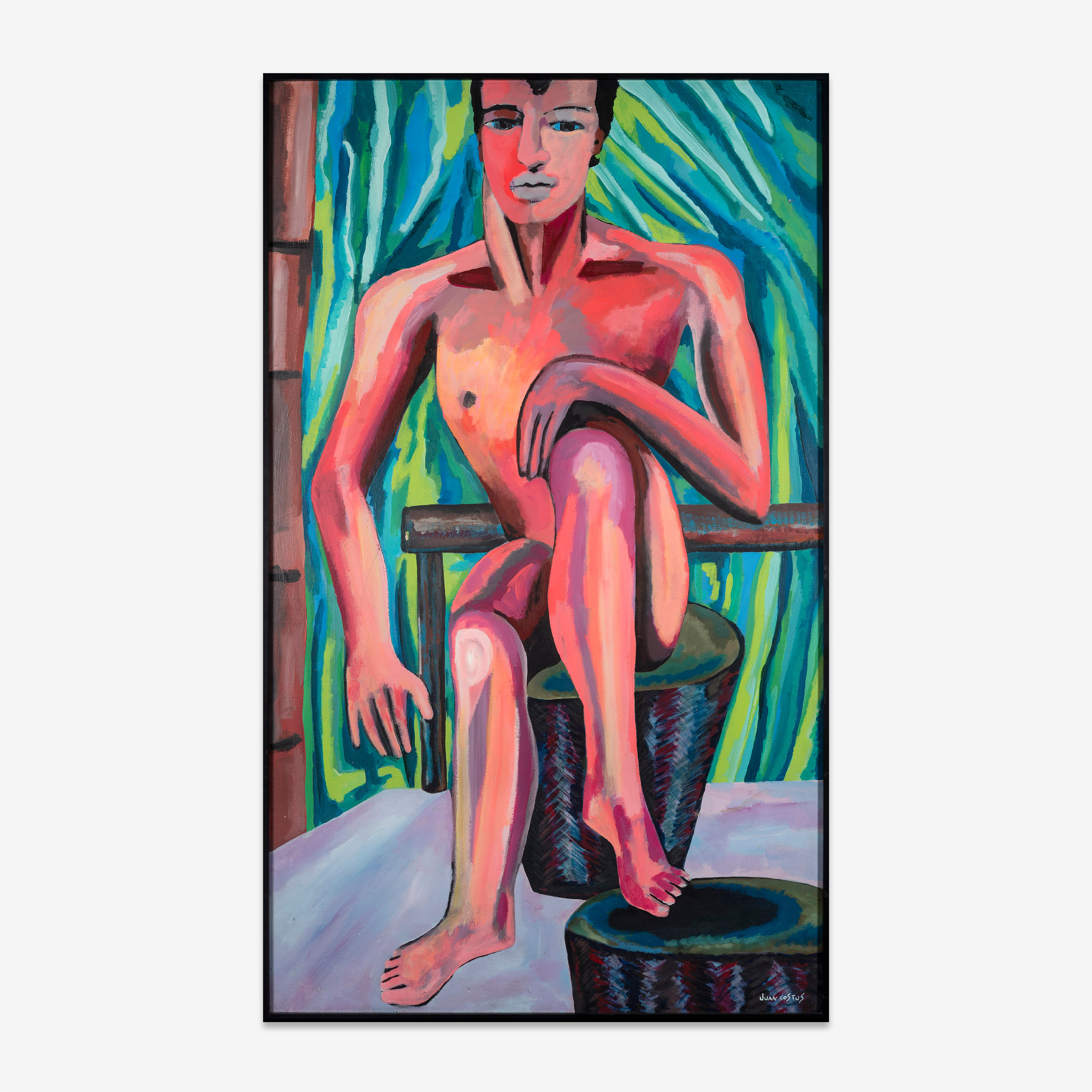
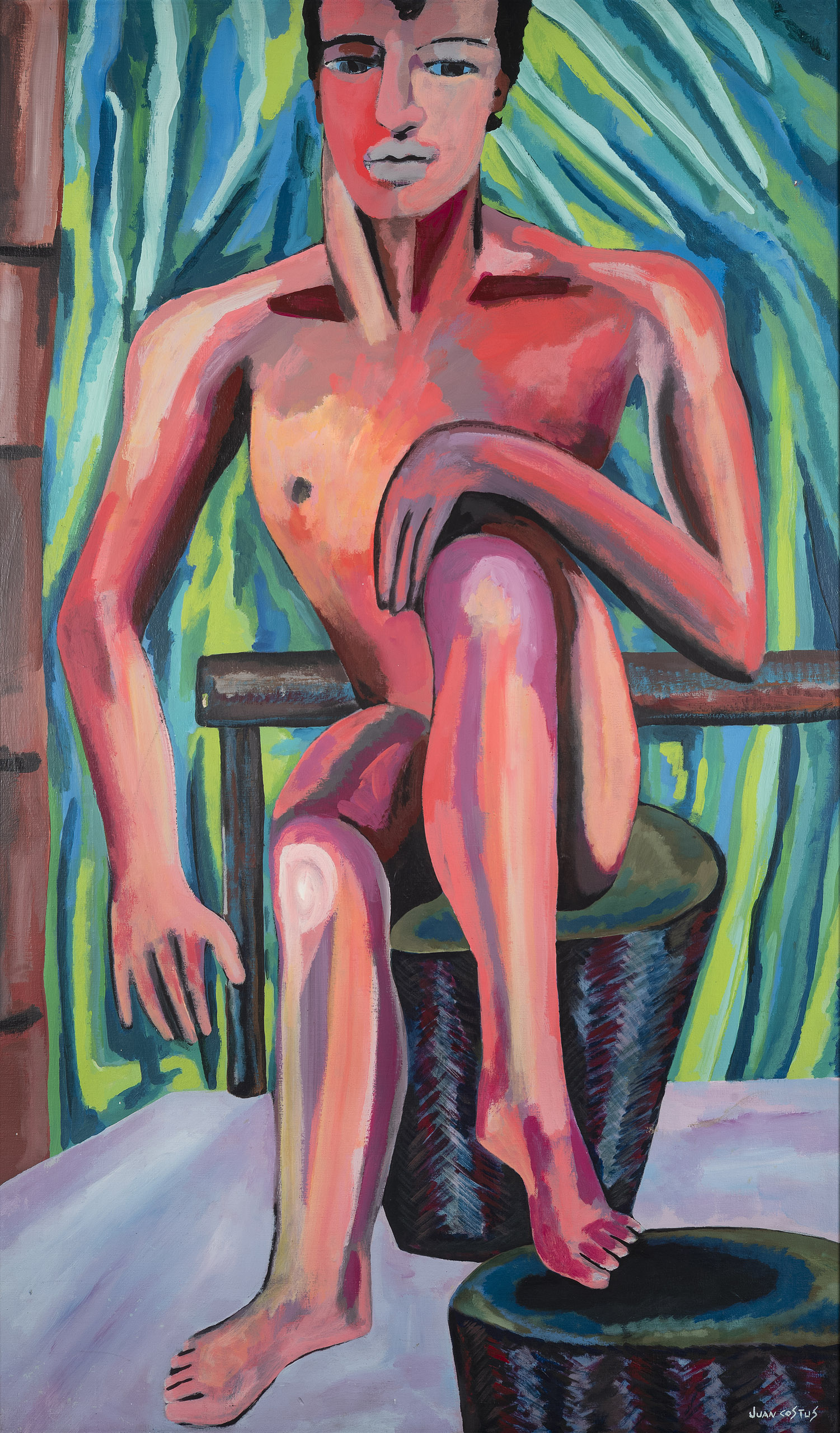
“Chulo con bombos” is a commanding large-format acrylic on canvas executed in 1983 and signed Juan Costus, with an additional inscription on the verso reading Costus Juan Carrero de O. The painting presents a seated male figure posed among two drum-like forms, articulated through an assertive, saturated palette of reds, pinks and cool blues. The composition emphasizes posture and surface — the figure’s gesture reads as both composed and theatrical — while the surrounding vertical motifs in greens and turquoise create a sense of rhythmic movement that amplifies the image’s performative quality.
Technically, the work demonstrates Costus’ confident handling of acrylic at scale: broad, layered passages of colour alternate with sharper, graphic outlines to define musculature and silhouette. The drums beneath the figure act as sculptural anchors, giving the composition a tangible centre of gravity and allowing the painter to play with foreshortening and planar contrast. The large vertical format (148 × 89 cm) widens the pictorial field, enabling a sustained interplay between figure and backdrop and permitting the chromatic contrasts to operate with maximum impact.
Formally, Chulo con bombos negotiates a tension between stylisation and anatomical observation. While the representation is intentionally pared and somewhat exaggerated, the artist’s control of volume, light and edge conveys convincing solidity. The theatrical posture, combined with the saturated palette, positions the painting within Costus’ broader exploration of staged identities and figurative bravura. The front signature and verso inscription also reinforce its provenance and situate the piece within the duo’s documented production from the early 1980s.
From a collecting and curatorial perspective, this painting is notable for its scale, condition and representative character: it is a vivid example of the Costus visual language at a moment when the duo crystallised a powerful, recognisable aesthetic. The work is suitable for institutional display and for private collections focused on Spanish contemporary painting, late-twentieth-century figurative experiments, or works connected to the cultural movements of the period. Its combination of painterly confidence, chromatic audacity and clear provenance makes it an important acquisition within the Costus corpus.


 No products in the cart.