

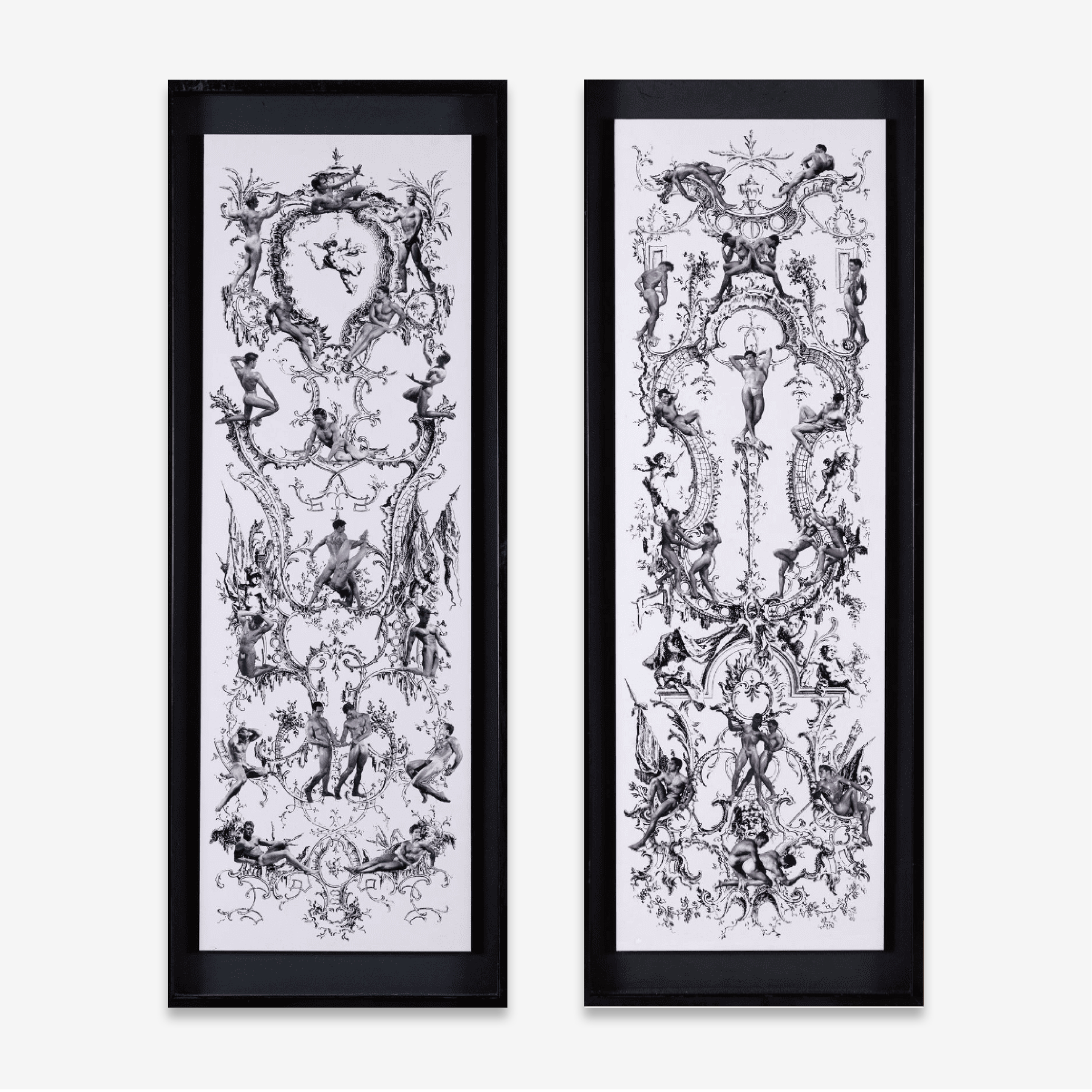
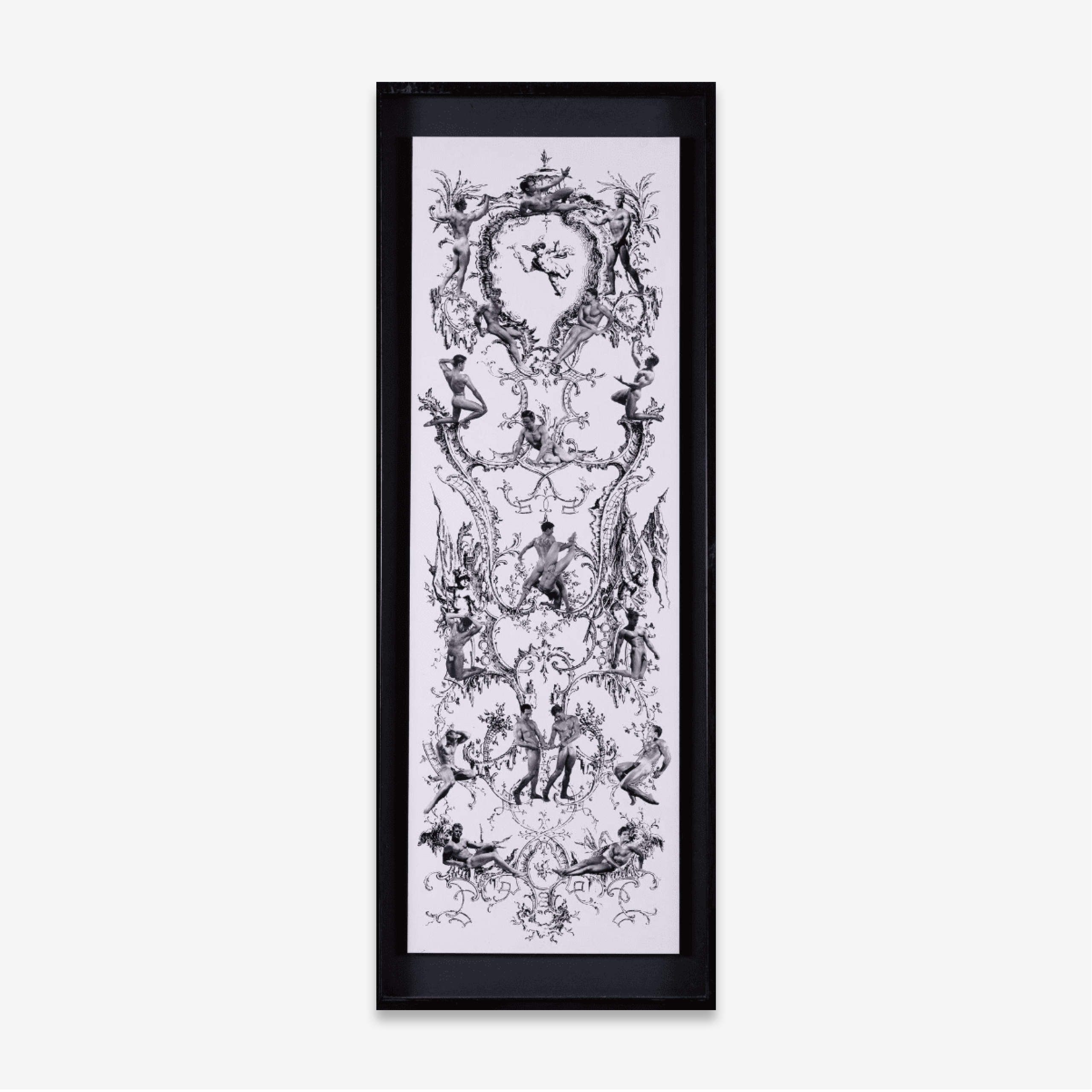
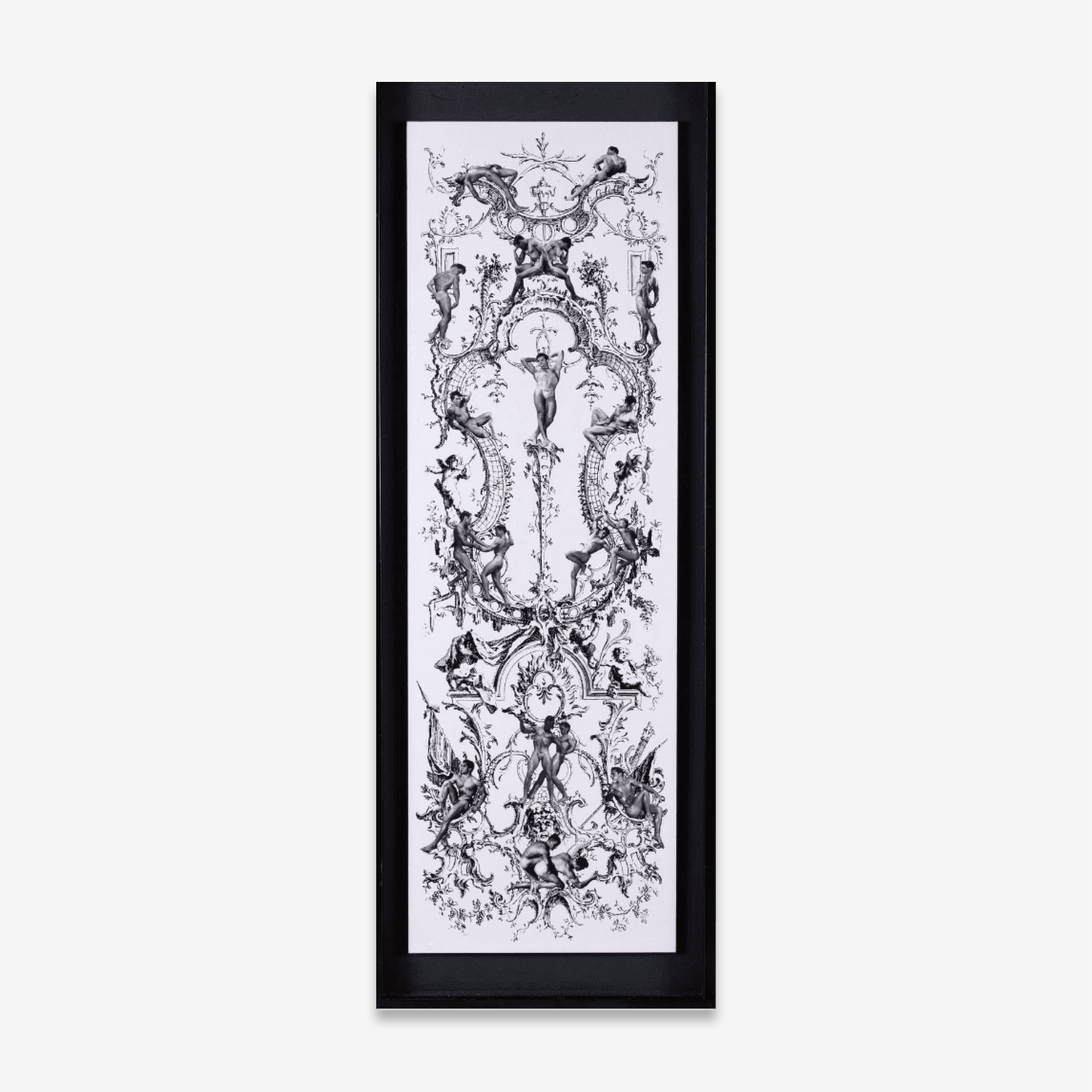
Jean-Louis Gaillemin occupies a unique position in the contemporary art world as both a distinguished art historian and a meticulous creator. His artistic practice draws deeply from his encyclopedic knowledge of architectural ornament and the “grotesque” tradition. Specifically, Gaillemin utilizes the visual language of the 18th and 19th centuries to reconstruct modern narratives. He founded the prestigious magazine FMR, which informed his obsession with the hidden geometries of history. Furthermore, his work serves as a bridge between scholarly research and pure aesthetic creation. Consequently, collectors value his pieces for their intellectual rigor and their connection to the grand tradition of European decorative arts.
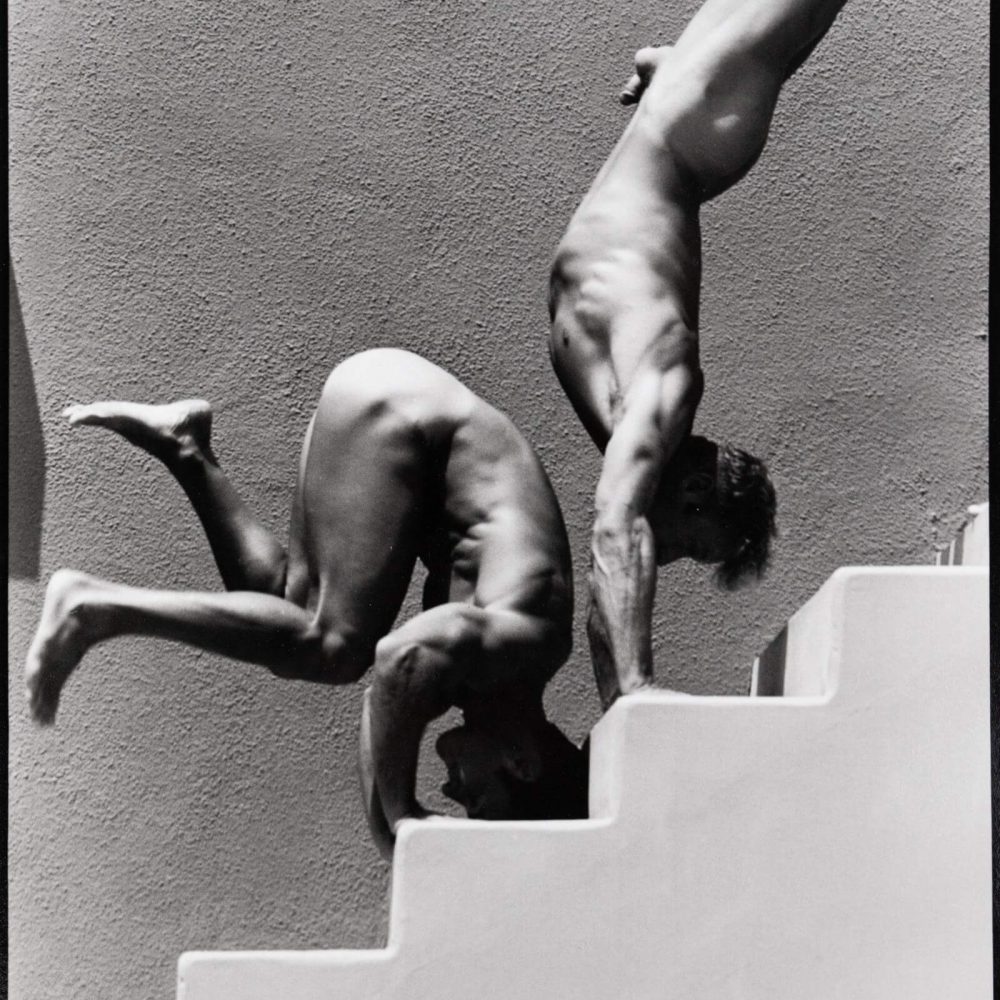
In this sophisticated diptych, Gaillemin explores the concept of the human body as a decorative element. The composition features intricate black-and-white scrolling and floral motifs that echo the style of Piranesi or neoclassical engravings. However, the artist cleverly integrates dozens of small, photographic male figures into the ornate structure. These figures inhabit the scrollwork like classical statuary brought to life. Therefore, the photograph functions as a complex commentary on the “body as architecture.” It challenges the viewer to find the individual within the dense, repetitive patterns of history. This approach highlights Gaillemin’s mastery of the “grotesque” style, where the human and the ornamental merge into a single entity.













 No products in the cart.