
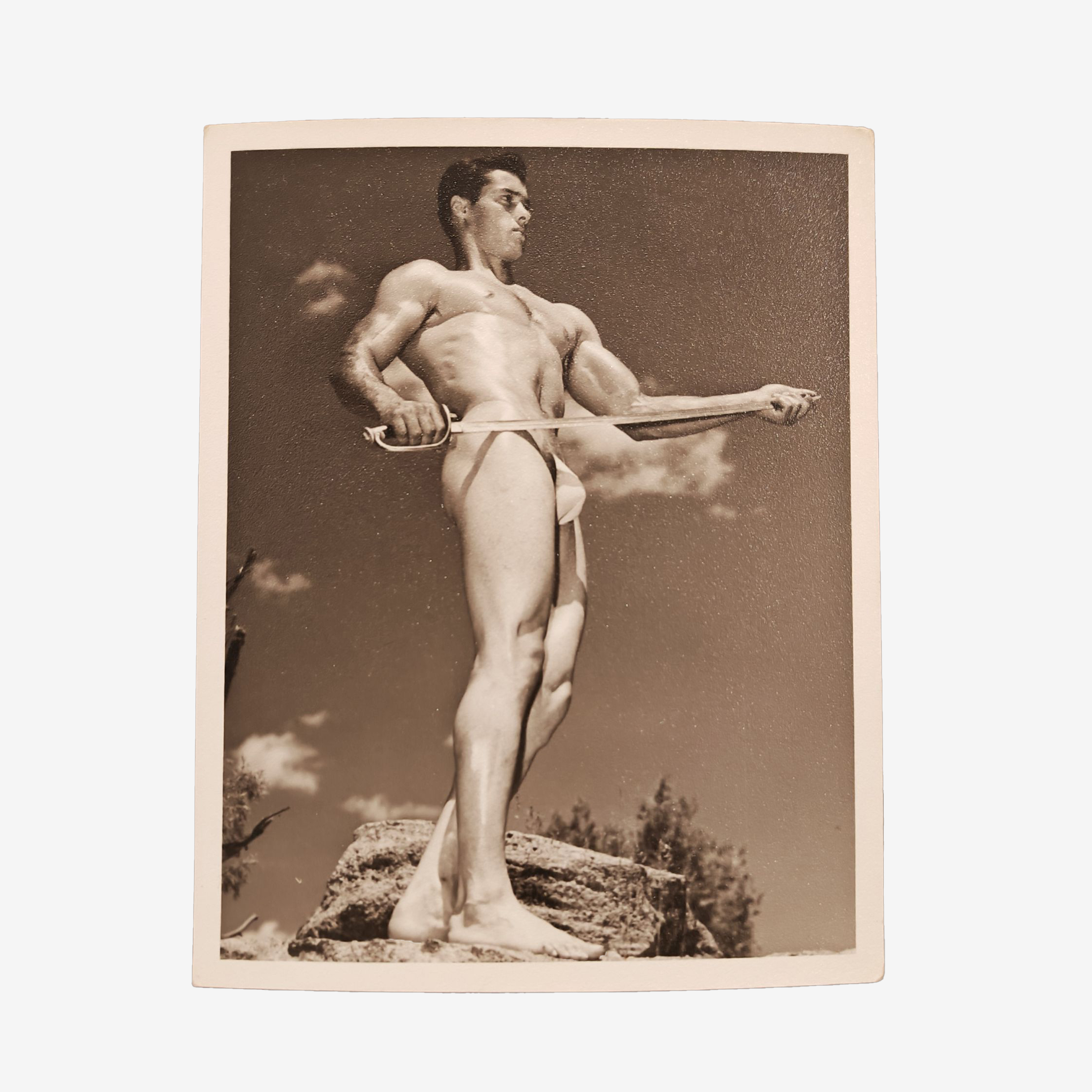
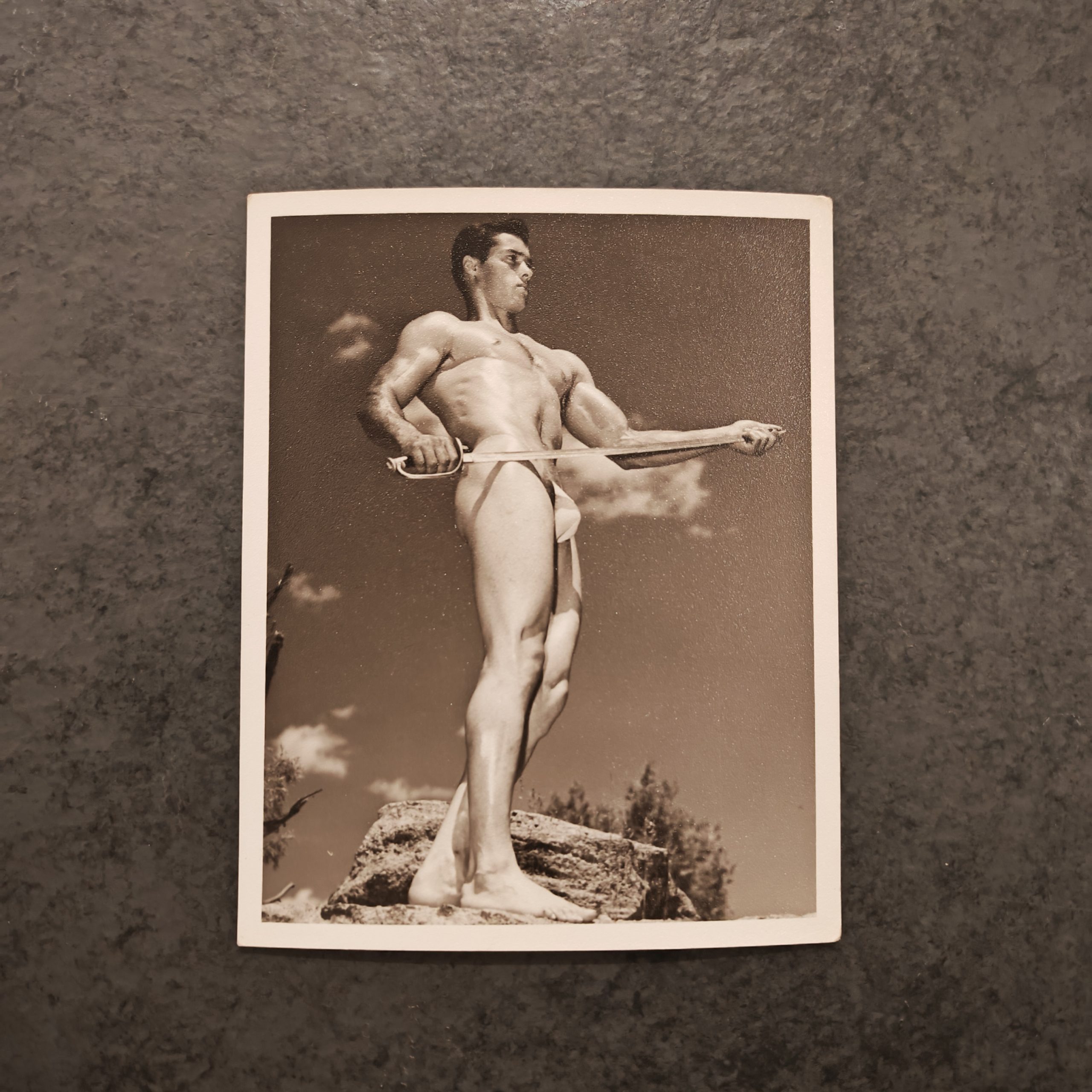
The photograph of Ray Belloni with Sword serves as a vital historical document within the mid-century Physique Movement. Initially, this movement emerged as a precursor to modern fine-art queer aesthetics. This specific work features the model Ray Belloni in a classical, heroic pose. By referencing Greco-Roman athletic ideals, the image transcends simple documentation. Instead, it enters the realm of rigorous anatomical and artistic study. Collectors often look for such pieces to understand the evolution of [internal link: masculine iconography] in the 20th century.
The technical quality of this vintage silver gelatin print reflects the elite standards of the Western Photography Guild. Specifically, Whitman’s mastery of outdoor lighting highlights the muscular definition of the subject with extreme precision. Furthermore, the artist places the model against a low-horizon sky to create a monumental, statue-like presence. The inclusion of the sword serves as a thematic prop to emphasize discipline and strength.
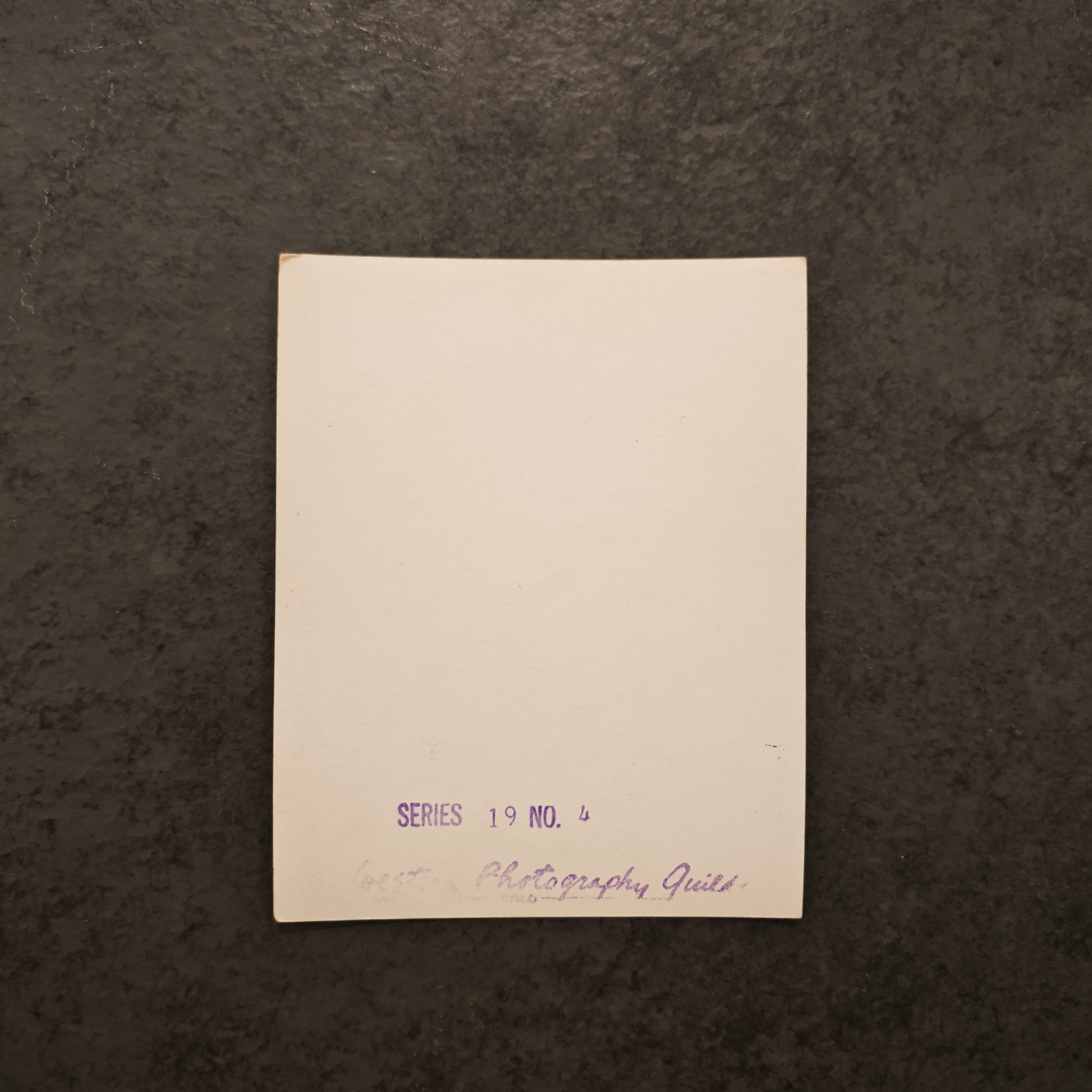
Don Whitman: Ray Belloni with Sword holds significant provenance value because of its original markings. On the reverse side, the print features the “Series 19 No. 4” stamp from the Denver-based Guild. Don Whitman was a pivotal figure who helped legitimize the male nude as a subject of serious inquiry. Today, his works are highly sought after by institutions focusing on LGBTQ+ history and Americana. Because of its rarity, this print represents a stable and appreciating asset for any serious art collection.
In conclusion, the acquisition of Ray Belloni with Sword offers both aesthetic beauty and social importance. The “heroic” style pioneered by Whitman directly influenced later masters like Robert Mapplethorpe. As a result, this photograph is an essential cornerstone for those building a comprehensive portfolio of vintage photography. It successfully bridges the gap between historical activism and contemporary artistic perfection.


 No products in the cart.