

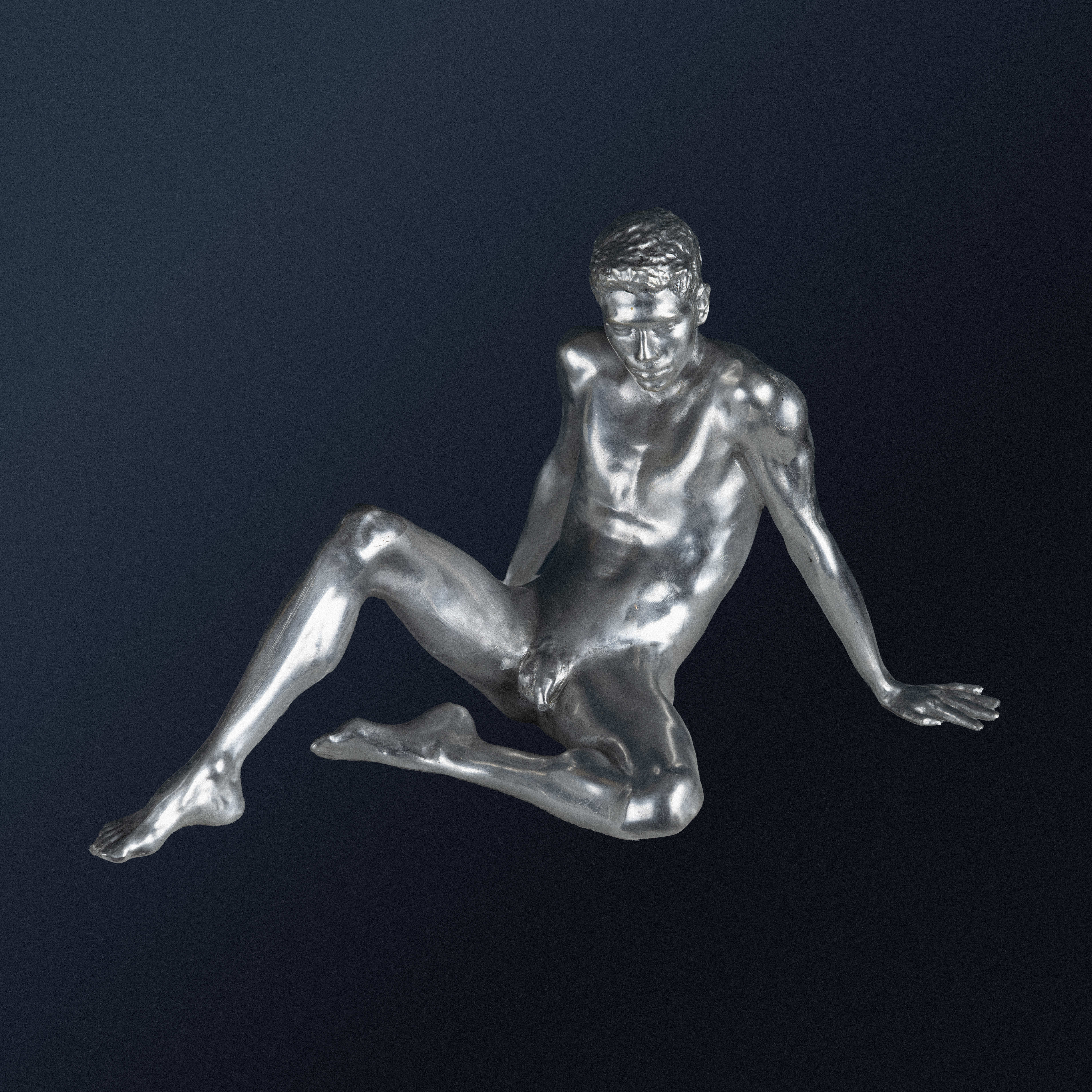
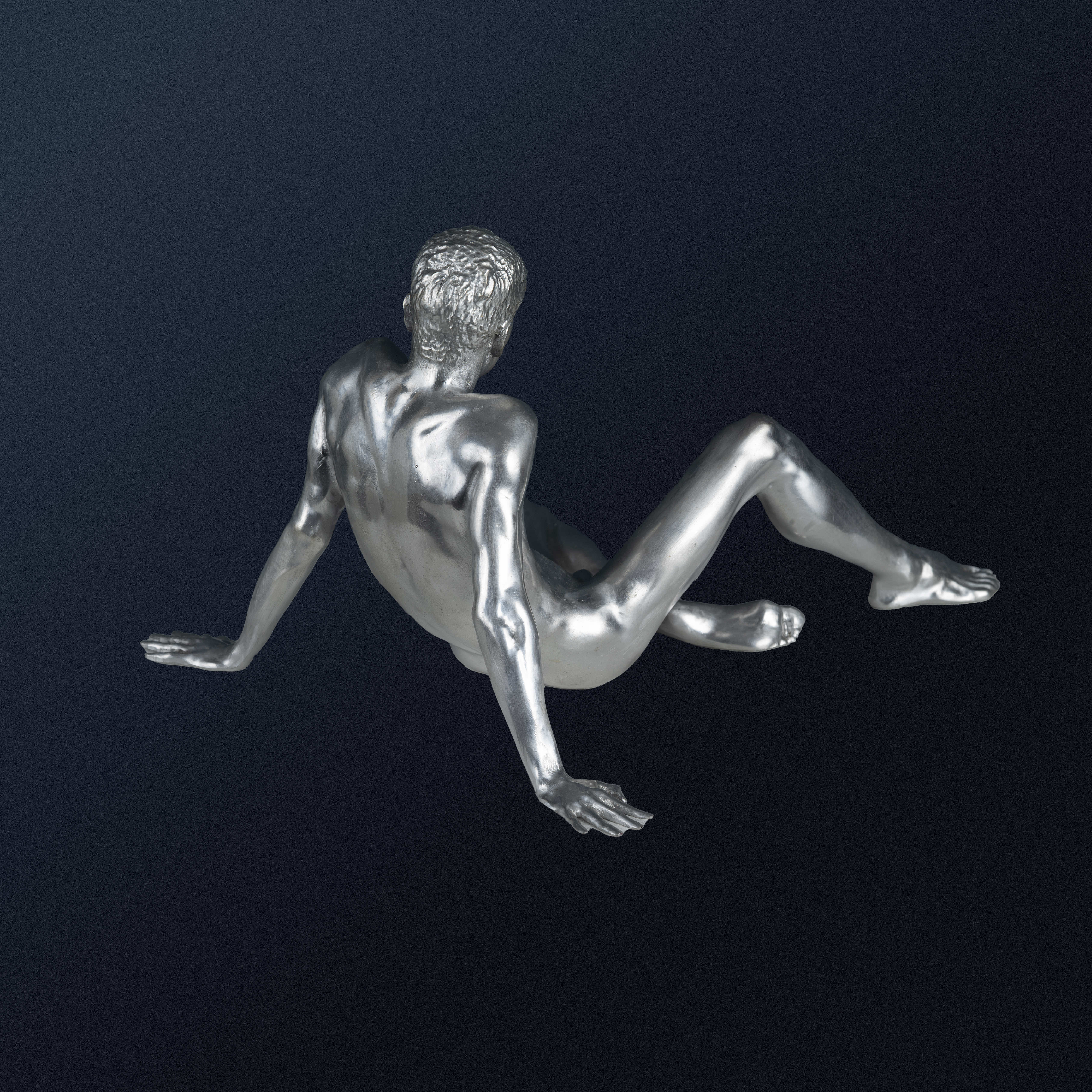
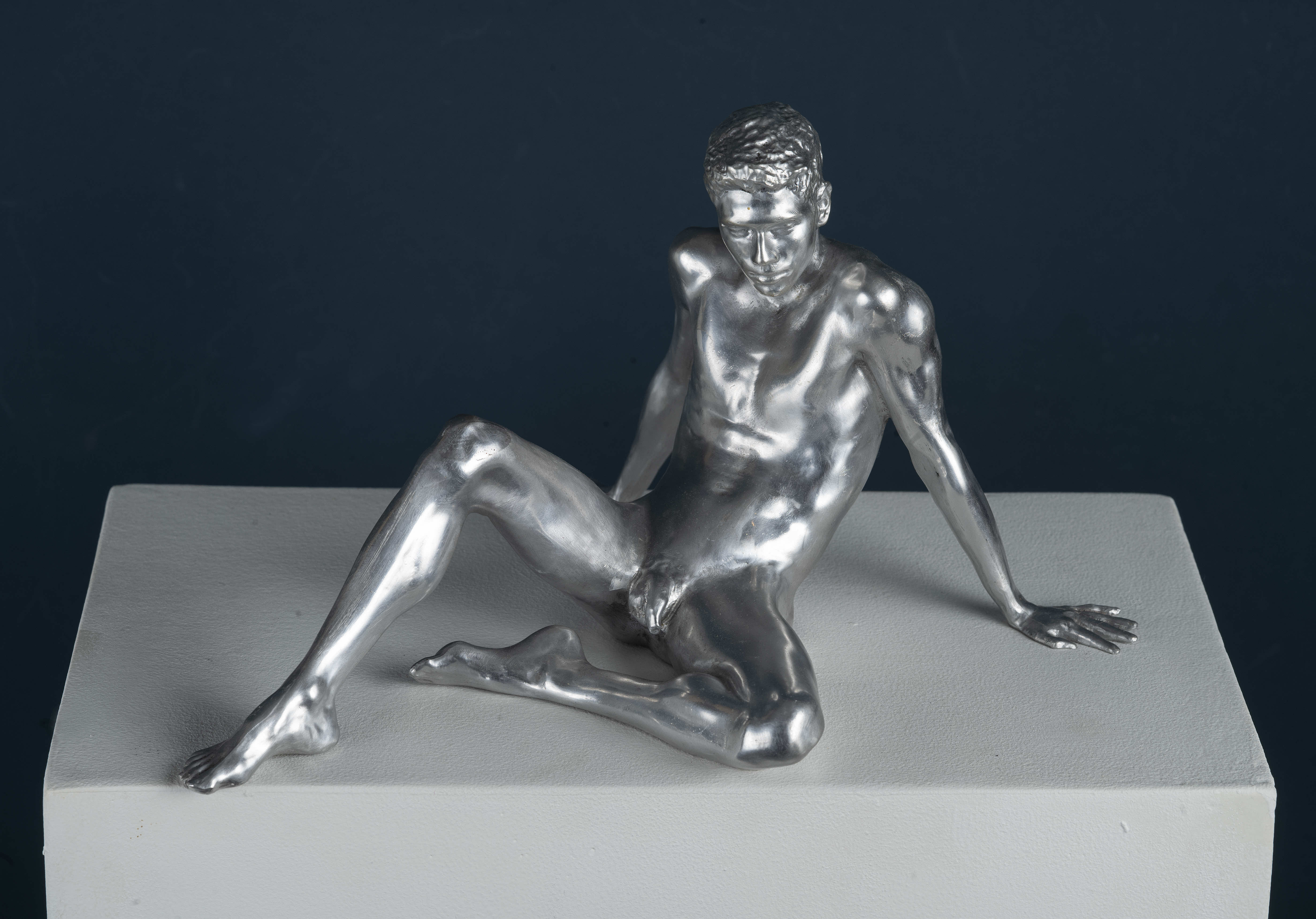
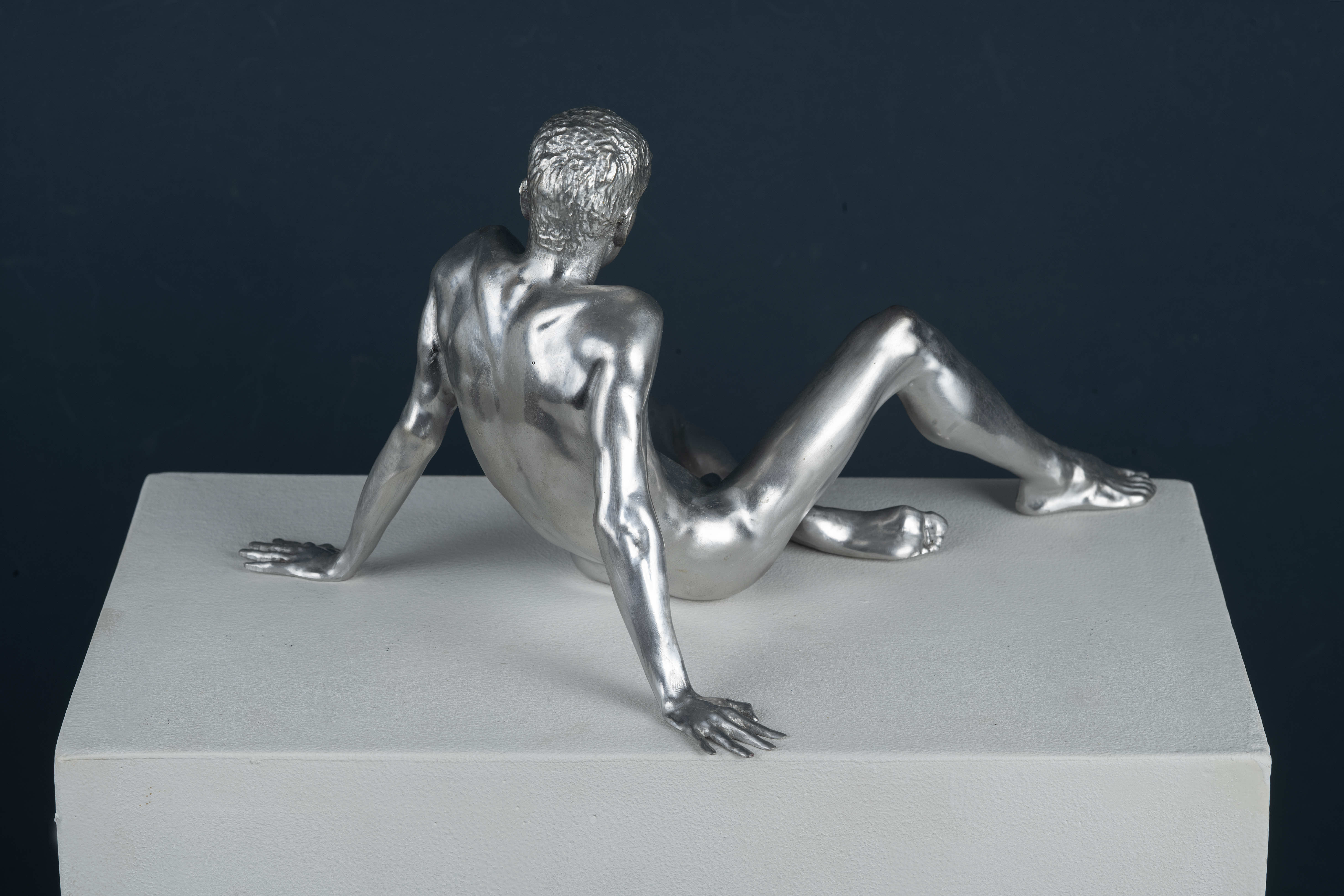
The sculpture “Desi” by artist Nikolaj Christensen Andersen, created in 2020, is a contemporary aluminum piece from a limited, numbered edition of 1/8. Its dimensions (15.5 × 21 × 24.7 cm) make it a small-format work, designed for intimate and close contemplation, closer to a cabinet sculpture than a monumental one. It is in excellent condition and bears a signature and date at the bottom, reinforcing its original, collectible character.
The work depicts a young nude man in a relaxed pose, sitting with his torso slightly turned and resting both arms back. The figure conveys serenity and naturalness, moving away from academic rigidity and closer to a personal vision of the human body, blending attention to anatomical detail with a certain stylization of posture. The polished surface of the aluminum creates an interplay of light and reflections that enhances the muscles, the tension in the torso, and the lightness of the limbs.
From a historical and artistic perspective, the treatment of the nude is reminiscent of classical Greco-Roman tradition, where the male body was represented as an ideal of beauty, balance, and youth. However, Andersen does not seek a mythological hero or a grandiloquent figure, but rather an intimate, almost introspective portrait, more closely linked to 20th-century modern sculpture. In this sense, the piece evokes the interest of artists such as Auguste Rodin, who explored the expressiveness of the body in natural attitudes, or Aristide Maillol, who endowed the male and female nude with a serene and restrained character.
The choice of aluminum as a material is significant. Traditionally associated with industry and modernity, here it is transformed into a vehicle of subtlety and sculptural refinement, replacing classical bronze with a colder, shinier finish that reinforces the work’s contemporaneity. This metallic surface generates contrasts of light and shadow, giving the figure a shifting, almost liquid vitality.
This type of sculpture is part of a contemporary movement that revalues the representation of the human body, moving away from the abstractions that dominate much of contemporary art. In parallel, one can find similarities with the work of artists such as Jaume Plensa, in his exploration of the human figure from an intimate and poetic perspective, although Andersen maintains a greater attachment to realistic anatomy.
In conclusion, Desi is a piece that combines tradition and modernity: a reflection on the human body rendered in contemporary language, inviting aesthetic contemplation and a sensitive experience in which the materiality of the metal and the subtlety of the posture merge in balance.

















 No products in the cart.