
Pavel Tchelitchew and Neo-Romantic Figuration
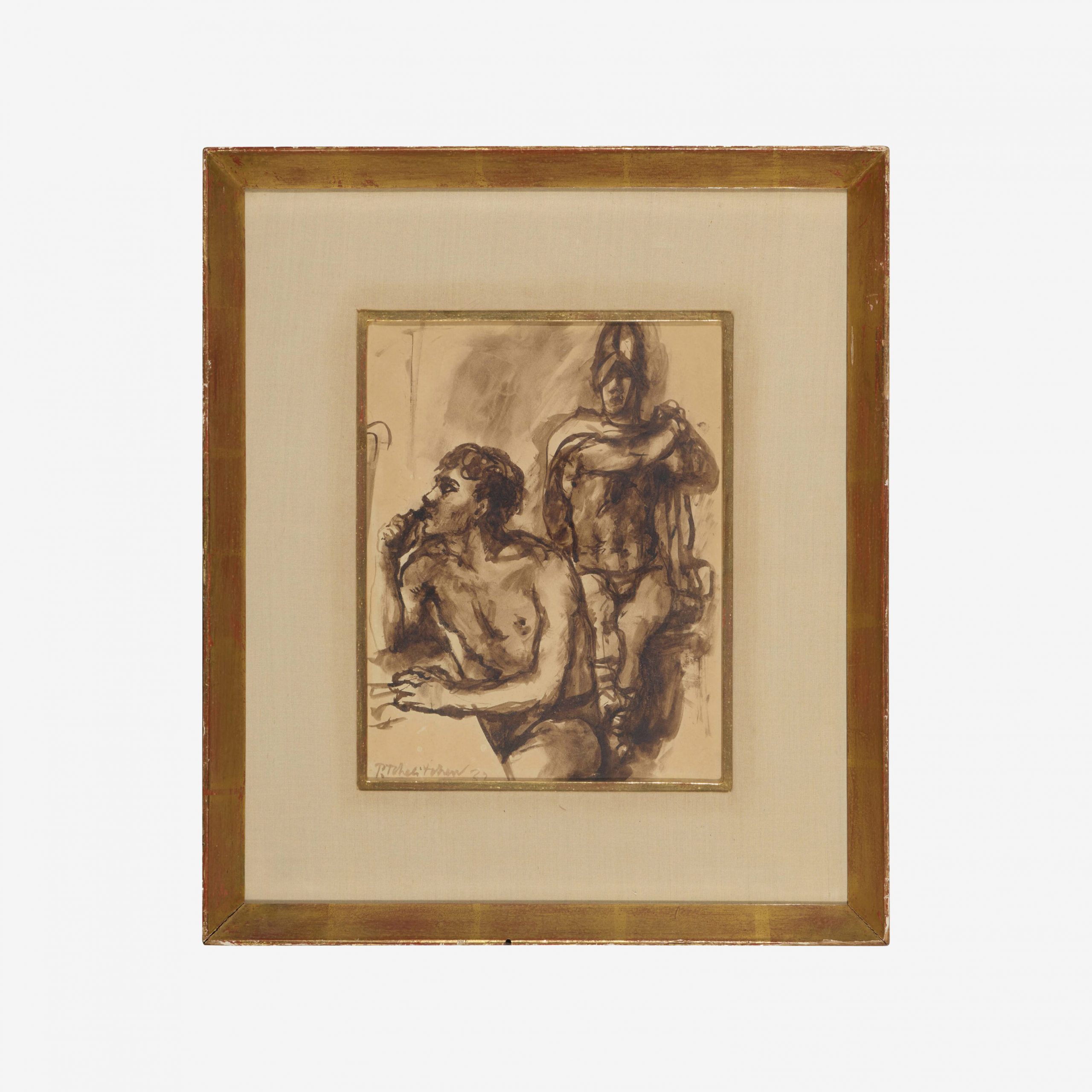
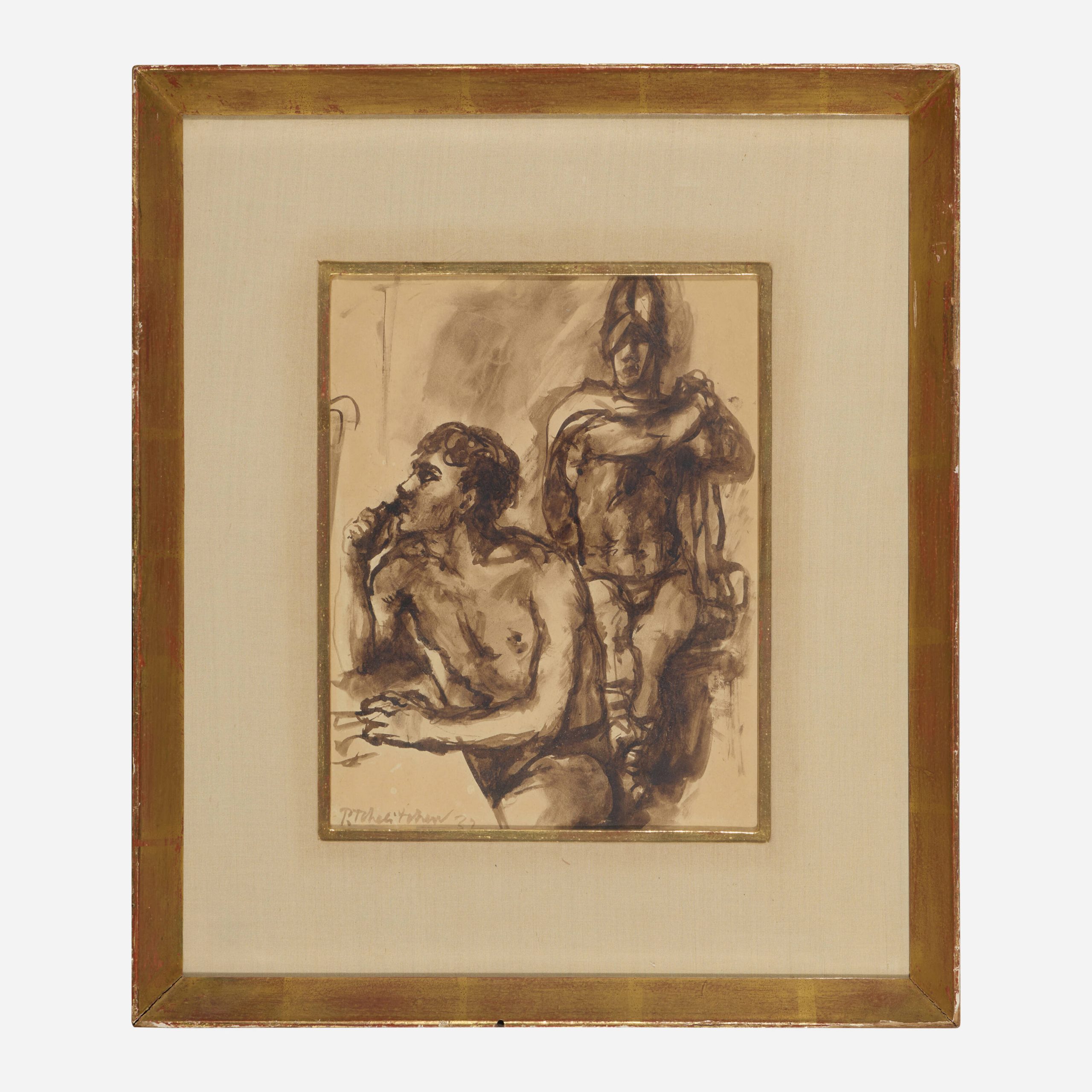
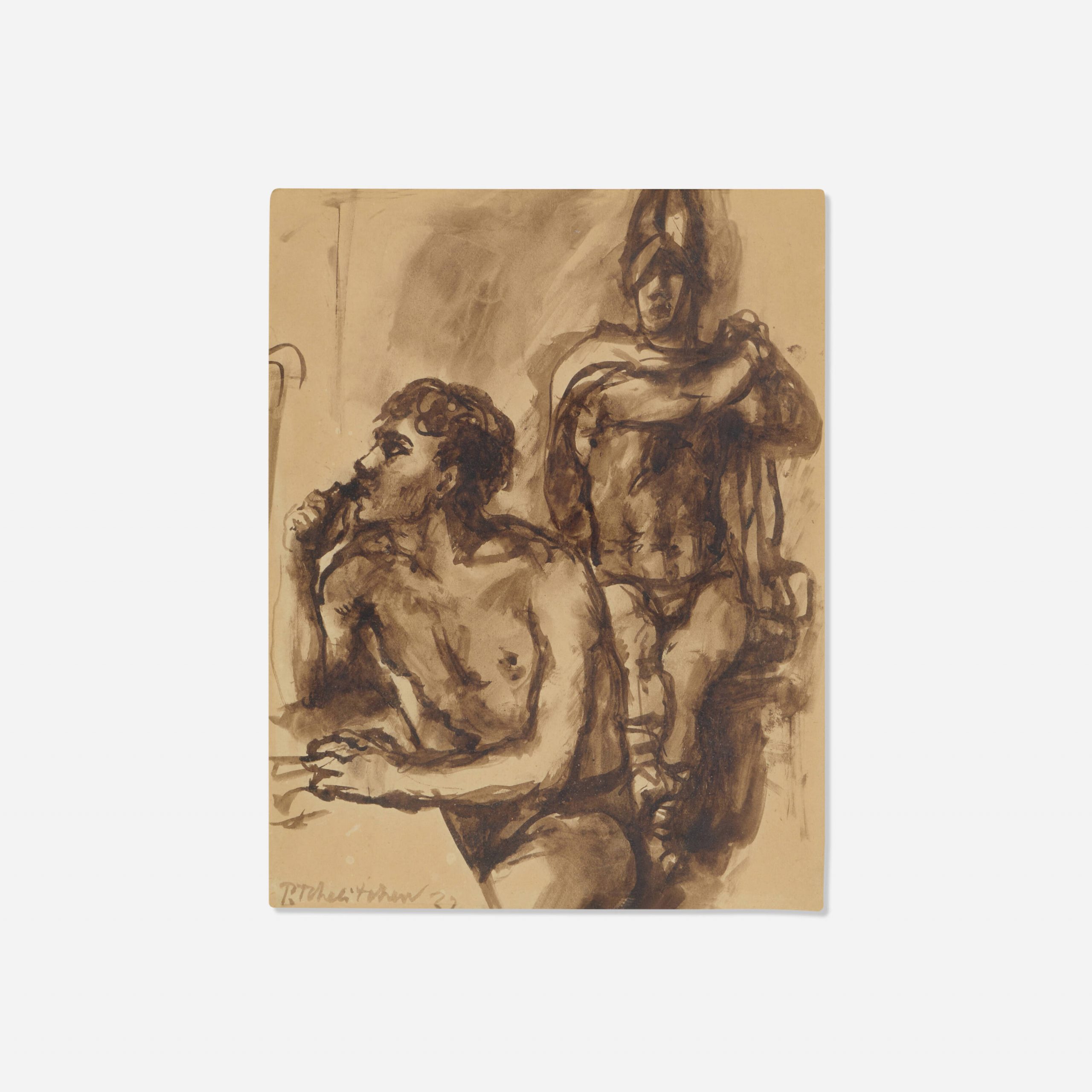
Pavel Tchelitchew (Russia, 1898 – Italy, 1957) was one of the most intellectually ambitious figures in 20th-century figurative art. His watercolor The Actors / The Authors (1932) stands as a key work from his Neo-Romantic period. During these years, he worked alongside artists such as Christian Bérard and Eugene Berman. Together, they reacted against the emotional distance of late Cubism.
Tchelitchew created this work during his productive time in Paris. He used the human figure not only as a physical form, but as a carrier of emotion and meaning. The scene conveys quiet tension and theatrical focus. It also reflects his close connection to ballet and stage design. His collaborations with Sergei Diaghilev and George Balanchine strongly shaped this approach.
Technique and Visual Language
In this work, Tchelitchew demonstrates full control of watercolor and tonal restraint. He limits his palette to sepia and earth tones. This choice gives the figures a classical presence while maintaining a modern sensibility. The drawing recalls the discipline of Old Master draftsmanship, filtered through a surreal and poetic vision.
Tchelitchew uses confident, economical strokes to define anatomy. The male figures feel solid and grounded. At the same time, soft washes dissolve the surrounding space. This contrast creates visual tension. The background remains deliberately ambiguous, blurring the line between physical reality and inner perception. This balance defines much of his early 1930s work.
Provenance and Artistic Significance
The provenance of The Actors / The Authors adds to its importance. The work belonged to the Estate of Samuel P. Reed in New York and later passed through Sotheby’s. This history reflects careful and informed collecting within 20th-century Modernism.
During the early 1930s, influential voices such as Gertrude Stein and Edith Sitwell actively supported Tchelitchew. Their interest placed him at the center of the international avant-garde. This work marks a transition between his experiments with multiple perspective and his later metaphysical studies of anatomy. As such, it represents a significant moment in the evolution of Neo-Romantic figurative art and remains a strong acquisition for serious modern art collections.


 No products in the cart.