

Gaston Goor and Classical Inspiration
Gaston Goor (France, 1902–1977) was a singular figure in 20th-century French art. He devoted his career to the ideals of Hellenistic beauty and classical antiquity. Rather than following modern trends, he chose a timeless path rooted in ancient models. His work reflects a deep admiration for balance, harmony, and the idealized human form.
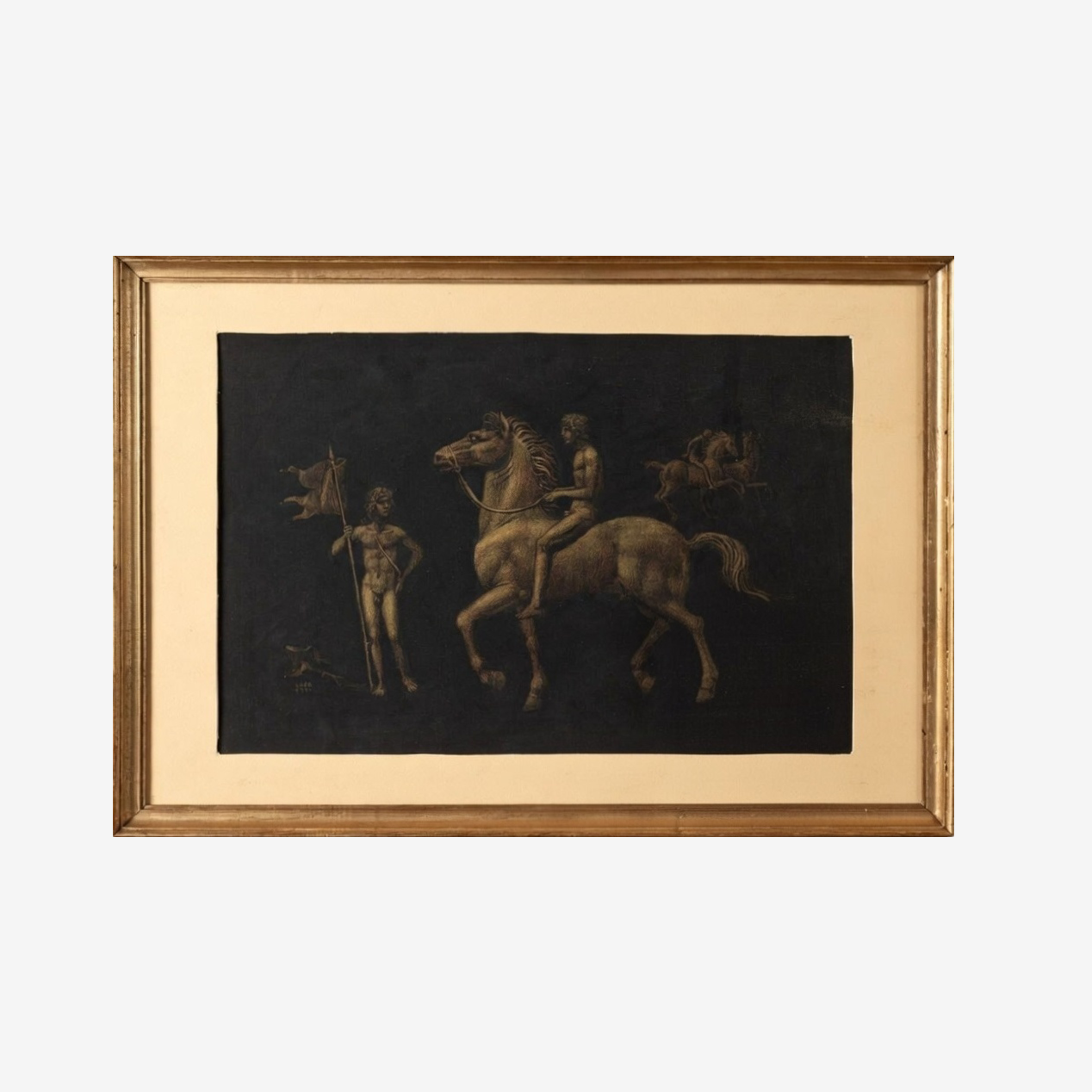
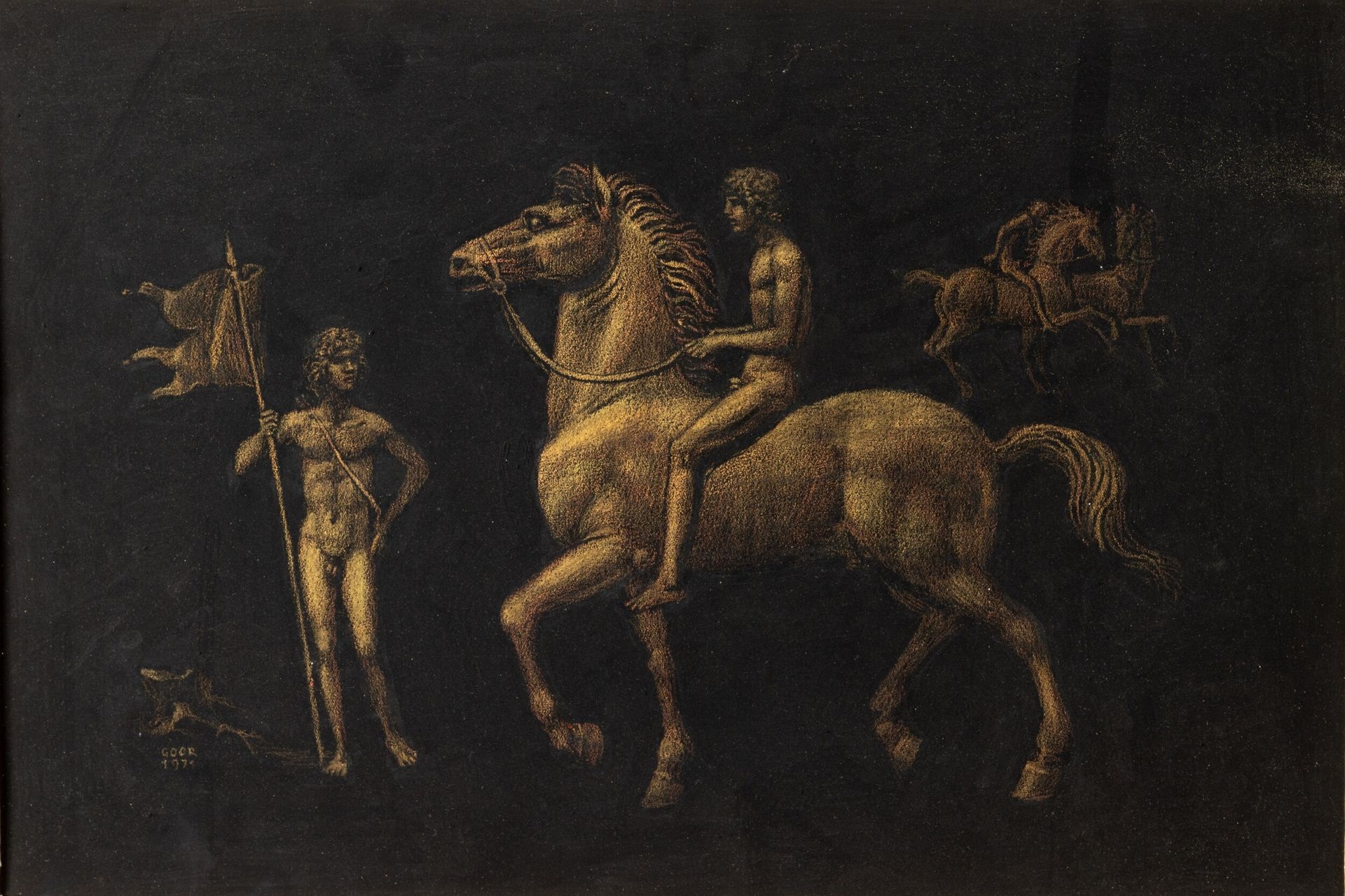
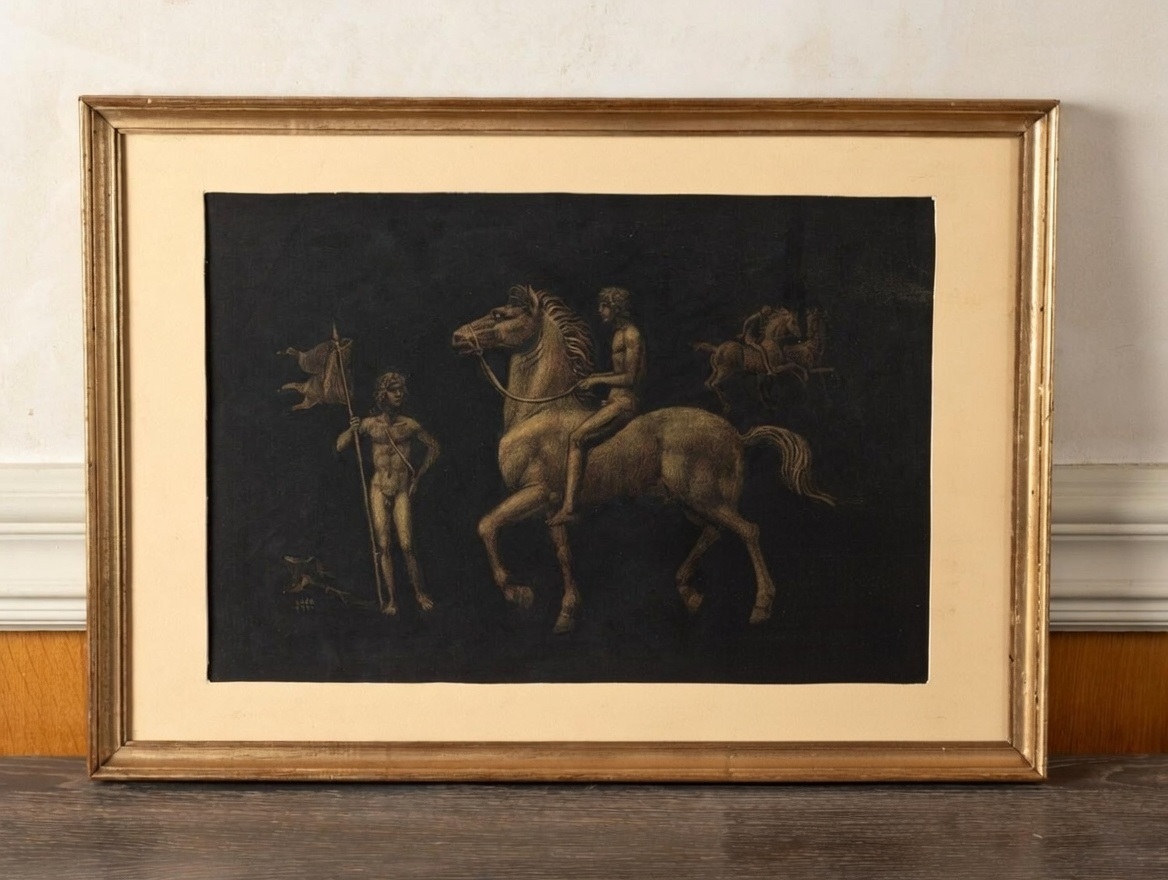
Created in 1971, La jeunesse d’Alexandre (The Youth of Alexander) belongs to Goor’s late period and reveals his mature artistic vision. The young Alexander the Great appears as a symbol of emerging power and grace. This theme recurs frequently in Goor’s work, allowing him to explore heroic mythology while celebrating physical perfection. Through this subject, Goor aligned himself with the French academic tradition while enriching it with a Neo-Romantic spirit.
Technique and Use of Materials
Goor’s technical approach in this work is both distinctive and demanding. He used gold pastel on black paper, a choice that challenges conventional drawing methods. Instead of adding shadow onto a light surface, he drew light directly out of darkness. This inversion gives the image a striking visual intensity.
The black background functions as a vast architectural space. It enhances the luminosity of the gold pastel and creates subtle variations of light. As a result, the figures appear almost sculptural. The musculature of the horse and the proportions of the young figure resemble bronze forms in bas-relief. Goor’s precise lines—particularly in the horse’s mane and Alexander’s anatomy—reveal his strong foundation in classical illustration.
Artistic and Collectible Value
From a collector’s perspective, La jeunesse d’Alexandre establishes a refined link between antiquity and modernity. Goor rejected abstraction and embraced figurative clarity. His visual language is timeless and remains aligned with Western artistic traditions rooted in Mediterranean culture.
The contrast between gold and black gives the work a commanding presence. It integrates seamlessly into both classical and contemporary interiors. Signed and dated 1971, the drawing captures Goor at the height of his technical mastery. Today, collectors value his work for its precision, elegance, and mythological depth. Demand remains strong in both European and American markets.



















 No products in the cart.