Le garçon aux pieds nus
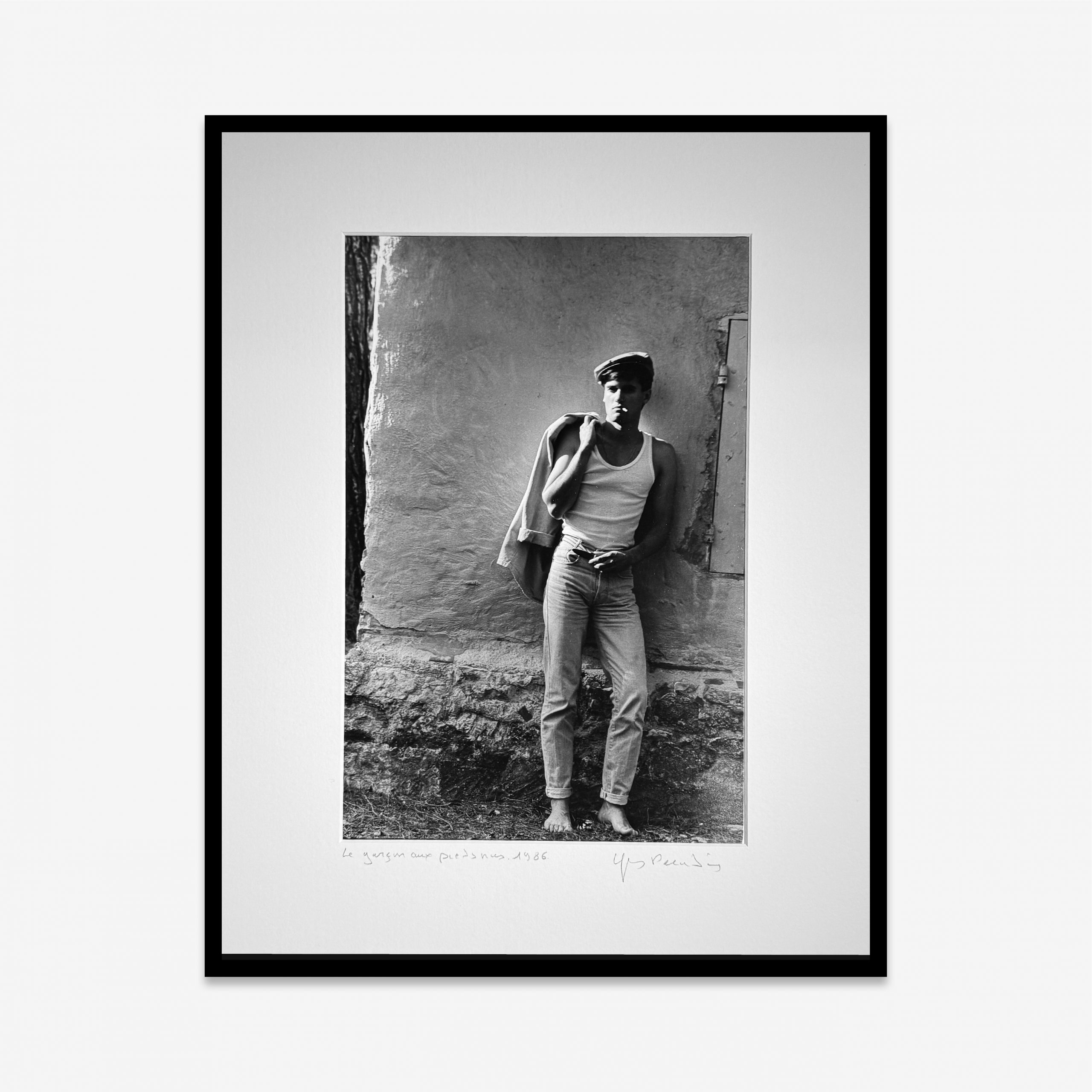
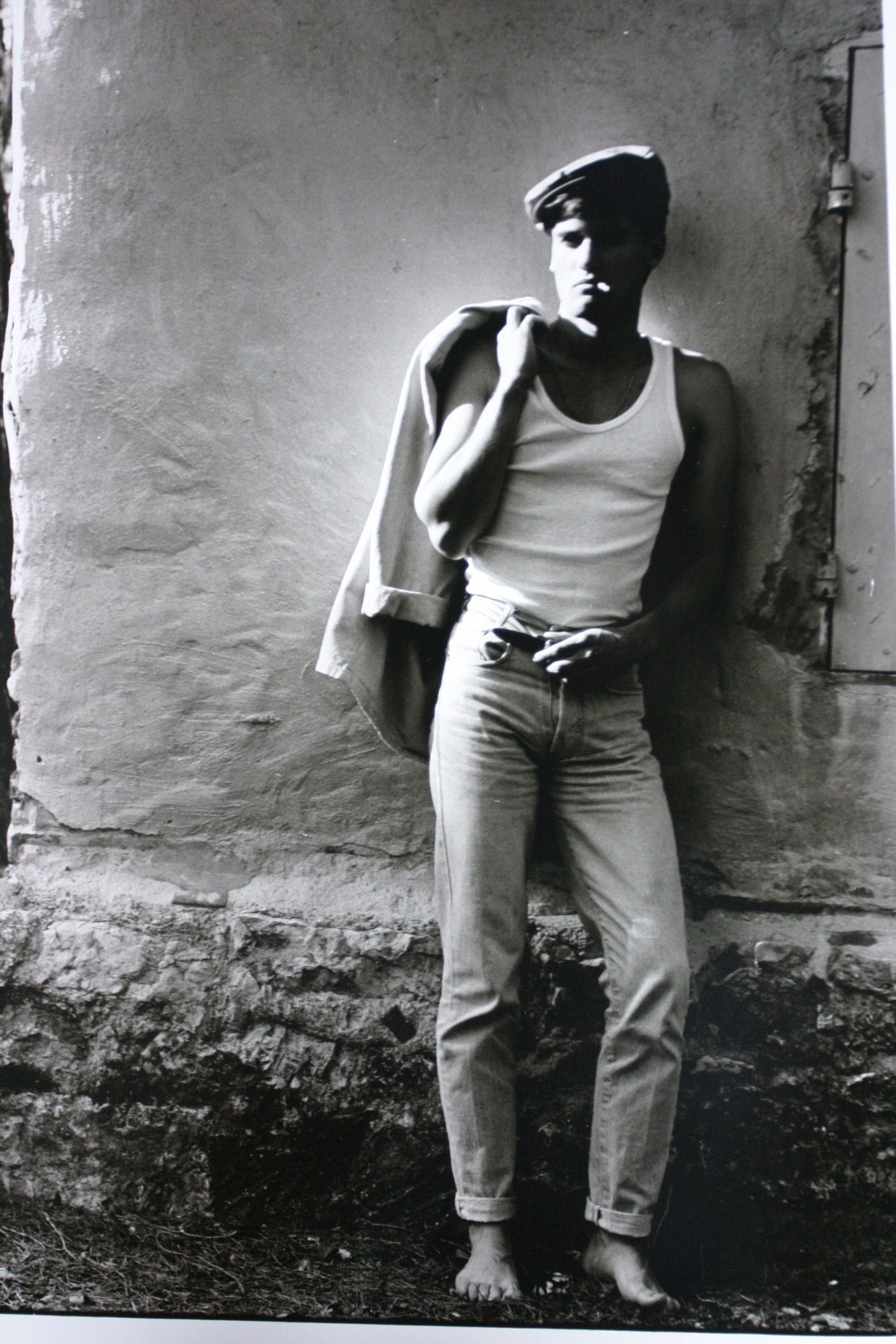
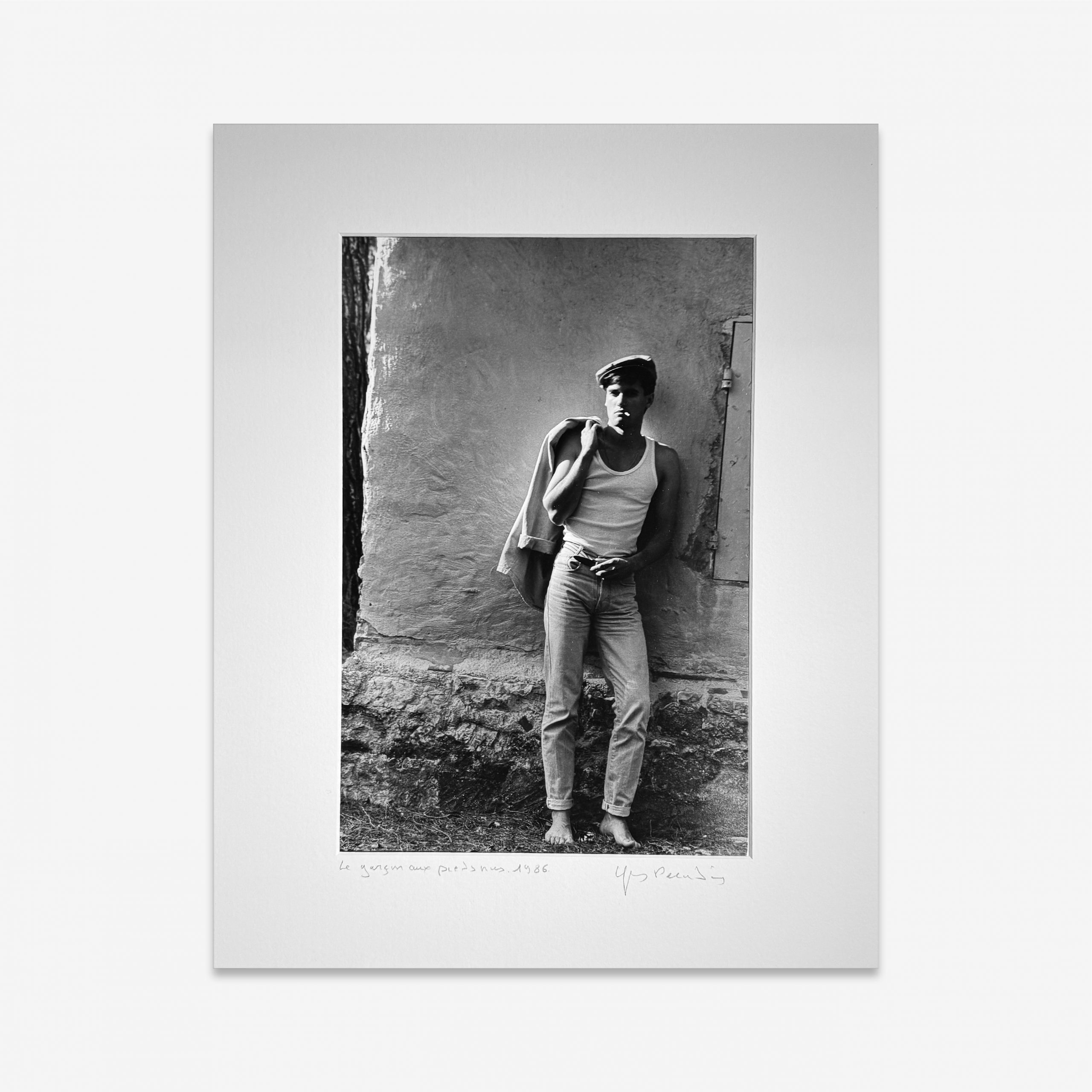
This black-and-white photograph presents a young man standing against a rough exterior wall. He wears a simple tank top and fitted trousers, while holding a jacket over his shoulder. His posture feels relaxed yet deliberate. His gaze turns slightly away, which creates a sense of distance and introspection.
Strong natural light falls across the figure and the wall. It illuminates one side of his body while leaving the other in shadow. This contrast shapes the figure and emphasizes his form. The light also enhances the textures of the wall, revealing cracks and irregular surfaces.
The absence of shoes draws attention to the figure’s bare feet. This detail introduces a sense of immediacy and vulnerability. It also connects the subject more closely to the ground and surroundings. The gesture contrasts with the otherwise styled appearance, adding complexity to the image.
The background remains simple but expressive. The worn wall and small window frame suggest an everyday environment. These elements give the photograph a grounded and realistic tone. At the same time, they serve as a neutral stage for the figure.
The gelatin silver print creates a rich tonal range with clear contrasts. Light and shadow define both the body and the space. The composition recalls traditions of portrait and street photography. Similar works explore youth, identity, and presence through minimal settings and strong light.
Yves Paradis
Yves Paradis was born in Brittany in 1955 into a family of farmers. He discovered photography during secondary school and from that moment on never stopped capturing his surroundings. After studying hospitality, he worked in the tourism sector before being hired by a weekly newspaper, where he was in charge of the photo lab—a role much more aligned with his passion. Gradually, he became a journalist and learned all aspects of the profession through what is known as local reporting.
At the same time, he continued to photograph for pleasure. He initially focused on the “deep France” of the 1970s and 1980s—village festivals, religious celebrations, Saturday night dances… At the turn of the 1980s, his interest shifted toward the world of boys.
Although close to the gay scene, Yves Paradis has always remained independent of trends, which gives his photographs a timeless quality.
From 1985 onwards, he worked regularly with the homosexual newspaper Gai Pied until its closure in 1992, as well as with numerous other publications, particularly in Italy and Germany. His work was noted for its singularity. His colleague Joseph Caprio described him as “the Robert Doisneau of boys.” Like Doisneau, he conveys deep empathy for his subjects, photographing them outside the studio, in natural light, without artifice, and most often in black and white. This gives his images a particularly authentic character.
“Yves Paradis’ photographs always tell a story… They are simple images, set in simple environments, often creating a sense of identification, like songs or landscapes that evoke memories…,” wrote Didier Lestrade—journalist and founder of Act Up France—in Gai Pied in 1986.
Yves Paradis stopped taking photographs in the early 1990s to focus on his career as a journalist, as photography did not provide him with a sufficient living. However, he carefully ensured the preservation of his archives. Upon retirement, and through various encounters, he resumed photography, still working in analog black and white.
A self-taught photographer, Yves Paradis has always printed his own photographs in his personal darkroom. “In order to master my images from A to Z…,” he explains, adding that analog photography has always been his preferred medium.
“For the past thirty years, digital technology has disrupted the world of photography and has even improved image quality. However, analog photography—with the unbearable uncertainty of the shot, whose quality only reveals itself during film development—requires a different approach: more focused, less casual. With digital, you can immediately retake a failed photo. Not with film. In the darkroom, the photographer can also refine the print by working with contrast, developer temperature, papers… Like Brassaï, I believe that the author’s print is what truly matters… even if the darkroom process involves a great deal of work…”
This highly artisanal approach defines Yves Paradis’ work. As a result, each of his prints presents subtle variations that distinguish it from the previous one, making each piece, in a way, unique.




 No products in the cart.