


Baseball Billy
Sporting a powder-white uniform with vivid red accents, a bright red helmet, and the number “69” boldly printed on his chest, Baseball Billy steps up to the plate with charm and cheek. His fitted jumpsuit, red belt, and side-stripe detailing blend classic American baseball iconography with unmistakable queer flair. Bat in hand, he’s ready to swing—not just for home runs, but for representation.
Baseball Billy draws inspiration from vintage athletic aesthetics and reclaims them with unapologetic pride. With playful nods to camp and coded language (yes, that “69”), this figure challenges the heteronormativity of traditional sports while celebrating visibility and style. He’s not your average player—he’s rewriting the rules of the game.
John McKitterick & Juan Andrés
In the late 1980s, amidst London’s tense political climate under Margaret Thatcher and the devastating impact of the AIDS epidemic, artists John McKitterick and Juan Andres began an ambitious collaboration that merged art, politics, and sexuality. Together, they conceived Billy not merely as an artwork, but as a cultural statement — a symbol of pride, visibility, and resistance.
McKitterick and Andres envisioned Billy as a conceptual project from the very beginning: a work that could exist simultaneously within the realms of contemporary art and popular culture. Every aspect was premeditated — from the initial sculpture to future exhibitions, books, films, music, and products — all intended to spread a message of diversity and awareness beyond the traditional art world.
When Billy was first exhibited in 1994 at The Freedom Gallery in Soho, the response was immediate and polarizing. The duo’s creation was celebrated internationally, applauded for its courage and creativity, and criticized by more conservative audiences, which only reinforced its visibility and relevance.
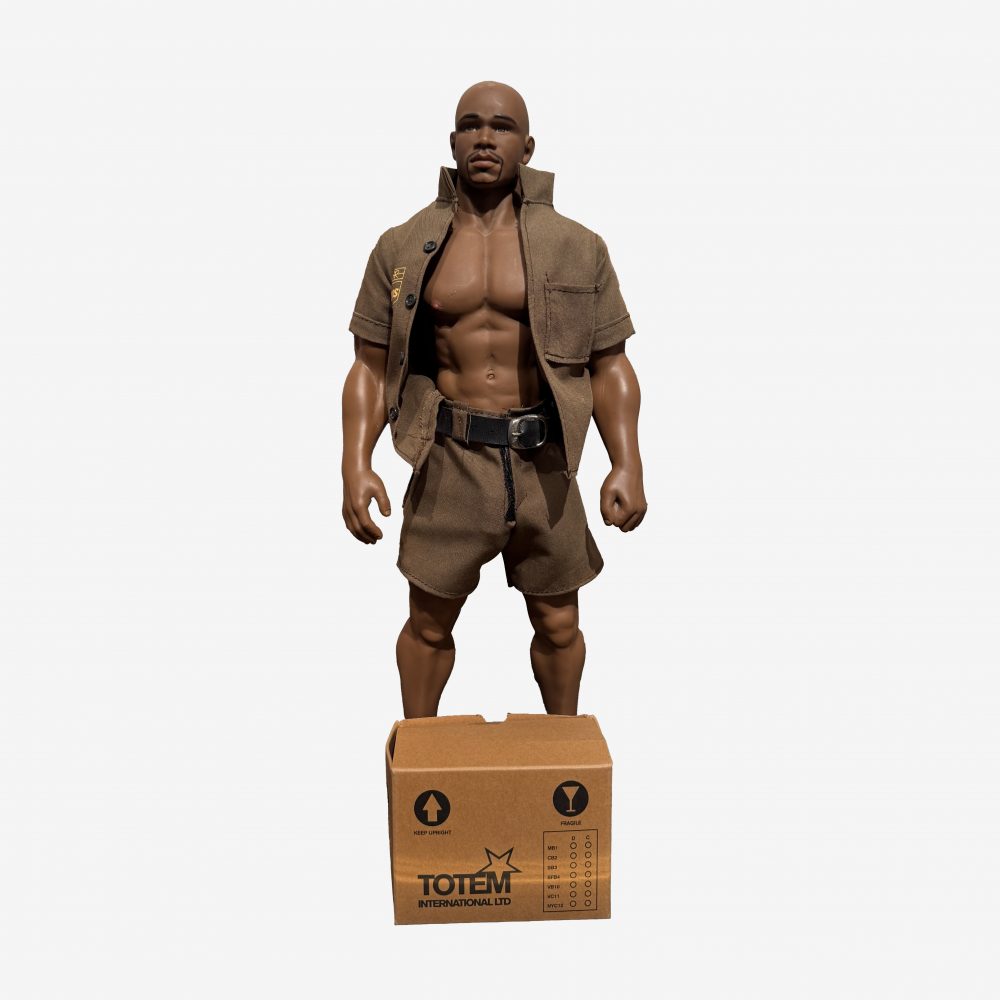
Three years later, McKitterick and Andres transformed their artistic vision into a mass-produced object: Billy – The World’s First Out and Proud Gay Doll. What began as a provocative sculpture became a global icon, sold in hundreds of stores, dressed by designers like Alexander McQueen, and exhibited in major institutions such as the Andy Warhol Museum, the Science Museum in London, and The New Museum of Contemporary Art in New York.
Through Billy, McKitterick and Andres succeeded in transcending artistic boundaries, creating one of the first cultural bridges between queer identity and mainstream visibility. Their work stands as a testament to how art can embody resistance, inspire dialogue, and transform social consciousness.





 No products in the cart.