

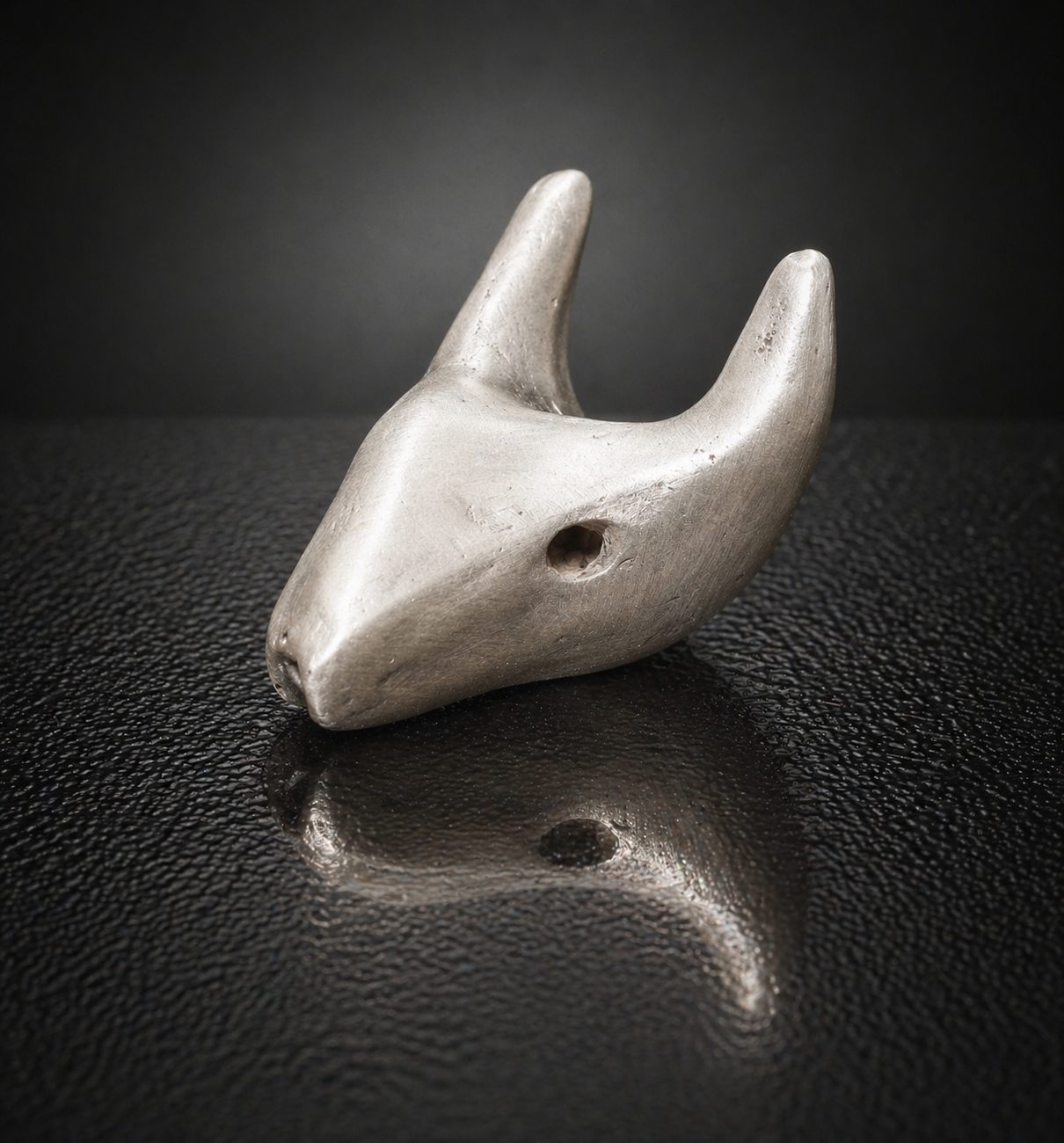
COSTUS Bull Necklace
Costus and the visual culture of the Movida
Costus occupies a singular place in Spanish art of the 1980s. Juan Carrero and Enrique Naya developed a visual language where painting, popular culture, devotion, humour, excess and provocation could coexist without hierarchy. Their work looks at Spain from both inside and outside: it celebrates it, parodies it, exaggerates it and turns it into a luminous, theatrical and radically free scene.
Animals in the Costus imagination
Within this universe, animals are never merely decorative motifs. They operate as symbolic presences, almost as characters, condensing desire, ritual, festivity, threat, sensuality and masquerade. In Costus, fauna belongs to a world where nature becomes staged and popular imagery acquires an ambiguous force between the religious, the carnivalesque and the pop.
The bull, Spain and the cultural context
The bull is one of the most charged signs in Spanish visual tradition. It evokes strength, sacrifice, festivity, Mediterranean myth and an image of Spain shaped over centuries through solemnity, violence, pride and spectacle. In the context of the Movida madrileña, that iconography could be read differently: not as an untouchable monument, but as cultural material open to play, irony, excess and reinvention.
The necklace
This necklace shifts the bull into the realm of ornament and staged presence. The animal figure becomes centre, mask and emblem, as if a deeply Spanish image had passed through the camp, pop and baroque filter of Costus. The necklace does not simply adorn: it activates cultural memory and transforms it into a contemporary sign, theatrical and charged with identity.










 No products in the cart.