

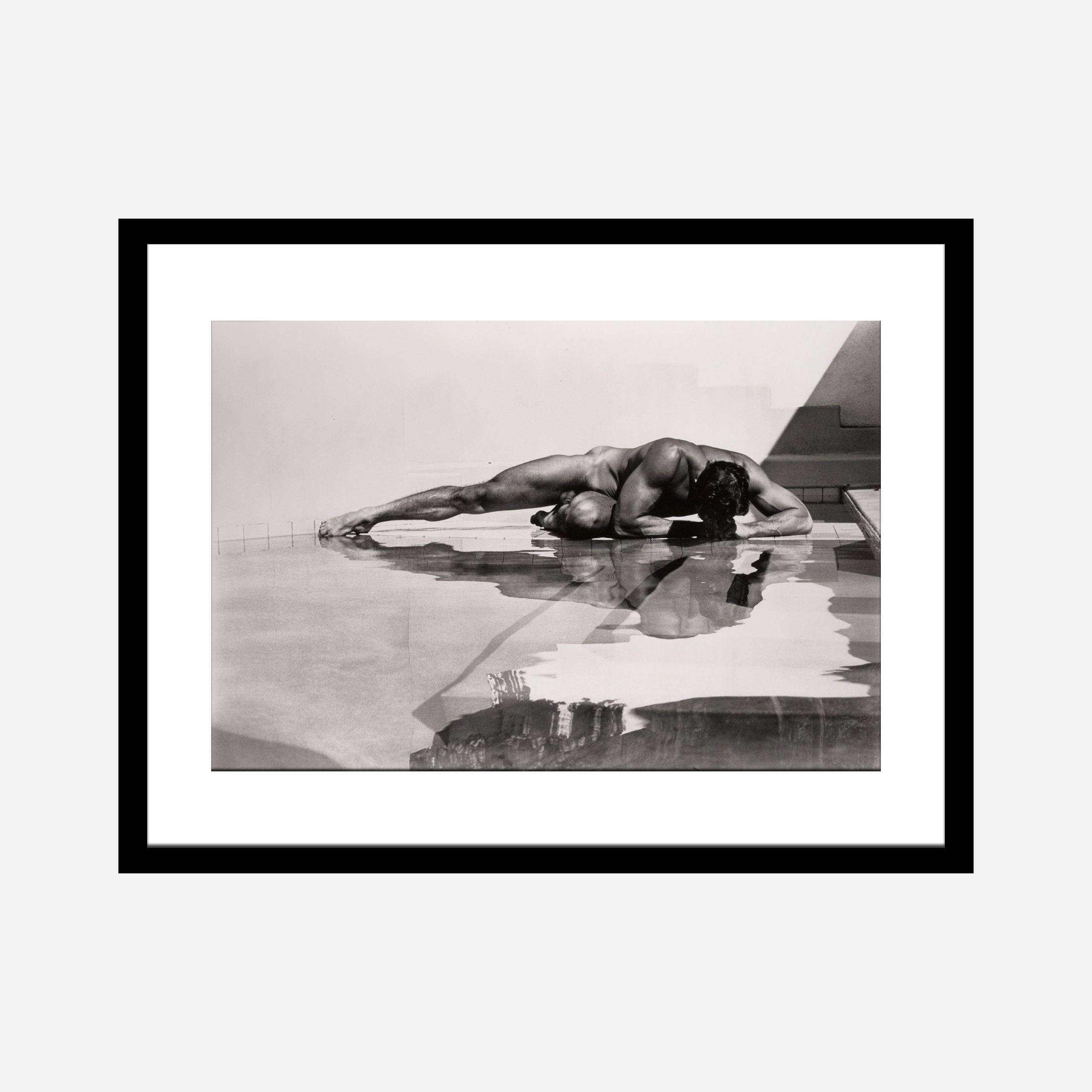
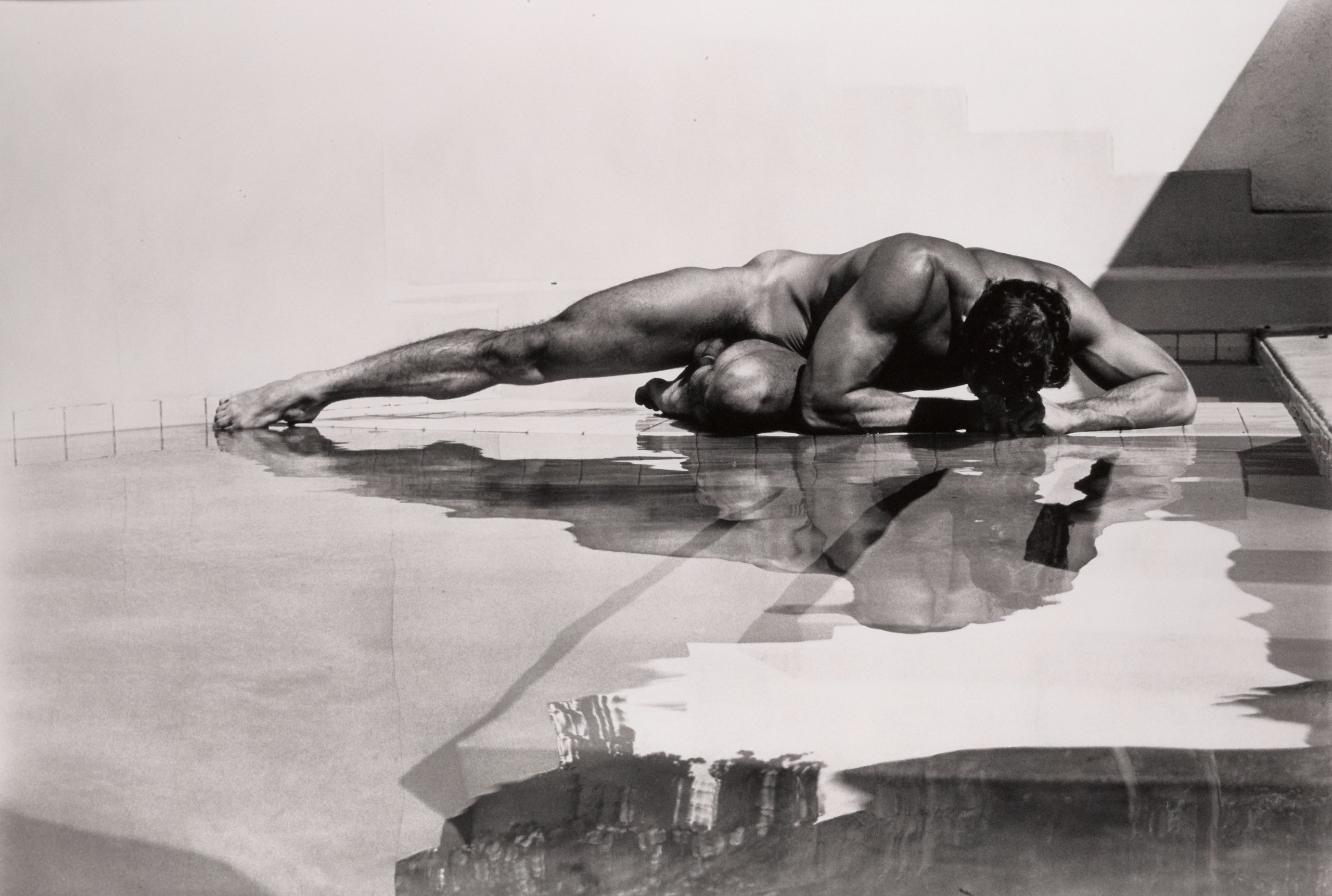
The Legacy of Tom Bianchi Tom Bianchi remains a seminal figure in late 20th-century photography. He is widely recognized for his rigorous dedication to the male form. Throughout his career, Bianchi chronicled a specific era of American social and physical culture with unmatched clarity. His 1990 work, “Narcissus,” represents a sophisticated intersection between classical Greek mythology and modern photographic realism. Furthermore, this gelatin silver print demonstrates Bianchi’s capacity for highly staged, sculptural compositions. Unlike his more candid Polaroid sequences, this work reinterprets the myth of Narcissus by utilizing the geometric lines of a contemporary poolside setting. Consequently, the piece creates a balanced, contemplative study of symmetry and self-observation.
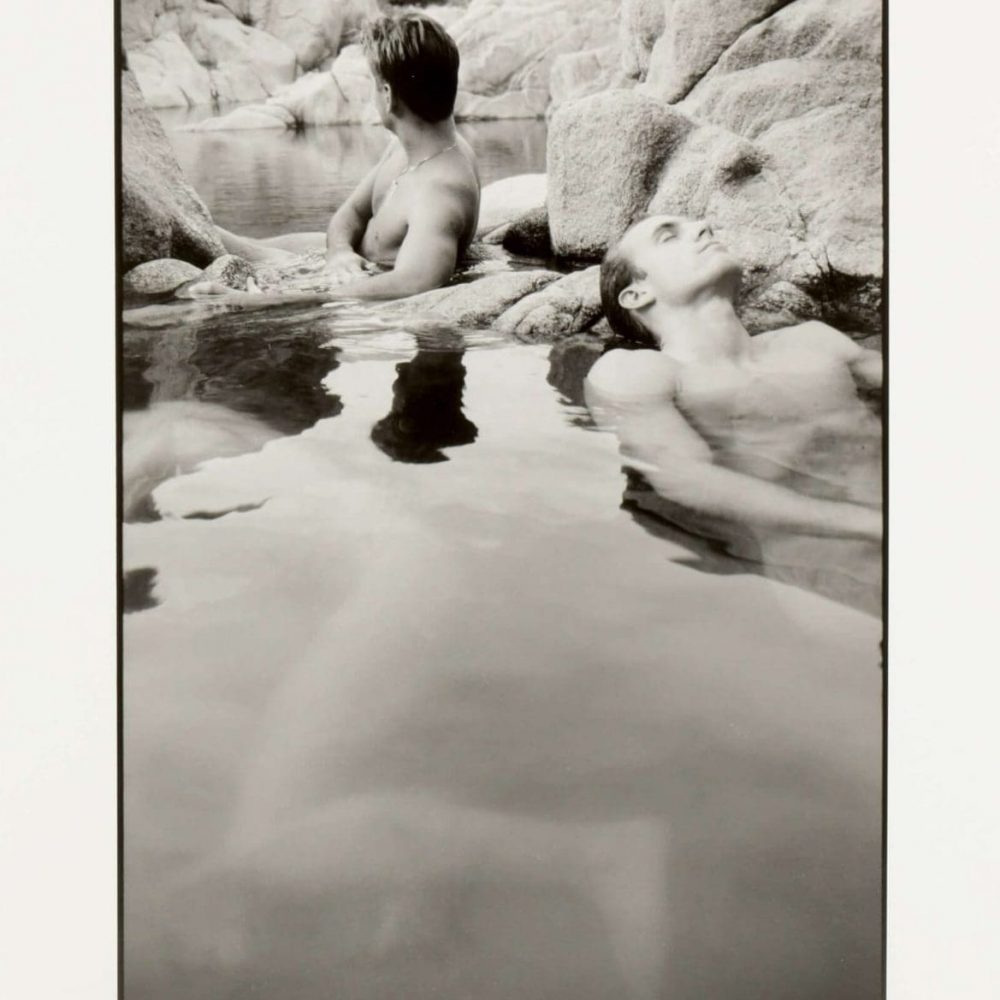
Technical Mastery of Light and Form Technically, this gelatin silver print serves as a masterclass in the management of light and reflective surfaces. Bianchi utilizes high-sunlight conditions to create deep, opaque shadows. These shadows effectively carve the subject’s musculature. As a result, the artist turns the human body into a series of interconnected volumes. A strong diagonal axis anchors the composition. This axis, created by the subject’s extended limb, leads the eye directly to the reflection in the water. Moreover, the surface of the pool acts as a secondary canvas. Here, the distorted mirror image provides a sharp textural contrast to the figure on the tile. This interplay requires precise control of exposure and timing. Therefore, the print ensures that both the skin’s highlights and the dark depths of the water retain their tonal integrity.
Provenance and Collector Value For the serious collector, the status of this piece as a signed and numbered H.C. 1/1 (Hors Commerce) proof significantly elevates its value. In the hierarchy of fine art editions, an H.C. proof represents a version originally intended for the artist’s private use. Because it is a unique 1/1 proof of a definitive image, this work constitutes an institutional-grade acquisition. Numerous permanent collections worldwide currently hold Bianchi’s work. Specifically, this piece captures the artist at a critical juncture. He moved beyond mere documentation into a formalist, almost architectural approach to the figure. Ultimately, this mastery cements his place in the lineage of giants like Herb Ritts and Robert Mapplethorpe.















 No products in the cart.